
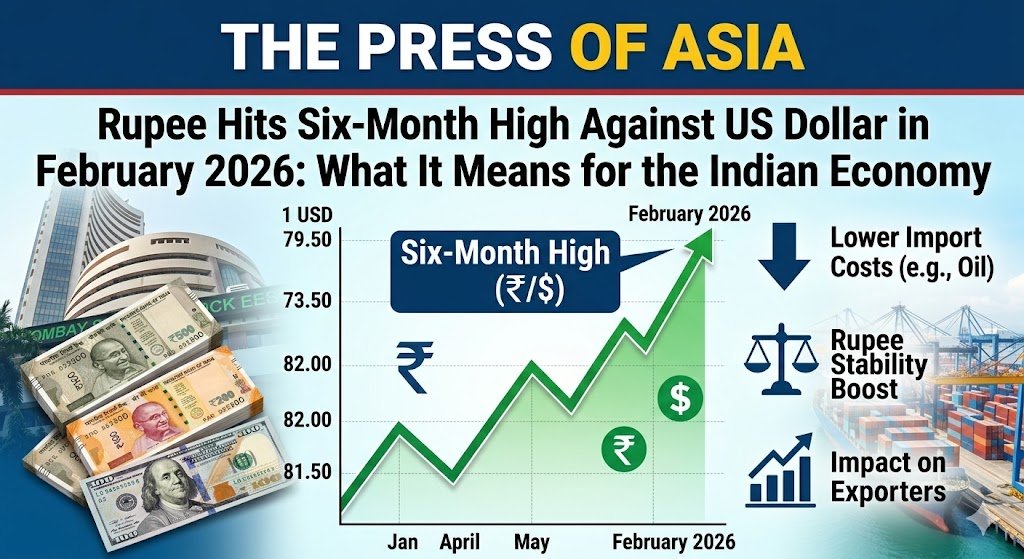
The Indian Rupee surged to a six-month high against the US Dollar in February 2026, breaking through the 83 mark and reaching its strongest level since mid-2025. The strengthening of the Rupee comes as a confluence of positive macroeconomic indicators boost investor confidence in India’s economic trajectory.
The primary drivers behind the Rupee’s rally include improving economic fundamentals, rising foreign exchange reserves, reduced trade deficit, and a significant uptick in foreign institutional investor (FII) inflows into Indian equities and debt markets. The Reserve Bank of India’s (RBI) careful management of exchange rate volatility has also played a crucial role in this appreciation.
A stronger Rupee has several significant implications for the Indian economy. For importers, especially those reliant on crude oil, a stronger currency directly reduces the import bill, helping contain domestic inflation. India imports approximately 85% of its crude oil requirements, making the Rupee-Dollar exchange rate critical for energy cost management.
However, the flip side affects India’s export-oriented sectors. IT services companies, textile exporters, and pharmaceutical exporters may face margin pressure as their dollar earnings convert to fewer Rupees. The IT sector, in particular, generates a major portion of its revenue in US Dollars.
For the common Indian citizen, a stronger Rupee means lower prices for imported goods including electronics, edible oils, and luxury products. It also benefits students studying abroad and those remitting money to families overseas, who will now receive less in Rupee terms.
Financial analysts suggest that if India’s economic fundamentals continue to strengthen and global sentiment remains positive, the Rupee could potentially test the 82-per-dollar mark in the near term. However, global geopolitical risks, particularly the Pakistan-Afghanistan conflict and US Federal Reserve policies, remain potential headwinds.