trump-xi-summit-delay-iran-war-china-2026
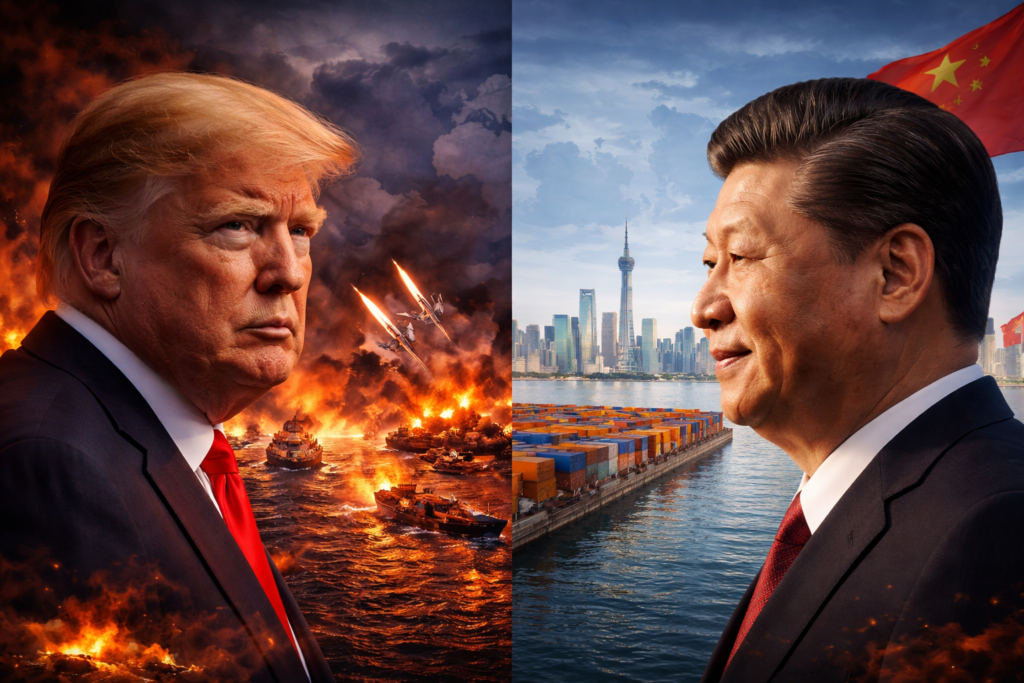
In a significant diplomatic development that could reshape US-China relations for the rest of 2026, US President Donald Trump announced on March 17 that he has asked China to delay his planned summit with President Xi Jinping by “about a month”. The meeting had been scheduled for March 31 to April 2 in Beijing, but Trump said the ongoing war against Iran makes it “necessary for me to be here” in Washington.
Trump’s Announcement and Its Context
“We’ve asked to delay it for about a month,” Trump told journalists at the White House on Monday. “There are no tricks involved. It’s straightforward. We have a war in progress, and I believe it’s crucial for me to be present here”. Trump added that he is eager to meet with Xi and that the two leaders maintain a “very strong relationship,” suggesting the delay is logistical rather than hostile.
However, in the days leading up to the announcement, Trump had also suggested he might delay the trip if China does not help reopen the Strait of Hormuz. This linkage — tying diplomacy to China’s willingness to pressure Iran over the Hormuz blockade — signals a more transactional approach to US-China relations, consistent with Trump’s broader foreign policy style.
China’s embassy in Washington did not immediately respond to requests for comment. The silence from Beijing is itself telling — it gives China maximum flexibility to assess the situation before committing to any position.
Why China May Welcome the Delay
Bloomberg’s analysis, published on March 17, makes a compelling case that Trump’s delay may actually be a welcome gift to Beijing. The Iran war has created a uniquely complex situation for China:
- China imports approximately 27% of its crude oil from the Gulf, making it deeply vulnerable to the Strait of Hormuz blockade
- At the same time, China has been quietly maintaining economic and diplomatic ties with Iran, which resents any perception that Beijing is siding with the US
- A rushed summit with Trump could have forced Xi to publicly choose between supporting the US war effort or defending Iran — an impossible position
By delaying the summit by a month, China buys time to see how the war unfolds. If Iran is defeated quickly, China can pivot toward a post-war relationship with the US from a position of strength. If the war drags on, China can use its leverage as a potential diplomatic broker to extract concessions from both Washington and Tehran.
The Bigger Picture: US-China-Iran Triangle
The Iran war has exposed a profound tension in the US-China relationship. Trump came into office in January 2025 promising to be tough on China through tariffs and trade restrictions. Yet the war in Iran — which China did not want and did not support — has given Beijing an unexpected strategic opportunity.
As the US gets increasingly bogged down in a military campaign that is proving harder than expected, its ability to simultaneously confront China on trade, Taiwan, and technology is being stretched thin. Chinese state media has been careful not to gloat publicly, but internal commentaries cited by Bloomberg suggest Beijing views the war as a “strategic miscalculation” by Washington that could weaken the US’s global standing.
For the world economy, the delay of the Trump-Xi summit matters enormously. The two leaders had been expected to discuss trade tariffs, technology restrictions, fentanyl cooperation, and Taiwan — issues that collectively affect trillions of dollars of global trade. A month’s delay, in the context of a raging Middle East war, could mean those discussions are further disrupted by shifting geopolitical realities on the ground.
NATO Fractures Further
The Iran war is also exposing cracks in the NATO alliance. Trump’s angry demand that NATO allies send warships to the Strait of Hormuz has been met with refusal by major European members, who fear being drawn into a conflict they consider America’s — not NATO’s — war. German Chancellor Friedrich Merz has said Germany will not send naval assets to the Persian Gulf. France has been similarly reluctant.
This is creating an extraordinary moment where the US — already exhausted from its Middle East campaign — is simultaneously in a war with Iran, pressuring China over Hormuz, warning NATO, and now seeing its diplomacy with Beijing go on hold. The question of how long Washington can maintain this level of global engagement is being asked loudly in capitals from Berlin to New Delhi to Tokyo.