
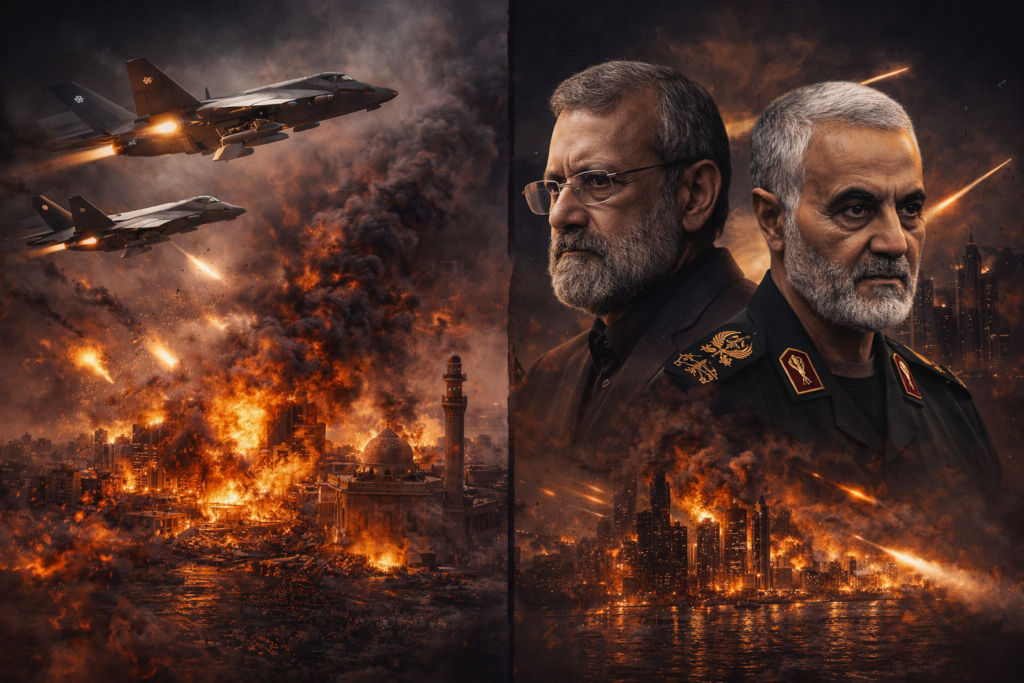
The Iran-US-Israel war entered its 19th day on March 18, 2026, with a dramatic and deadly escalation that sent shockwaves across Asia, the Middle East, and global energy markets. In one of the most significant military strikes of the conflict, Israel confirmed the killing of Ali Larijani — the secretary of Iran’s Supreme National Security Council — along with General Gholamreza Soleimani, the commander of Iran’s Revolutionary Guards’ Basij force. The deaths of both senior officials were later confirmed by Iranian state media, marking a severe blow to Tehran’s military and political leadership.
Who Was Ali Larijani?
Ali Larijani was one of the most powerful figures in the Iranian government after Supreme Leader Ayatollah Ali Khamenei was killed in an airstrike at the very beginning of the conflict. As the secretary of Iran’s Supreme National Security Council, Larijani was effectively the man steering Iran’s military and diplomatic response to the war. He had previously served as Speaker of Iran’s Parliament and was widely respected in Iranian political circles. His death represents a catastrophic leadership vacuum for Tehran at one of its most critical moments in decades.
Simultaneously, General Gholamreza Soleimani, the head of the Basij — Iran’s powerful all-volunteer paramilitary militia — was also killed in the same Israeli operation. The Basij has been a critical force in suppressing internal dissent and supporting Iranian military operations. Iran’s state media confirmed both deaths, and Iranian Army Chief Amir Hatami immediately threatened a “decisive” retaliation against what he called the “criminal America and the bloodthirsty Zionist regime.”
Iran’s Revenge: Missiles Rain on Israel and Gulf States
Following the deaths of Larijani and Soleimani, Iran wasted no time in launching fresh rounds of missile and drone attacks. Iranian missiles targeted central Israel, killing at least two people and wounding dozens more as sirens blared across Tel Aviv. Iran’s Revolutionary Guards confirmed they had launched the strikes as direct retaliation for the killings.
Simultaneously, Iran expanded its attacks to Gulf Arab countries. Bahrain, Qatar, Saudi Arabia, and the United Arab Emirates all reported intercepting multiple Iranian drones and missiles. Loud explosions were heard in Dubai as UAE authorities confirmed successful air interceptions, while an Iranian projectile reportedly struck near the Australian consulate in the region. The Gulf States, which had so far tried to maintain a degree of neutrality, now found themselves squarely in the crosshairs of the expanding conflict.
Israel widened the scope of its strikes, targeting the Iranian Intelligence Minister Esmail Khatib in a fresh airstrike on Tehran. Israeli media reported the operation was still being assessed, with no immediate official confirmation on the outcome. Additionally, US forces dropped a 5,000-pound bomb near the Strait of Hormuz, signalling Washington’s intent to keep the vital shipping lane open at any cost.
Trump Abandons Ally Recruitment, Threatens Iran’s Oil Hub
US President Donald Trump, who had been attempting to recruit international partners to join the war effort against Iran, officially abandoned those efforts on March 18 and lashed out at allies who had publicly rejected his appeals. Japan, South
India is among the most affected nations in Asia due to this conflict. India imports approximately 60% of its LPG (Liquefied Petroleum Gas) requirements, and of this, over 90% travels through the Strait of Hormuz. With the Strait under constant threat, India’s cooking gas supply chain has been severely disrupted, causing panic among consumers and LPG dealers across the country.
The Indian government has ordered refineries to maximise domestic LPG production and has absorbed a significant portion of the rising costs to prevent steep price hikes at the consumer level. The petroleum ministry urged citizens not to panic-buy cylinders, assuring them that supply chains were being carefully managed. However, reports indicate growing anxiety in rural areas where LPG alternatives are limited.
On the economic front, India’s stock markets continued to recover, with the Sensex gaining over 850 points and the Nifty reclaiming 23,800 on March 18, driven largely by IT stocks. However, analysts warn that a prolonged war and potential strikes on Kharg Island could reverse these gains rapidly. Gold prices in India surged to an all-time high of Rs 1,65,820 per 10 grams for 24-carat gold in Delhi, as investors rushed to safe-haven assets amid the global turmoil.
Sri Lanka declared Wednesdays as fuel conservation days, shutting down most activity to manage its severe fuel shortage linked to the Hormuz crisis. Pakistan, already fighting a war with Afghanistan, faces additional economic strain as fuel prices soar.Korea, Australia, and NATO member states all declined to participate in direct military action. Trump publicly scolded these nations, calling their refusals a sign of weakness.
Despite walking back his coalition-building efforts, Trump doubled down on military pressure, threatening to expand strikes on Kharg Island — Iran’s primary oil export hub. This threat has massive implications for global oil markets, as Kharg Island handles over 90% of Iran’s crude oil exports. A strike on Kharg Island would further tighten global oil supply and could push oil prices beyond $120 per barrel, economists warn.
Trump also postponed a planned summit with Chinese President Xi Jinping, as Beijing indicated it did not want to meet Washington while the war was ongoing. China expressed deep concern about the regional escalation and called on all parties to halt military operations immediately.
As of March 18, 2026, there are no signs of the conflict abating. Iran has declared it has no intention of relinquishing its control over the Strait of Hormuz, and Israel continues to strike deep inside Iranian territory. The United States, despite Trump’s efforts to claim the war would end soon, continues to carry out airstrikes alongside Israel.
The killing of two of Iran’s most senior leaders in a single day is unlikely to lead to a quick ceasefire. Instead, military analysts suggest it will intensify Iran’s resolve to retaliate with greater force and urgency. The coming 48 to 72 hours are considered critical by security analysts, as Iran determines its next major response.
For the people of Asia — particularly in India, Sri Lanka, Pakistan, and other oil-dependent nations — the human cost of this distant war is very real. Fuel prices, food inflation, disrupted supply chains, and rising economic anxiety are the everyday consequences. Press of Asia will continue to monitor developments closely and bring you the latest updates as the situation evolves.
Key Facts at a Glance:
- Day 19 of Iran-US-Israel War: March 18, 2026
- Officials killed: Ali Larijani (Iran’s SNSC Chief), Gen. Gholamreza Soleimani (Basij Commander)
- Countries attacked by Iran: Israel, UAE, Saudi Arabia, Qatar, Bahrain
- Oil price: Hovering above $106 per barrel
- India’s 24K gold price: Rs 1,65,820 per 10 grams (all-time high)
- Sensex: Up 850+ points on March 18
- 13 US troops killed so far; over 200 injured
- Hormuz Strait: Partially blocked, causing global energy crisis
What Does This Mean for Asia and India?
Outlook: No End in Sight