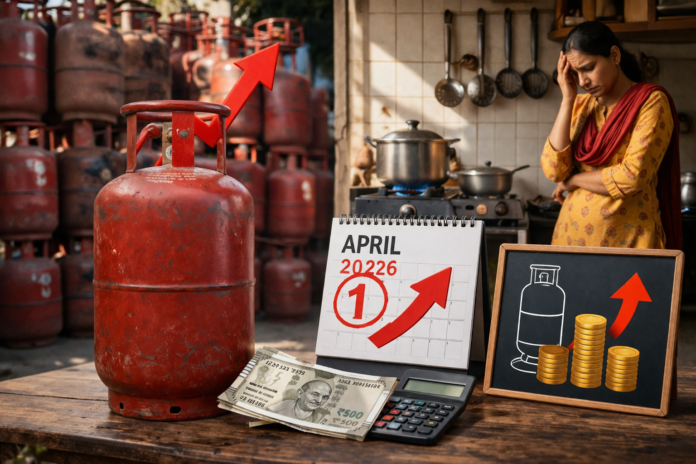

New Delhi, April 2, 2026: Effective from April 1, 2026, oil marketing companies (OMCs) in India — including Indian Oil Corporation (IOC), Bharat Petroleum Corporation Limited (BPCL), and Hindustan Petroleum Corporation Limited (HPCL) — have hiked the prices of 19-kilogram commercial LPG cylinders across all major cities. The hike, which ranges from Rs 195.50 to Rs 218 per cylinder depending on the city, marks the third consecutive increase in commercial LPG prices in just over a month, driven primarily by the global energy market disruption caused by the ongoing US-Iran military conflict and the resulting turbulence in Middle East oil supply chains.
While the 19 kg commercial cylinder — primarily used by hotels, restaurants, dhabas, and other commercial establishments — has seen a steep hike, the 14.2 kg domestic LPG cylinder used by household consumers has been left unchanged for April 2026. Domestic LPG prices had already been revised upward in March 2026 by Rs 60 per cylinder, and the government has chosen not to pass further costs on to domestic consumers for now, providing some relief to ordinary households.
Latest LPG Prices Across Major Cities (April 1, 2026)
19 kg Commercial LPG Cylinder (New Rates):
- Delhi: Rs 2,078.50 (up by Rs 195.50)
- Mumbai: Increased by approximately Rs 196
- Kolkata: Highest increase of Rs 218
- Chennai: Rs 2,246 (up by Rs 203)
- Srinagar: Rs 2,385 (one of the highest rates nationally)
14.2 kg Domestic LPG Cylinder (Unchanged for April 2026):
- Delhi: Rs 913
- Kolkata: Rs 939
- Mumbai: Rs 912.50
- Chennai: Rs 928.50
Why Are Commercial LPG Prices Rising?
The sharp and recurring increases in commercial LPG prices are directly linked to the global energy market upheaval triggered by the US-Iran war. Since the United States and Israel began coordinated military strikes against Iran approximately five weeks ago, crude oil prices and LPG (liquefied petroleum gas) prices on global markets have surged significantly. The Strait of Hormuz — a critical maritime chokepoint through which a large portion of global LPG exports pass — has been disrupted, affecting supply chains and driving up international LPG benchmark prices.
India imports a substantial portion of its LPG requirements, particularly for the commercial segment. When international LPG prices rise, the OMCs — which are state-owned enterprises — face increased procurement costs. While the government has so far shielded domestic consumers from the full impact of price increases, the commercial segment has been more directly exposed to market-linked pricing revisions.
Timeline of Recent LPG Price Hikes
- March 1, 2026: 19 kg commercial LPG prices hiked by Rs 28 to Rs 31 across cities.
- March 7, 2026: Second hike, 19 kg cylinder raised by Rs 114.50; domestic 14.2 kg cylinder raised by Rs 60 (the first domestic hike since April 2025).
- April 1, 2026: Third consecutive hike, 19 kg cylinder raised by Rs 195.50 to Rs 218 depending on the city.
This rapid sequence of price increases within a single month reflects the severity of the global energy market disruption. In Delhi alone, the price of the 19 kg commercial LPG cylinder has risen from Rs 1,883 (as of early March 7) to Rs 2,078.50 on April 1 — a jump of 10.4% in less than a month.
Impact on Businesses: Hotels, Restaurants, Dhabas Hit Hard
The repeated hikes in commercial LPG prices are hitting small and medium-scale businesses in the food service industry particularly hard. Hotels, restaurants, caterers, dhabas, and street food vendors — who are among the primary consumers of the 19 kg commercial cylinder — are facing a significant and rapid escalation in their operating costs. Many of these businesses operate on thin margins, and the combination of rising raw material costs (linked to global inflation) and now surging fuel costs is creating a severe economic squeeze.
Industry bodies representing hospitality and food service sectors have urged the government to provide targeted relief, including subsidies or tax reductions on commercial LPG, to help the industry weather the current crisis. Some establishments have already begun passing on the increased costs to consumers in the form of higher menu prices.
Government’s Response and What Consumers Can Expect
The central government has so far maintained its position that domestic LPG prices need not be raised for April 2026, providing some cover for household budgets. The Pradhan Mantri Ujjwala Yojana (PMUY) beneficiaries, who already receive a subsidy on LPG cylinders, continue to get their subsidised rates.
However, if the US-Iran conflict continues to drag on or escalates further, sustained global LPG price pressures could eventually force revisions to domestic prices as well. The government will be watching the situation closely, particularly as rising inflation and fuel costs could have political ramifications in an already heated environment, with multiple state elections on the horizon.
For now, the message from OMCs is clear: commercial users should brace for continued price volatility as long as global energy markets remain unsettled. Consumers and businesses alike would do well to monitor the monthly LPG price revisions closely and plan accordingly.
How to Check the Latest LPG Price in Your City
Consumers can check the prevailing LPG price in their city through several convenient methods. The easiest is to visit the websites or mobile apps of their respective LPG distributor — Indian Oil’s IndianOil ONE app, BPCL’s SmartLine app, or HPCL’s HP Gas app. Alternatively, consumers can send an SMS to check the current price, or call their gas agency directly. The LPG price is typically updated on the first day of every month, with special revisions possible mid-month in response to exceptional market conditions.
It is also important to note that LPG prices in India vary not just between cities, but also between states, depending on local taxes and transportation costs. Consumers in remote or hilly areas typically pay higher prices due to the added logistics costs involved in supply. States with higher VAT on petroleum products will also see higher LPG prices than states with lower tax rates.
Pradhan Mantri Ujjwala Yojana (PMUY): Relief for BPL Households
The Pradhan Mantri Ujjwala Yojana scheme, which provides subsidised LPG connections and cylinders to below-poverty-line (BPL) households, continues to offer a critical safety net for India’s most economically vulnerable families. PMUY beneficiaries receive a government subsidy directly in their bank accounts via the Direct Benefit Transfer (DBT) mechanism, which offsets part of the market price they pay for their domestic cylinders.
As of early 2026, the PMUY scheme has reportedly benefited over 100 million households across India, making it one of the world’s largest clean cooking fuel programmes. The government has repeatedly stated its commitment to protecting PMUY beneficiaries from the full impact of global LPG price volatility, even as commercial segment prices track more closely to international market movements.
Looking Ahead: Energy Security in a Volatile World
India’s LPG price story in 2026 is, at its core, a reflection of the country’s exposure to global energy market risks. With the US-Iran war showing no clear signs of resolution in the near term, the energy market disruption is likely to persist for weeks or even months. India’s dependence on LPG imports means that as long as global prices remain elevated, domestic commercial prices will continue to face upward pressure.
The government’s challenge will be to continue protecting vulnerable domestic consumers while managing the fiscal burden of subsidies, all while encouraging a longer-term transition toward renewable energy alternatives for cooking — including electric induction stoves, biogas, and solar-powered cooking systems. The LPG price hike of April 2026 is a stark reminder of why India’s long-term energy security depends on diversifying away from imported fossil fuels and building a more resilient domestic clean energy ecosystem.