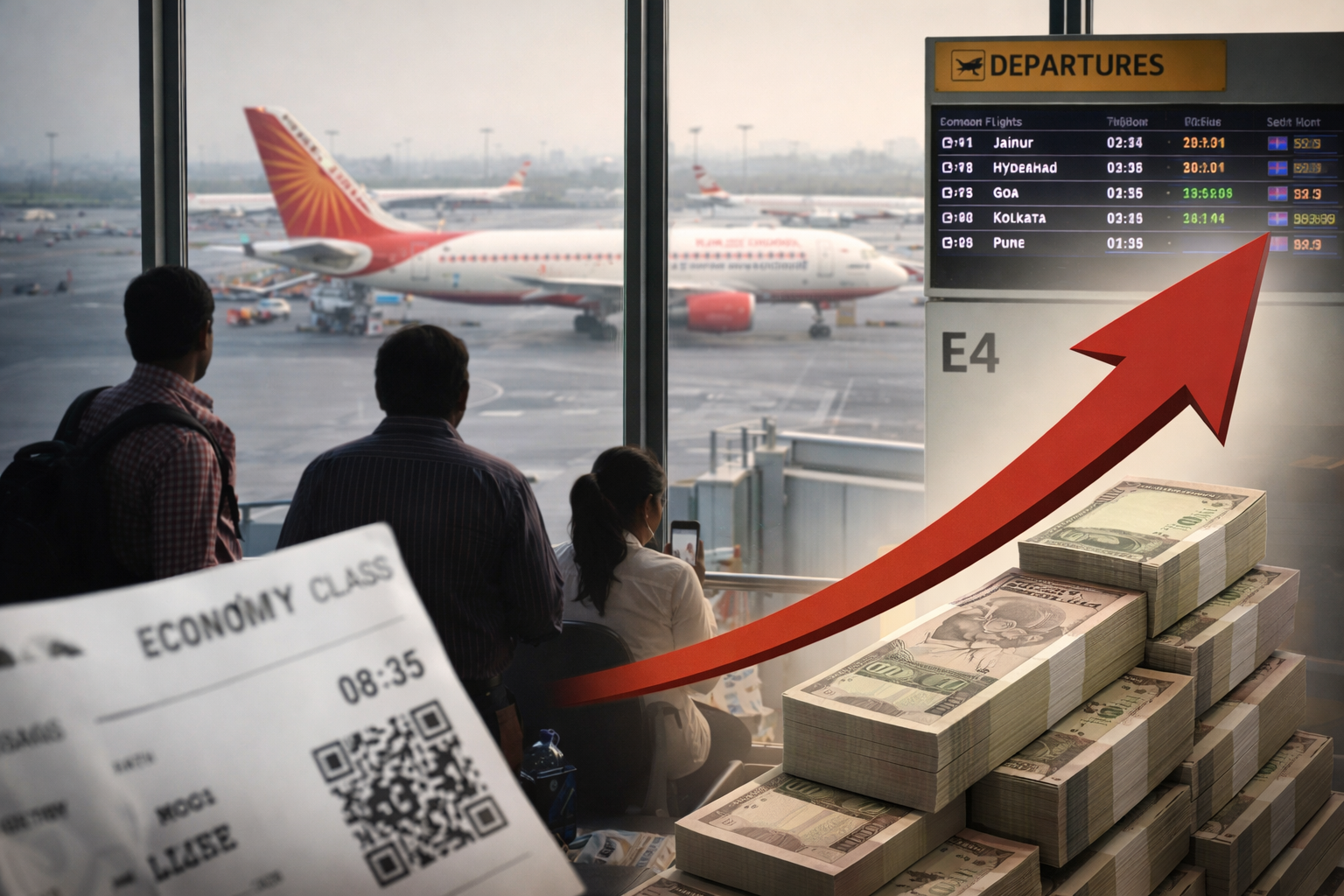

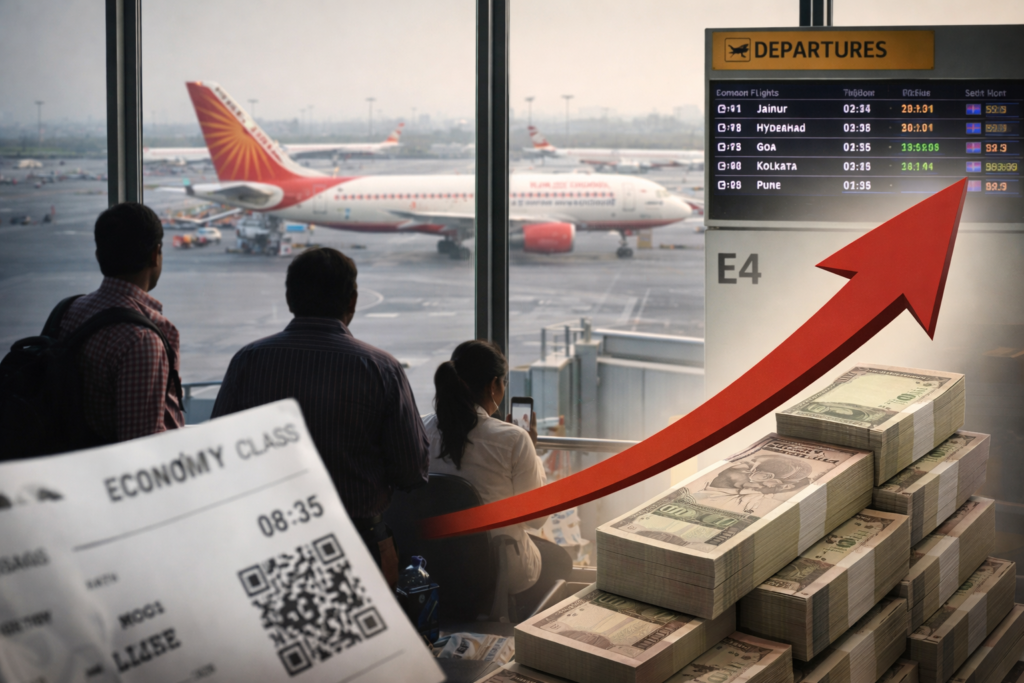
Indian air travelers should brace for higher domestic flight fares starting Monday, March 23, 2026, as the Ministry of Civil Aviation withdraws the temporary price caps that were imposed during the IndiGo crisis in December 2025. The move, announced on March 21, marks a return to market-driven pricing and could see ticket prices surge significantly, particularly on high-demand routes.
Why Were Fare Caps Imposed?
In early December 2025, India’s aviation sector faced unprecedented disruption when IndiGo, the country’s largest carrier, suffered a massive operational meltdown due to technical and crew scheduling issues. The crisis led to thousands of flight cancellations, leaving passengers stranded and triggering panic booking on rival airlines.
As desperate travelers scrambled for alternative flights, ticket prices skyrocketed to alarming levels—with fares on key routes like Delhi-Mumbai and Mumbai-Bangalore surging to ₹40,000–₹70,000 for one-way economy seats. The government intervened swiftly, imposing fare caps on December 6, 2025, to protect consumers from price gouging.
The caps were structured as follows:
- Up to 500 km: Maximum ₹7,500 per ticket
- 500–1,000 km: Maximum ₹12,000 per ticket
- 1,000–1,500 km: Maximum ₹15,000 per ticket
- Above 1,500 km: Maximum ₹18,000 per ticket
(Note: These caps excluded User Development Fee, passenger security fees, and taxes)
The intervention brought relief to passengers but placed financial strain on airlines already grappling with high operating costs.
Why Is the Government Lifting the Cap Now?
According to the Ministry of Civil Aviation’s order dated March 21, 2026, “The prevailing situation has since stabilised, with restoration of capacity and normalisation of operations across the sector.” IndiGo has resolved its operational challenges, and flight capacity has returned to pre-crisis levels.
The ministry stated: “Upon review, it has been decided that the fare cap imposed vide the aforesaid letter shall stand withdrawn with effect from 23rd March, 2026.”
However, the government has cautioned airlines to exercise responsibility, saying: “Airlines shall ensure that fares remain reasonable, transparent and commensurate with market conditions, and that passenger interests are not adversely impacted.” The ministry has indicated it will continue monitoring airfare trends to prevent exploitation.
Why Are Airlines Pushing for Higher Fares?
Airlines have been lobbying for the removal of fare caps for weeks, citing mounting financial pressures:
- Skyrocketing Fuel Costs
Aviation Turbine Fuel (ATF) prices have surged dramatically since the Iran-US-Israel war began on March 1, 2026. With Brent crude now trading above $112 per barrel—a 35% increase since late February—ATF costs have jumped proportionally. Fuel accounts for nearly 40% of airline operating expenses, making this the single largest cost driver.
Air India became the first carrier to respond, introducing a phased fuel surcharge starting March 12:
- Domestic flights: ₹399 per ticket
- SAARC region: ₹399
- West Asia/Middle East: $10
- Southeast Asia: $60 (up from $40)
- Africa: $90 (up from $60)
- Europe: $125 (up from $100)
- North America & Australia: $200 (up from $150)
Other carriers are expected to follow suit now that fare caps are lifted.
- Circuitous Routing Costs
The closure of the Strait of Hormuz and airspace restrictions over Iran, parts of Saudi Arabia, and the Gulf have forced airlines to take longer routes for international flights. This increases flight times, fuel consumption, and crew costs—expenses that airlines argue cannot be absorbed indefinitely under capped domestic fares.
- Thin Margins Under Price Controls
The Federation of Indian Airlines (FIA), representing Air India, IndiGo, SpiceJet, Vistara, and others, argued that the fare caps were unsustainable in the current cost environment. In a petition to the ministry, FIA stated that airlines were operating several routes at a loss, threatening long-term viability.
What to Expect: How Much Will Fares Rise?
While exact fare increases will vary by route, time of booking, and demand, industry analysts predict:
- Last-minute bookings could see the steepest increases, potentially rising 30–50% on busy routes like Delhi-Mumbai, Bangalore-Delhi, and Mumbai-Hyderabad.
- Advance bookings (3–4 weeks ahead) may see moderate increases of 10–20%.
- Festival and holiday travel periods could witness even sharper spikes as airlines capitalize on demand.
For context, prior to the December 2025 caps, economy fares on popular routes often exceeded ₹25,000–₹30,000 during peak demand periods. With fuel costs now significantly higher than in late 2025, similar or higher prices are likely.
Will Budget Travelers Be Affected Most?
Yes. Budget-conscious travelers who rely on low-cost carriers like IndiGo and SpiceJet for affordable connectivity will feel the impact most acutely. These airlines operate on thin margins and are expected to pass on fuel surcharges and remove promotional fares.
Premium carriers like Air India and Vistara, which already charge higher base fares, may see comparatively smaller percentage increases but will still add fuel surcharges.
Government’s Balancing Act
The government faces a delicate balancing act:
- Protect consumers from excessive pricing while ensuring airlines remain financially viable.
- Monitor fares closely to prevent price gouging, especially on routes with limited competition.
- Encourage transparency in fare structures, including clear disclosure of fuel surcharges and taxes.
The ministry has warned that it reserves the right to reintroduce controls if airlines are found exploiting passengers.
Alternatives for Budget-Conscious Travelers
- Book Early: Advance bookings typically offer lower fares. Avoid last-minute travel where possible.
- Use Fare Comparison Tools: Platforms like Google Flights, MakeMyTrip, and Yatra can help identify the cheapest options.
- Consider Trains: For shorter distances (500–1,000 km), Indian Railways offers competitive alternatives, including Vande Bharat Express and premium trains.
- Travel Off-Peak: Mid-week flights (Tuesday–Thursday) and early morning/late-night slots are often cheaper.
- Join Airline Loyalty Programs: Frequent flyer programs can unlock discounts and upgrades.
Industry Reaction
Airlines have welcomed the decision. An IndiGo spokesperson stated: “The removal of fare caps allows us to respond dynamically to market conditions while managing our cost structure effectively. We remain committed to offering competitive fares.”
However, consumer advocacy groups have expressed concern. “Without regulatory oversight, there’s a risk of airlines forming tacit pricing cartels, especially on routes dominated by one or two carriers,” said Bejon Misra, founder of the Consumer Online Foundation.
Conclusion: A New Era of Pricing Volatility
The lifting of domestic airfare caps from March 23, 2026, marks a return to free-market pricing in Indian aviation—but in a vastly different cost environment than before. With fuel prices at multi-year highs due to the Iran war, travelers should expect higher fares in the near term.
While the government has pledged to monitor pricing, the onus is largely on airlines to balance profitability with passenger affordability. For Indian travelers, the coming weeks will test whether market forces deliver competitive pricing or whether intervention becomes necessary once again.
For now, the message is clear: if you’re planning domestic travel in the coming months, book early and be prepared to pay more.