
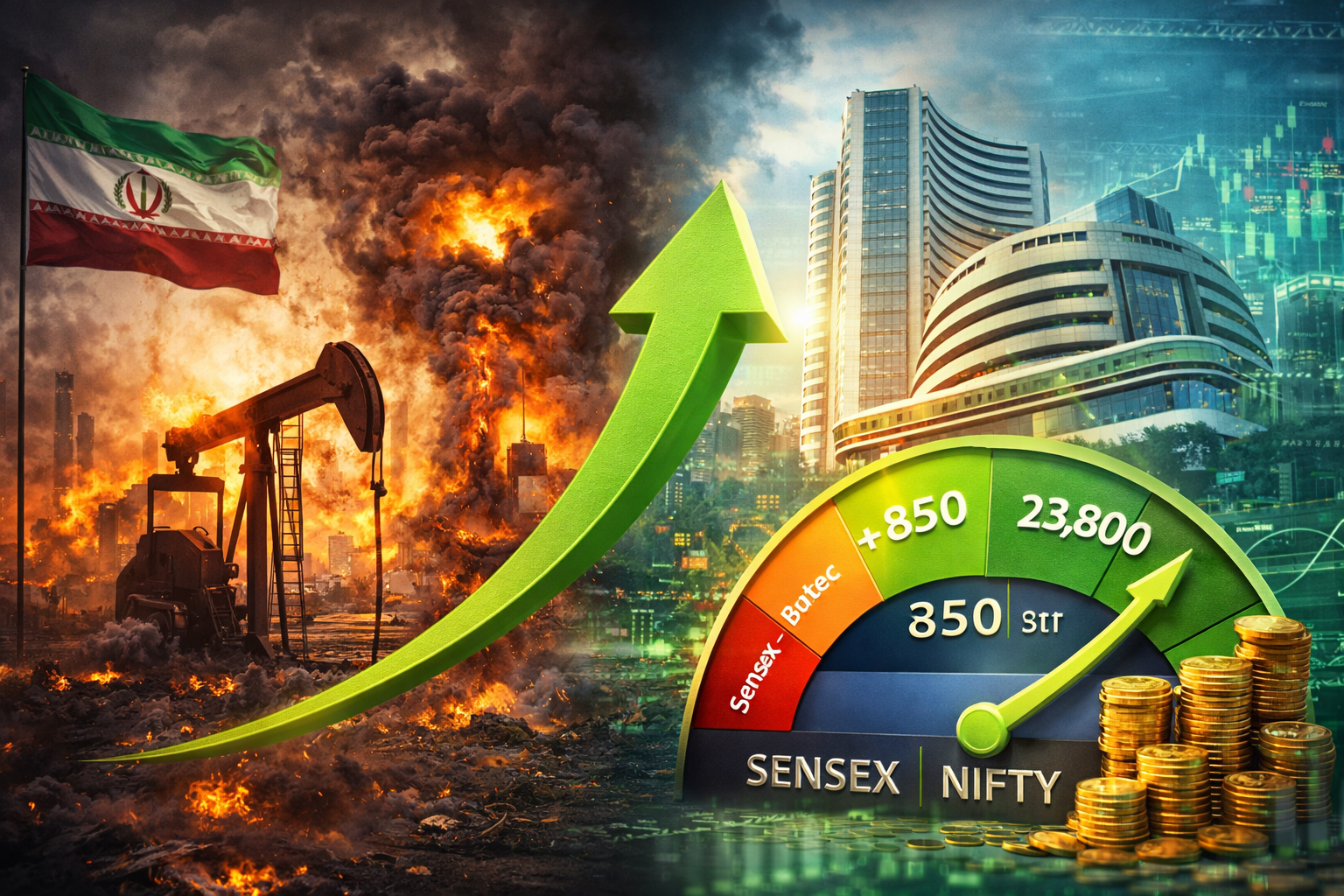

Indian stock markets witnessed a significant rally on March 25, 2026, with Nifty50 surging past 23,250 and BSE Sensex gaining over 1,100 points as oil prices dropped below $100 per barrel amid growing hopes of a ceasefire between the United States and Iran. The unexpected diplomatic breakthrough has brought relief to investors worried about the prolonged West Asia conflict.
Market Performance: A Welcome Recovery
In early trading on Wednesday, March 25, the Indian stock market displayed remarkable strength, reversing weeks of pessimism triggered by soaring crude oil prices and geopolitical tensions. The Nifty50 index opened at 23,126.65, marking a gain of 214 points or 0.94% from the previous close. By mid-morning, the index had surpassed the psychologically important 23,250 level, signaling renewed investor confidence.
The BSE Sensex followed suit, rising over 1,100 points in opening trade, reflecting broad-based buying across sectors. The rally comes after weeks of volatility that saw the Sensex plunge over 2,000 points earlier this month when oil prices spiked to $113 per barrel following escalation in the US-Iran conflict.
Oil Price Collapse: The Key Driver
The primary catalyst for this market recovery is the dramatic fall in crude oil prices. Brent crude, which had reached alarming levels of $113 per barrel on March 23, dropped more than 5% on Wednesday to slip below the $100 mark. This significant decline is attributed to reports that the United States has presented Iran with a comprehensive 15-point proposal to end the ongoing conflict.
According to multiple sources, including Axios and Reuters, Washington has been engaged in indirect negotiations with Tehran through mediators including Oman, Egypt, and Pakistan. The proposed ceasefire framework reportedly includes provisions for:
- Immediate cessation of hostilities
- Reopening of the Strait of Hormuz for international shipping
- Guarantees against future military strikes
- Potential compensation for war damages
- Discussion on Iran’s nuclear program
The prospect of resolving the Strait of Hormuz crisis has been particularly well-received by markets. This critical waterway, through which approximately 20-30% of the world’s oil supply passes, has been partially blocked since the conflict began, causing severe disruptions to global energy supplies.
Impact on Indian Economy: Relief from Multiple Fronts
For India, which imports nearly 85% of its crude oil requirements, the fall in oil prices brings relief on multiple fronts:
1. Inflation Control
Lower crude oil prices directly translate to reduced input costs across industries, from transportation to manufacturing. This provides breathing room for the Reserve Bank of India (RBI) to maintain its current monetary policy stance without the pressure of combating oil-driven inflation.
2. Fiscal Deficit Management
The Indian government’s subsidy burden on petroleum products decreases significantly when international oil prices moderate. This allows for better fiscal deficit management and potentially more resources for development spending.
3. Current Account Balance
India’s current account deficit, which had widened alarmingly as oil prices crossed $110 per barrel, stands to improve substantially. A reduction in the oil import bill directly strengthens the rupee, which had plummeted to a record low of 93.94 against the dollar earlier this month.
4. Corporate Profitability
Sectors heavily dependent on fuel—aviation, logistics, paints, and chemicals—stand to benefit immediately from lower input costs, improving their profit margins and overall financial health.
Sectoral Performance: Winners and Losers
The market rally on March 25 was notably sectoral:
Major Gainers:
- Aviation stocks led the charge, with airlines benefiting directly from lower jet fuel costs
- Auto and auto component companies saw significant buying as reduced fuel prices improve consumer sentiment
- Paint and chemical companies gained on expectations of improved margins
- Consumer discretionary stocks rose on hopes of improved spending power
Notable Losers:
- Oil Marketing Companies (OMCs) such as BPCL, HPCL, and Indian Oil Corporation fell sharply, declining over 8% in early trade. The drop reflects concerns that these companies may not immediately pass on the benefits of lower crude prices to consumers, potentially leading to inventory losses
- Oil exploration companies also witnessed selling pressure as lower oil prices impact their revenue projections
Diplomatic Developments: The Road to Peace?
The potential breakthrough in US-Iran negotiations represents a significant shift from the confrontational stance that has characterized the conflict since late February. The war, which began following the killing of Iran’s Supreme Leader Ayatollah Ali Khamenei in joint US-Israeli strikes on February 28, has already lasted over three weeks and caused extensive damage to regional infrastructure.
Trump’s Shifting Stance:
Former and current US President Donald Trump, who had initially imposed a two-month ultimatum on Iran to dismantle its nuclear program, has notably softened his rhetoric. On March 23, Trump announced a five-day postponement of his deadline for reopening the Strait of Hormuz, citing “very good and productive conversations” with Iran.
Interestingly, Iranian officials have publicly denied that any such talks are taking place, creating confusion about the actual state of negotiations. Iran’s Foreign Minister Abbas Araghchi firmly rejected claims of ceasefire discussions, insisting that Iran seeks a permanent end to the war rather than a temporary pause.
Iran’s Conditions:
Iranian President Masoud Pezeshkian has outlined specific conditions for ending hostilities:
- Recognition of Iran’s sovereign rights
- Compensation for war damages (amount unspecified)
- Solid guarantees against future US and Israeli military strikes
- Safe passage through the Strait of Hormuz under specific protocols
- No US military presence or operations launched from neighboring Gulf states
Pezeshkian’s unprecedented apology to neighboring countries affected by Iranian retaliatory strikes signals a potential willingness to de-escalate, even as the Islamic Revolutionary Guard Corps (IRGC) continues to maintain a defiant posture.
India’s Strategic Response: All-Party Meeting Called
Recognizing the serious implications of the West Asia crisis, the Government of India has convened an all-party meeting on March 25 at 5 PM to discuss the situation. Defence Minister Rajnath Singh is expected to chair the meeting, with Leaders of Opposition and senior party leaders from across the political spectrum invited to attend.
This follows Prime Minister Narendra Modi’s detailed statements in both the Lok Sabha and Rajya Sabha on March 24, where he:
- Described the situation as “worrisome” with potential long-term impact
- Called for national unity similar to the Covid-19 pandemic response
- Emphasized India’s dependence on West Asia for crude oil and gas imports
- Highlighted concerns about Indian nationals residing in the conflict zone
- Advocated for dialogue and diplomacy as the only path to resolution
- Stressed the importance of reopening the Strait of Hormuz
PM Modi’s statement that the West Asia war has created a “serious energy crisis” underscores the gravity of the situation for India. The region not only supplies a large portion of India’s energy needs but also serves as a crucial trade route for Indian exports and imports.
Opposition parties, while supportive of the government’s diplomatic efforts, have criticized Modi for not explicitly condemning the US-Israeli airstrikes on Iran. Congress and other parties have demanded detailed parliamentary discussions on the issue, viewing the all-party meeting as potentially inadequate for addressing such a significant national security and economic concern.
Regional Impact and India’s Energy Security
The West Asia conflict has exposed India’s vulnerability to energy supply disruptions. Currently, India sources crude oil and natural gas from multiple countries in the region:
- Saudi Arabia: India’s largest oil supplier
- Iraq: Second-largest supplier
- UAE: Significant gas supplier
- Kuwait, Oman, Qatar: Other important energy partners
PM Modi revealed that India imports energy from 41 different countries, a diversification strategy aimed at reducing dependence on any single source. However, the concentration of supply routes through the Strait of Hormuz remains a critical vulnerability.
The government has reportedly been reviewing strategic petroleum reserves and exploring alternative supply arrangements with Russia, the United States, and Latin American countries. Additionally, India has accelerated discussions with Gulf nations not directly involved in the conflict to ensure uninterrupted energy supplies.
Market Outlook: Cautious Optimism
While the March 25 rally has brought cheer to investors, analysts urge caution. The sustainability of this market recovery depends on several factors:
- Actual Ceasefire Implementation: Markets have rallied on hopes rather than confirmed agreements. If negotiations collapse, oil prices could spike again
- Iran’s Nuclear Stance: Whether Iran accepts US demands regarding its nuclear program remains unclear
- Regional Stability: Even if US-Iran tensions ease, the broader regional situation involving Israel and Iranian proxy groups could continue to create volatility
- Global Economic Impact: Prolonged high interest rates in developed economies continue to pose challenges for emerging market equities
Market experts suggest that the Nifty50 needs to sustain above the 23,500 level for several sessions to confirm a trend reversal. Until then, the current rally may be viewed as a relief bounce rather than the beginning of a sustained bull run.
Conclusion: A Fragile Hope
The March 25 market surge reflects the intense relief felt by investors at the prospect of de-escalation in the West Asia conflict. The drop in oil prices below $100 per barrel addresses one of the most pressing concerns for the Indian economy—runaway energy costs that threaten inflation control, fiscal stability, and economic growth.
However, the path to lasting peace remains uncertain. The contradictory signals from Washington and Tehran, the complex regional dynamics involving Israel and Iranian proxies, and the deep-seated mistrust between the parties suggest that negotiations, if they are indeed occurring, will be extremely challenging.
For India, the focus must remain on ensuring energy security through continued diversification of supply sources, building strategic reserves, and accelerating the transition to renewable energy. The current crisis serves as a stark reminder that India’s economic destiny remains tied to events in distant regions, making strategic autonomy and energy independence not just policy goals but existential necessities.
As markets celebrate this temporary reprieve, policymakers and citizens alike must recognize that sustainable economic growth requires structural solutions to India’s energy challenges—solutions that reduce vulnerability to global geopolitical shocks and build resilience for the long term.