
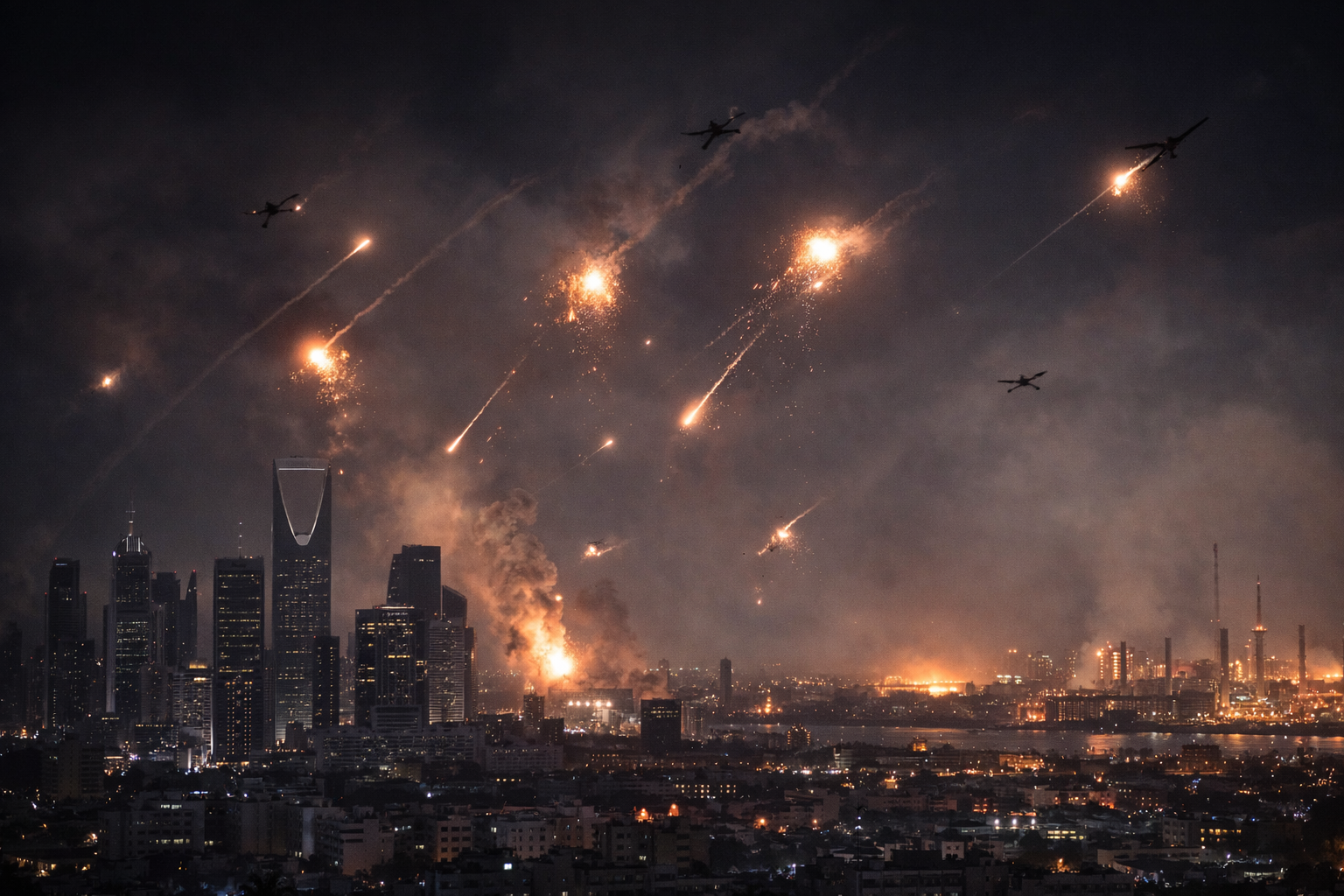

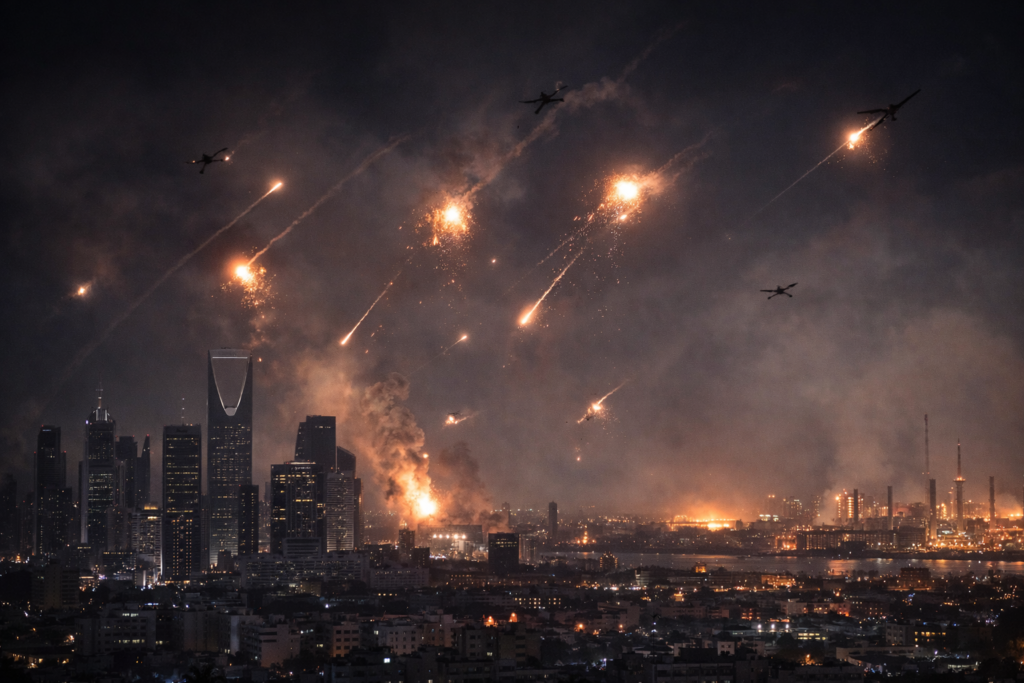
On day 23 of the devastating Iran-US-Israel conflict, the humanitarian toll continues to mount as Iranian Health Ministry officials report that the death count has surpassed 1,500, with over 20,984 individuals injured. Meanwhile, regional powers are being drawn deeper into the crisis, with Saudi Arabia intercepting a record 92 Iranian drones in a single weekend—the highest number of aerial threats faced by the kingdom since the conflict began on March 1, 2026.
Death Toll and Humanitarian Crisis
According to the Iranian Health Ministry’s latest figures released on March 22, at least 1,500 people have been killed since US and Israeli forces launched coordinated strikes on Iran on February 28. The casualties span a wide demographic, ranging from an eight-month-old infant to an 88-year-old elder.
Among the dead:
- 200 women have been killed
- 168 children lost their lives, many in the horrific attack on Shajareh Tayyebeh elementary school in Minab, Hormozgan Province
- 55 healthcare workers have been injured, with 11 fatalities including 4 doctors, 2 nurses, and 3 emergency responders
- 7 hospitals have been forced to evacuate
- 36 ambulances have been damaged or destroyed
Human rights organizations paint an even grimmer picture. Hengaw Organization for Human Rights documents that at least 5,300 people were killed in the first 18 days alone, including 511 civilians and 4,789 Iranian military personnel. The NGO HRANA reported 3,114 deaths by March 17, noting that “military casualties are significantly higher than reported figures” due to government censorship of sensitive military information.
The toll extends beyond Iran’s borders. In Israel, 18 people have been killed and over 3,730 injured from Iranian retaliatory strikes, with a ballistic missile attack on Beit Shemesh in central Israel claiming nine lives on March 1.
Saudi Arabia Under Siege: 92 Drones Intercepted in One Weekend
Saudi Arabia has emerged as a primary target of Iranian retaliation, facing an unprecedented barrage of drone and missile attacks. The kingdom’s Defense Ministry reported that its air defense systems intercepted 92 drones between Friday and Saturday alone, with 51 shot down on Saturday—surpassing all of Friday’s intercepts.
The attacks have concentrated on Saudi Arabia’s Eastern Province, home to the world’s largest oil reserves and critical energy infrastructure including the Aramco facilities. Saudi Defense Ministry spokesman Maj. Gen. Turki al-Maliki confirmed that interceptions occurred over Riyadh, Al-Kharj governorate, and across the Eastern Province.
On Saturday evening, Saudi air defenses also destroyed six ballistic missiles launched toward Al-Kharj. The intensity of attacks marks a dramatic escalation—Iran has shifted from sporadic strikes to sustained aerial campaigns designed to overwhelm Gulf defenses and strike at the heart of the region’s energy sector.
The timing is particularly concerning: these attacks followed Israel’s bombing of Iran’s South Pars gas field earlier in the week, one of the world’s largest natural gas reserves. Iran’s strikes on Saudi energy infrastructure appear to be both retaliation and a strategic move to disrupt global energy markets.
UAE Faces Relentless Assault
The United Arab Emirates has borne the brunt of Iranian attacks outside of Iran itself. By March 20, the UAE Defense Ministry reported intercepting:
- 338 ballistic missiles
- 1,740 drones
- 15 cruise missiles
Despite the high interception rate, falling debris and projectiles that evade defenses have caused significant damage. Eight people have been killed, including two military personnel and six foreign nationals from Pakistan, Nepal, Bangladesh, and Palestine. An additional 158 people have been injured, including UAE, Egyptian, and Turkish citizens.
Attacks have struck civilian areas in Abu Dhabi and Dubai, with debris from intercepted missiles starting fires at Jebel Ali port and a drone hitting a luxury hotel in Jumeirah. The UAE government has warned that it “reserves its complete right to respond to this escalation and take necessary actions to safeguard its territory, citizens, and residents.”
Analysts suggest the UAE is now considering military strikes on Iranian missile sites, a move that would dramatically expand the conflict beyond the US-Israel coalition.
Regional Ripple Effects
Qatar: Natural gas production has been severely curtailed, with most facilities shut down for safety. Qatar supplies approximately 8% of global LNG, and the production halt is already impacting Asian and European energy markets.
Kuwait and Bahrain: Both have faced Iranian drone and missile strikes, though most have been intercepted. Kuwait reported damage to an oil facility near the Iranian border.
Oman: Despite historically maintaining neutrality and good relations with both Iran and the West, Oman has faced strikes as Iran’s campaign expands.
Iran’s Military Strategy: Overwhelming Gulf Defenses
Iran’s tactics appear designed to saturate and exhaust the air defense systems of Gulf states. By launching waves of low-cost drones alongside more sophisticated ballistic missiles, Iran forces adversaries to expend expensive interceptor missiles—a strategy known as “cost-asymmetry warfare.”
IRGC Aerospace Force chief Seyed Majid Moosavi claimed on Saturday that Iran “dominates the skies” over Israeli territory and warned that upcoming attacks would intensify. While this is likely propaganda given Israel’s advanced air defenses, it signals Tehran’s intent to continue escalation despite heavy losses from US-Israeli strikes.
US and Israeli Response
The Pentagon reported that coalition forces have struck over 2,400 Iranian military sites in 23 days, including:
- 187 missile production and storage facilities
- 94 naval assets
- 312 air defense installations
- 68 drone manufacturing sites
Despite these strikes, Iran retains enough capability to launch sustained attacks across the region, suggesting that either US intelligence underestimated Iran’s arsenal or Tehran has successfully dispersed and hidden critical assets.
Economic and Energy Fallout
The conflict’s economic toll is mounting:
- Brent crude remains above $112 per barrel, a 35% increase since the war began
- Over 3,000 flights have been cancelled across the Middle East
- Insurance premiums for Gulf shipping have increased tenfold
- The closure of the Strait of Hormuz has cost the global economy an estimated $18 billion in three weeks
- Qatar’s LNG production shutdown is causing price spikes in Asian spot markets
European countries are particularly vulnerable, as natural gas futures have spiked 42% since March 1.
Humanitarian Concerns Mount
International humanitarian organizations have called for immediate ceasefires to allow aid to reach affected populations in Iran. The IAEA continues to monitor Iran’s nuclear facilities, expressing grave concern over military operations near the Bushehr nuclear plant.
The UN Security Council remains deadlocked, with Russia and China blocking resolutions condemning Iran, while the US has vetoed calls for an immediate ceasefire, insisting that Iran must first cease attacks on regional countries and commit to dismantling its nuclear program.
What’s Next?
As day 23 concludes with no signs of de-escalation, several dangerous scenarios loom:
- Gulf States Enter the War: If the UAE or Saudi Arabia launch retaliatory strikes on Iranian territory, the conflict transforms into a full regional war.
- Hormuz Strait Closure Deepens: Further disruptions to energy flows could trigger global recession.
- Escalation to Nuclear Threats: Trump’s ultimatum targeting the Bushehr nuclear plant could provoke Iran to accelerate any covert nuclear weapons development.
- Humanitarian Catastrophe: With hospitals overwhelmed and aid blocked, civilian deaths could spiral into the tens of thousands.
The international community watches anxiously as the Iran war enters its fourth week with no diplomatic breakthrough in sight. For the people of Iran, Israel, and the Gulf states, each day brings new tragedy as the death toll mounts and the specter of wider war looms ever larger.