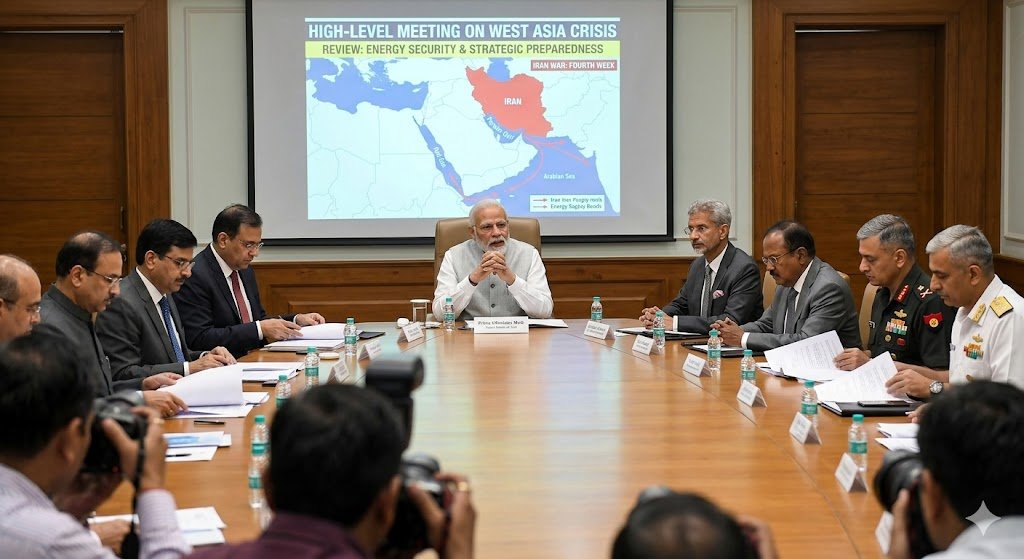

The Government of India has convened a crucial all-party meeting on March 25, 2026, at 5 PM to discuss the escalating West Asia crisis and its far-reaching implications for India’s energy security, economy, and national security. The meeting, expected to be chaired by Defence Minister Rajnath Singh, comes in the wake of Prime Minister Narendra Modi’s detailed statements in Parliament highlighting the serious nature of the ongoing US-Iran conflict.
Understanding the West Asia Crisis
The West Asia region is currently witnessing one of its most severe geopolitical crises in recent history. The conflict, which began on February 28, 2026, following the killing of Iran’s Supreme Leader Ayatollah Ali Khamenei in joint US-Israeli military strikes, has escalated into a full-scale war that threatens to destabilize the entire Middle East.
The crisis has already lasted for more than three weeks, causing extensive damage to regional infrastructure and creating severe disruptions to global energy supplies. The partial blockade of the Strait of Hormuz, a critical waterway through which 20-30% of the world’s oil supply passes, has sent shockwaves through global energy markets and economies.
PM Modi’s Parliamentary Address: A Call for Unity
Prime Minister Narendra Modi addressed both the Lok Sabha and Rajya Sabha on March 24, providing comprehensive briefings on the developments in West Asia and their potential impact on India. His statements were marked by a tone of serious concern and a call for national unity reminiscent of India’s response during the Covid-19 pandemic.
Key Points from PM Modi’s Address:
1. Long-Term Challenge Assessment
PM Modi emphasized that the difficult global conditions caused by the West Asia conflict may persist for an extended period. He urged the nation to remain prepared and united, drawing parallels with India’s collective response during the pandemic.
2. Multi-Dimensional Impact
The Prime Minister outlined various concerns arising from the crisis:
- Energy Security: Disruptions to crude oil and gas supplies
- Economic Impact: Rising fuel costs affecting all sectors of the economy
- National Security: Regional instability affecting defense preparedness
- Humanitarian Crisis: Safety of Indian nationals residing in the conflict zone
- Trade Routes: Disruption to India’s maritime trade connections
3. Diplomatic Stance
PM Modi reiterated India’s position that dialogue and diplomacy remain the only path to resolution. He stressed the urgent need for de-escalation and the reopening of the Strait of Hormuz to ensure uninterrupted energy supplies.
4. Energy Crisis Declaration
In a significant statement, the Prime Minister acknowledged that the West Asia war has created a “serious energy crisis” that is a cause of deep concern for India, given the country’s heavy dependence on the region for energy imports.
5. Trade Relations Importance
PM Modi highlighted India’s extensive trade relations with West Asian countries, noting that a large portion of India’s crude oil and gas needs are met by this war-affected region. He also emphasized that the region provides crucial trade routes for Indian exports and imports to other destinations.
The All-Party Meeting: Objectives and Expectations
The all-party meeting scheduled for March 25 at 5 PM represents a significant step in building consensus on India’s response to the West Asia crisis. Defence Minister Rajnath Singh is expected to chair the meeting, which will be attended by Leaders of Opposition and senior leaders from across the political spectrum.
Meeting Agenda (Expected):
1. Security Briefing
Defence Minister Rajnath Singh is likely to provide a comprehensive briefing on:
- Current situation in West Asia and potential escalation scenarios
- Impact on Indian nationals in the region (estimated hundreds of thousands)
- Security implications for India’s defense and strategic interests
- Contingency plans for evacuation of Indian citizens if necessary
2. Energy Security Discussion
Expected focus areas:
- Assessment of current oil and gas supply situation
- Strategic petroleum reserve status and utilization plans
- Alternative supply arrangements and diversification strategies
- Price control measures and subsidy implications
3. Economic Impact Assessment
Likely topics:
- Effect on inflation and economic growth projections
- Impact on fiscal deficit due to increased subsidy burden
- Currency stability concerns (rupee depreciation)
- Measures to protect vulnerable sectors and populations
4. Diplomatic Initiatives
Expected discussion on:
- India’s bilateral engagements with stakeholders
- Multilateral diplomatic efforts and participation
- Communication channels with all parties to the conflict
- India’s role as a potential mediator or facilitator
5. Preparedness Measures
Anticipated coverage:
- Covid-like preparedness protocols for long-term crisis management
- Inter-ministerial coordination mechanisms
- State-level implementation strategies
- Public communication and awareness campaigns
Opposition’s Response and Demands
While opposition parties have generally supported the government’s diplomatic efforts, they have raised several concerns and demands:
Congress Party’s Position:
The Congress and other opposition parties have questioned PM Modi for not explicitly condemning the US-Israeli airstrikes on Iran. They have characterized his statement as “a master class in self-boasts, cowardice and partisan dialogue-baazi” (rhetoric).
Demand for Parliamentary Discussion:
Opposition sources indicate they will insist on detailed discussions in both Houses of Parliament, viewing the all-party meeting as potentially inadequate for addressing such a significant national security and economic concern. They argue that parliamentary scrutiny and debate are essential for transparency and accountability.
Questions on Energy Preparedness:
Opposition leaders are expected to question the government on:
- Why strategic reserves were not built up adequately despite previous warnings
- The status of alternative energy transition plans
- Measures to protect common citizens from fuel price hikes
- Transparency in oil pricing mechanisms
Concerns About Indian Nationals:
There are demands for clear evacuation plans and safety protocols for Indian workers and residents in the conflict zone, particularly in Gulf countries affected by the hostilities.
India’s Energy Vulnerability: The Critical Context
The West Asia crisis has exposed India’s significant vulnerability to energy supply disruptions. Understanding this vulnerability is crucial to appreciating the gravity of the current situation.
India’s Energy Import Dependence:
Crude Oil Imports:
- India imports approximately 85% of its crude oil requirements
- Total annual import: Over 200 million tonnes
- Import bill: Approximately $100-120 billion annually (depending on prices)
Major Suppliers from West Asia:
- Iraq: ~23% of India’s oil imports (largest supplier)
- Saudi Arabia: ~18% (second-largest supplier)
- UAE: ~11%
- Kuwait: ~4%
- Iran: Trade has been limited due to US sanctions, but historically significant
Natural Gas Imports:
- Qatar, UAE, and other Gulf nations are significant LNG suppliers
- Critical for power generation and industrial use
PM Modi’s Diversification Strategy:
The Prime Minister revealed that India currently imports energy from 41 different countries, reflecting a conscious diversification strategy. However, the concentration of supply routes through the Strait of Hormuz remains a critical vulnerability regardless of supplier diversity.
Alternative Sources:
- Russia: Increased imports following Ukraine conflict sanctions
- United States: Growing LNG imports
- Latin America: Venezuelan and Brazilian oil
- Africa: Nigerian and Angolan crude
Despite this diversification, West Asian suppliers remain dominant, and any prolonged disruption could have severe consequences.
Economic Implications: A Comprehensive Analysis
The West Asia crisis presents multiple economic challenges for India:
1. Inflation Pressure
Current Situation:
- Crude oil prices spiked to $113 per barrel before recent ceasefire hopes brought it below $100
- Each $10 increase in crude oil prices adds approximately 0.3-0.4% to inflation
- Retail fuel prices have already increased significantly in recent weeks
Ripple Effects:
- Higher transportation costs affecting all goods and services
- Increased input costs for manufacturing and agriculture
- Reduced consumer purchasing power and demand
2. Fiscal Deficit Concerns
Subsidy Burden:
- Government bears significant burden from fuel subsidies to protect consumers
- Estimated additional expenditure of ₹50,000-70,000 crore annually if high oil prices persist
- Pressure on budget allocations for other development priorities
Revenue Implications:
- Potential reduction in excise duties to control fuel prices
- Impact on tax revenues from slowing economic activity
3. Current Account Deficit
Widening Deficit:
- India’s current account deficit widened significantly as oil prices crossed $110/barrel
- Higher oil import bill directly worsens trade balance
- Estimated additional outflow of $15-20 billion annually if prices remain elevated
Currency Pressure:
- Rupee depreciated to record low of 93.94 against the dollar
- Further weakening possible if oil crisis persists
- Makes all imports more expensive, compounding inflation
4. Growth Impact
GDP Growth Projections:
- RBI and other agencies may revise growth forecasts downward
- High oil prices historically correlated with slower economic growth
- Investment and consumption both affected by uncertainty
Sectoral Challenges:
- Aviation sector: Jet fuel costs are largest operational expense
- Logistics and transportation: Profit margins severely compressed
- Chemicals and paints: Input cost increases
- Power generation: Gas-based plants facing viability issues
Defense and Security Considerations
The all-party meeting is expected to address critical defense and security dimensions:
Regional Security Assessment:
- Gulf Cooperation Council (GCC) Stability: Impact on India’s relations with Saudi Arabia, UAE, and other Gulf allies
- Iran Relations: Balancing traditional ties with current geopolitical realities
- US-India Strategic Partnership: Navigating differences over Iran policy
- Israel-India Relations: Defense and technology cooperation amid conflict
Indian Diaspora Safety:
- Over 8.5 million Indians reside in Gulf countries
- Many in conflict-affected areas or potential conflict zones
- Evacuation preparedness and contingency planning crucial
- Previous successful evacuation operations (Yemen, Afghanistan) provide templates
Maritime Security:
- Indian Navy’s role in protecting shipping lanes
- Coordination with international naval forces
- Protection of Indian flagged vessels and personnel
India’s Diplomatic Initiatives
India has been actively engaged diplomatically to promote de-escalation:
Bilateral Engagements:
- Dialogue with US administration on conflict resolution
- Communication with Iran on de-escalation
- Discussions with Gulf allies on energy security
- Coordination with Russia and China through multilateral platforms
Multilateral Forums:
- Statements at UN Security Council
- Participation in BRICS discussions on regional stability
- Shanghai Cooperation Organization consultations
- G20 coordination on energy market stability
Mediation Role:
While not formally a mediator, India’s relationships with all parties position it as a potential facilitator for dialogue. PM Modi’s conversations with leaders from all sides demonstrate this approach.
Looking Ahead: Challenges and Opportunities
As the all-party meeting convenes, India faces several challenges and potential opportunities:
Immediate Challenges:
- Managing energy supply continuity
- Controlling inflation without derailing growth
- Maintaining fiscal discipline amid rising subsidies
- Protecting vulnerable populations from price shocks
- Ensuring safety of Indian nationals abroad
Medium-Term Imperatives:
- Accelerating renewable energy transition
- Building strategic petroleum reserves to at least 90-day capacity
- Developing alternative supply chains and routes
- Strengthening regional diplomatic relationships
- Enhancing energy efficiency across sectors
Strategic Opportunities:
- Demonstrate India’s role as a responsible global stakeholder
- Strengthen strategic partnerships with multiple nations
- Accelerate energy self-reliance initiatives
- Position India as a voice for Global South concerns
- Build consensus on reformed global energy governance
Conclusion: Unity in Crisis
The all-party meeting called by the Government of India represents a crucial moment in the nation’s response to the West Asia crisis. PM Modi’s appeal for unity and Covid-like preparedness underscores the seriousness with which the government views this challenge.
The crisis exposes India’s continued vulnerability to external energy shocks despite years of economic growth and development. However, it also provides an opportunity to accelerate structural reforms in energy policy, enhance strategic autonomy, and demonstrate mature crisis management.
The success of the all-party meeting will be measured not just by the consensus achieved but by the concrete action plan that emerges. India needs a comprehensive strategy that addresses immediate challenges while building long-term resilience.
As the nation watches this crucial meeting, the hope is that political leaders will rise above partisan differences to forge a unified national response. The stakes are simply too high—involving energy security, economic stability, and the well-being of millions of Indians both at home and abroad—for anything less than complete national solidarity.
The West Asia crisis is a test of India’s maturity as a rising global power. How the nation navigates this challenge will shape not only its immediate future but also its credibility and influence on the world stage for years to come.