
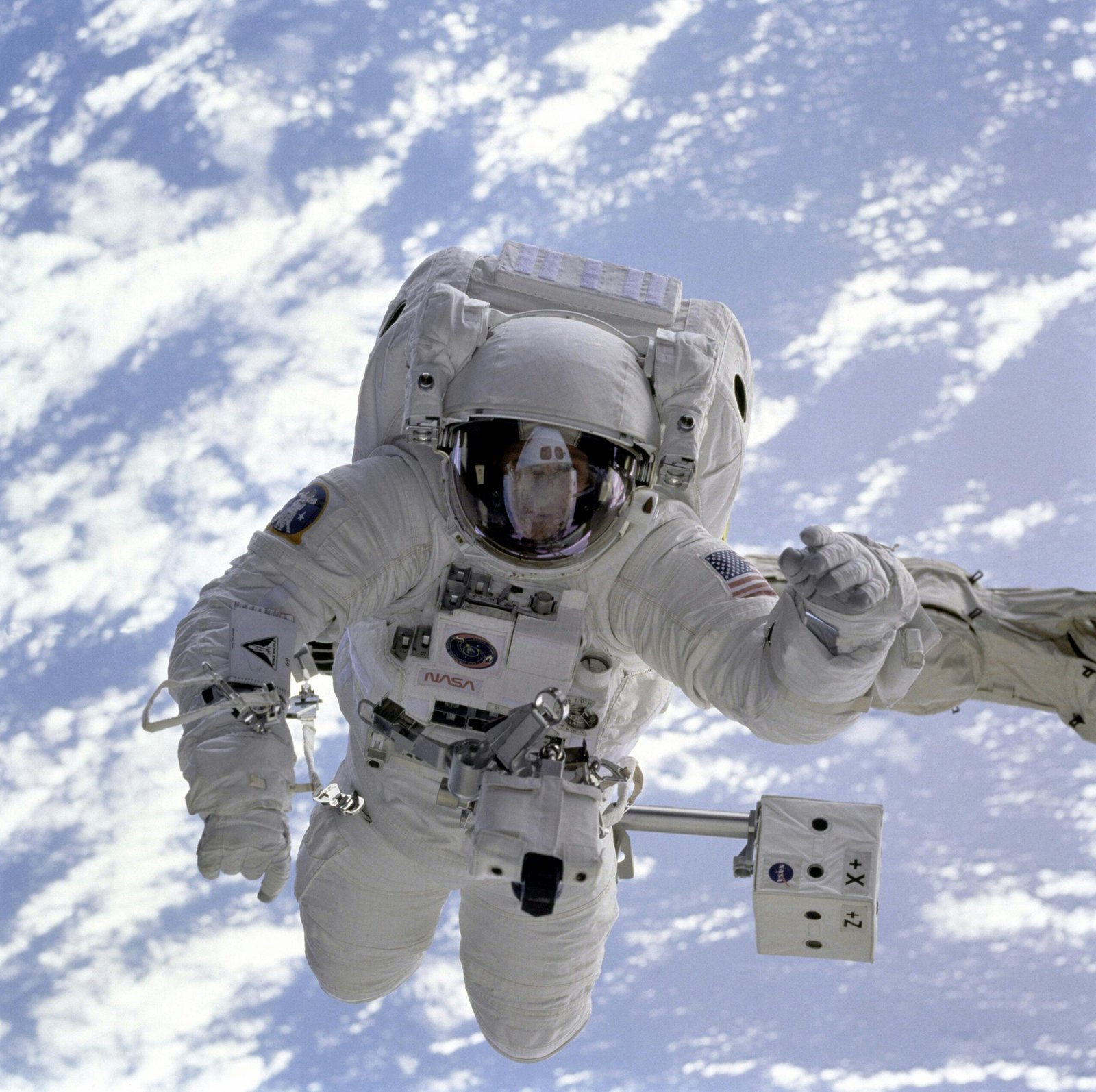

NASA astronaut Sunita Williams has successfully returned to Earth on March 18, 2025, after spending 286 days aboard the International Space Station (ISS). What was supposed to be an 8-day mission turned into a 9-month odyssey due to technical issues with Boeing’s Starliner spacecraft.
The Crew-9 mission ended with a dramatic splashdown in the Atlantic Ocean, marking the end of one of the most extended and challenging stays in space for the veteran astronaut who completed 4,577 orbits around Earth, traveling a staggering 195.2 million kilometers.
The Extended Mission: From 8 Days to 286 Days
When Sunita Williams and her fellow astronaut Butch Wilmore launched aboard Boeing’s Starliner spacecraft on June 5, 2024, they expected to be back on Earth within eight days. However, the mission took an unexpected turn when the Starliner developed multiple technical faults, including thruster failures and helium leaks.
NASA deemed it too risky to bring the astronauts back on the troubled Starliner, which ultimately returned to Earth empty. This decision extended Williams’ and Wilmore’s stay to nine months, making it one of the longest unplanned missions in recent space history.
During this extended period, Williams didn’t just wait for her ride home. She actively participated in Expeditions 71 and 72, conducting vital scientific research, performing maintenance work, and breaking spacewalking records with over 62 hours of extravehicular activity.
Record-Breaking Achievements
Sunita Williams’ latest mission added several impressive achievements to her already stellar career:
- Total Space Time: With this mission, Williams has accumulated 608 days in space across three missions
- Spacewalk Record: She set a record as the first woman astronaut to complete the longest cumulative spacewalk time of 62 hours and 6 minutes
- Orbital Achievement: Completed 4,577 orbits around Earth during this single mission
- Distance Traveled: Covered 195.2 million kilometers in space
These accomplishments cement Williams’ position as one of the most experienced female astronauts in history and demonstrate her exceptional dedication to space exploration.
The Dramatic Return Journey
The return journey aboard SpaceX’s Dragon spacecraft was nothing short of spectacular. As the capsule hurtled through Earth’s atmosphere at tremendous speeds, friction with the thick atmosphere created a plasma wall outside the spacecraft, generating temperatures exceeding 1,900 degrees Celsius.
The Crew-9 mission, which included NASA astronaut Nick Hague, Williams, Wilmore, and Roscosmos cosmonaut Aleksandr Gorbunov, successfully splashed down in the Atlantic Ocean waters. Upon landing, the astronauts waved and smiled, showing remarkable spirits despite the physical challenges of readjusting to Earth’s gravity.
Physical and Psychological Challenges
Returning to Earth after 286 days in microgravity presents severe physical and psychological challenges. Williams and her crewmates are likely experiencing:
Physical Effects:
- Muscle atrophy from prolonged weightlessness
- Bone density loss
- Cardiovascular deconditioning
- Balance and coordination difficulties
- Vision changes due to fluid shifts
Adaptation Process:
Medical experts indicate that astronauts typically require several weeks to months to fully readjust to Earth’s gravity. The rehabilitation process includes carefully monitored exercise regimens, nutritional support, and ongoing medical assessments.
SpaceX vs. Boeing: A Tale of Two Spacecraft
Williams’ extended mission has inadvertently highlighted the stark contrast between SpaceX and Boeing in the commercial crew program:
SpaceX Dragon:
- 100% success rate in crewed missions
- Reliable, reusable spacecraft
- Successfully completed multiple crew rotation missions
- Proven track record of safe returns
Boeing Starliner:
- Multiple delays and technical issues
- First spacecraft to launch with crew but return empty
- Ongoing certification challenges
- Significantly behind schedule
The successful return of Williams aboard SpaceX’s Dragon further solidifies the company’s position as NASA’s most reliable commercial partner for crew transportation.
Scientific Contributions During Extended Stay
Despite the unplanned nature of her extended mission, Williams made significant scientific contributions:
- Plant Growth Experiments: Conducted research on how plants grow in microgravity, crucial for future long-duration space missions
- Water Recovery Studies: Worked on advanced life support systems to recycle water more efficiently
- Human Physiology Research: Served as a test subject for studies on how extended spaceflight affects the human body
- Maintenance and Repairs: Performed critical repairs and upgrades to ISS systems
Political Spotlight and Public Interest
The prolonged stay of Williams in space became a political talking point, with President Donald Trump and SpaceX founder Elon Musk making it a focus of their criticism of the previous administration’s space policies.
Trump’s administration used the situation to highlight the superior performance of SpaceX, with Musk frequently by his side during public statements. The successful return has further boosted SpaceX’s reputation and its position in the commercial space industry.
Looking Ahead: India’s Space Ambitions
With the Crew-9 mission successfully completed, SpaceX is now shifting focus to the Axiom-4 mission scheduled for Spring 2025. This mission has particular significance for India, as Indian Air Force Group Captain Shubhanshu Shukla will pilot the Dragon spacecraft to the ISS on a 14-day mission.
This will mark India’s return to human spaceflight nearly half a century after Rakesh Sharma’s historic maiden flight in 1984. The mission represents a significant milestone in India’s growing space capabilities and international collaboration.
Williams’ Illustrious Career
Sunita Williams’ latest mission is just one chapter in her remarkable 27-year career with NASA:
- First Mission (2006-2007): Expedition 14/15, 195 days in space
- Second Mission (2012): Expedition 32/33, 127 days in space
- Third Mission (2024-2025): Crew-9/Expeditions 71-72, 286 days in space
Beyond her space missions, Williams has contributed significantly to NASA’s astronaut training programs, served in leadership roles, and inspired millions, particularly women and girls, to pursue careers in STEM fields.
Lessons Learned and Future Implications
The extended mission provides valuable lessons for future space exploration:
- Redundancy is Critical: Having multiple crew transportation systems is essential for astronaut safety
- Extended Stays are Manageable: Astronauts can adapt and remain productive during unplanned mission extensions
- Commercial Partnerships Matter: Reliable commercial partners like SpaceX are crucial for sustained space operations
- Human Resilience: Williams and her crew demonstrated remarkable mental and physical resilience
Conclusion
Sunita Williams’ safe return to Earth after 286 days marks the successful conclusion of an extraordinary chapter in space exploration history. What began as a routine 8-day certification flight transformed into a testament to human adaptability, engineering excellence, and the critical importance of reliable spacecraft.
As Williams undergoes her readjustment to life on Earth, her achievements continue to inspire the next generation of space explorers. Her record-breaking spacewalks, scientific contributions, and unwavering professionalism under challenging circumstances exemplify the very best of human space exploration.
The mission also underscores the growing dominance of SpaceX in commercial crew operations and sets the stage for exciting future missions, including India’s upcoming participation in the Axiom-4 mission. As humanity continues to push the boundaries of space exploration, stories like Sunita Williams’ remind us of the courage, dedication, and resilience required to venture beyond our home planet.
The Crew-9 mission ended with a dramatic splashdown in the Atlantic Ocean, marking the end of one of the most extended and challenging stays in space for the veteran astronaut.