
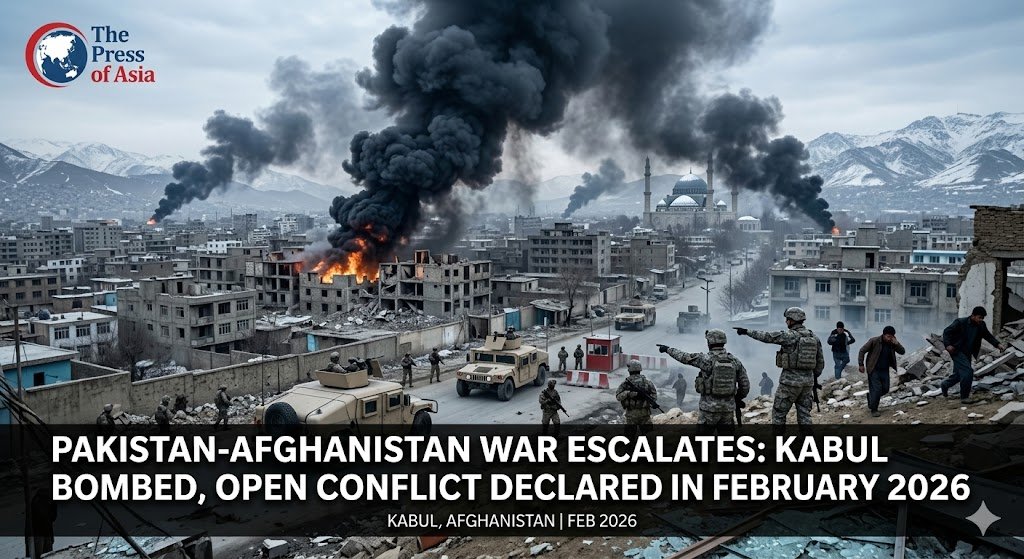
Pakistan and Afghanistan are locked in one of the most dangerous military confrontations in South Asia in recent years. On February 27, 2026, Pakistan’s Defence Minister Khawaja Asif declared “open war” against the Taliban-led Afghan government, following a series of deadly cross-border strikes that have shaken the region.
The conflict escalated rapidly when Pakistani forces launched air strikes and ground assaults targeting Taliban positions, command centers, and military installations in key Afghan cities including Kabul, Kandahar, and Paktia. The Taliban confirmed that Pakistani warplanes bombed targets in the Afghan capital — a move that marks an unprecedented escalation in bilateral tensions.
In retaliation, Taliban forces launched counter-strikes on Pakistani military facilities, including locations in Abbottabad and Swabi, demonstrating their capability to strike deeper inside Pakistani territory than previously anticipated. Taliban military commander stated that Pakistan should expect “an even more decisive response” in the coming days.
Both sides have reported significant casualties, though the numbers remain unverified and contradictory. Witnesses in Kabul reported hearing loud explosions followed by ambulance sirens across the city. Security footage shared by Pakistani officials showed bright flashes and heavy artillery exchanges along the border.
The root cause of this conflict lies in Pakistan’s long-standing accusation that the Afghan Taliban provides safe haven to Tehrik-e-Taliban Pakistan (TTP) militants — a charge the Taliban firmly denies. Iran, Russia, and China have jointly urged both nations to pursue diplomatic dialogue before the situation spirals further out of control.
The international community is watching closely as this nuclear-capable nation and its battle-hardened neighbor push the region toward a potentially catastrophic broader conflict. The United Nations has called for an immediate ceasefire.