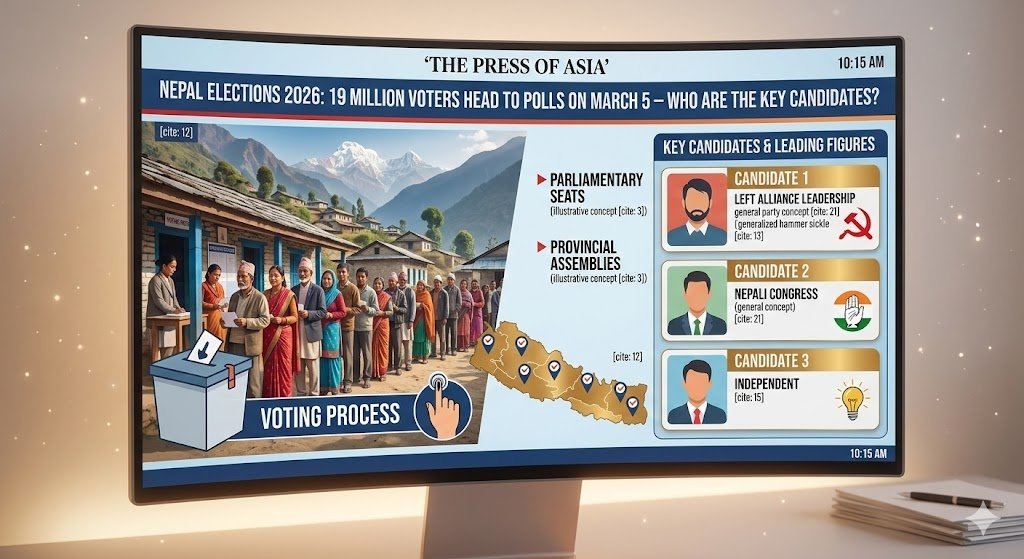
Nepal is gearing up for one of its most significant political events in recent years as nearly 19 million voters prepare to elect 275 members of the House of Representatives on March 5, 2026. This snap election was called after political turmoil led to the dissolution of parliament, marking a critical turning point for the Himalayan nation.
The election features three major political players vying for dominance: the Nepali Congress led by Sher Bahadur Deuba, the CPN (UML) under K.P. Sharma Oli, and the Maoist Centre led by Pushpa Kamal Dahal. Additionally, the Rastriya Swatantra Party (RSP) under Rabi Lamichhane has emerged as a significant new force, challenging the traditional political establishment.
Voters will elect MPs through a mixed system combining first-past-the-post constituencies and proportional representation. The Election Commission has issued strict guidelines, including a request that physical replicas of election symbols not be created or used during campaign activities.
This election comes at a particularly tense time for South Asia, with Nepal watching closely as its neighbors Pakistan and Afghanistan engage in open military conflict along their shared border. Nepal’s strategic location between India and China makes its political stability critically important for regional balance.
The BBC’s Nepal service reports that three days of public holiday have been declared to facilitate voter participation. Early results are expected by the evening of March 5, with full results anticipated within 48 hours. International observers from the United Nations and various democratic organizations are present to monitor the process.
Analysts say this election could herald a seismic shift in Nepali politics, with younger voters and anti-establishment sentiment potentially reshaping the traditional political landscape that has been dominated by the same parties for decades.