
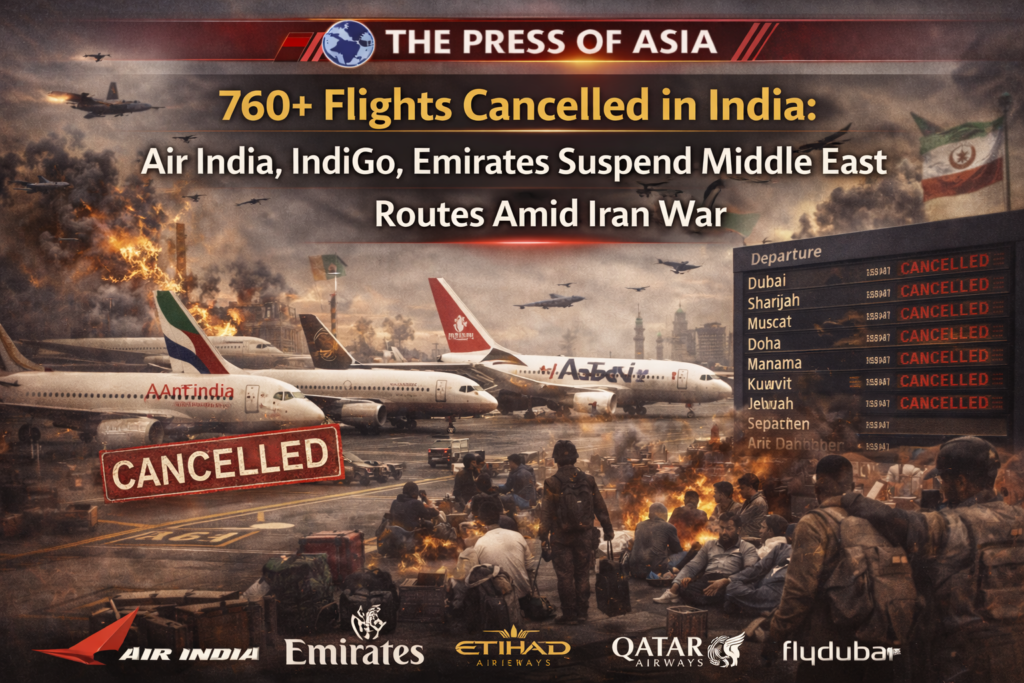
The ongoing US-Israel war on Iran has caused massive disruptions to global aviation, with over 760 flights cancelled in India alone within just two days. Major airlines including Air India, IndiGo, Emirates, Etihad Airways, and Qatar Airways have suspended or significantly curtailed their Middle East routes.
Air India has extended the temporary suspension of all flights to and from the Middle East until further notice. The airline cited “ongoing military operations in the region” and associated airspace closures as the primary reasons.
IndiGo, India’s largest airline, announced that it has resumed limited operations to Jeddah but suspended flights to several other Gulf destinations. The airline has activated emergency protocols to rebook passengers on alternative routes.
Affected Airlines and Routes:
- Air India: All UAE, Saudi Arabia, Kuwait, Bahrain, Oman, Qatar routes suspended
- IndiGo: Most Gulf routes suspended; limited Jeddah flights resumed
- Emirates: Operations from India significantly reduced
- Etihad Airways: Full suspension of operations
- Qatar Airways: All flights suspended pending airspace clearance
- Flydubai, Air Arabia: Operations halted
Passengers Stranded:
Thousands of passengers who were mid-journey or waiting for flights to the Gulf are stranded at major Indian airports including Indira Gandhi International Airport (Delhi), Chhatrapati Shivaji Maharaj International Airport (Mumbai), and Kempegowda International Airport (Bengaluru).
The Directorate General of Civil Aviation (DGCA) has issued advisories asking passengers to check with their airlines before proceeding to airports. The Ministry of Civil Aviation has set up helplines for distressed passengers.
Refund and Rebooking:
All major airlines have promised full refunds or free rebooking to affected passengers. Passengers are advised to contact their airline’s customer service or visit the official airline websites for updates.
Economic Impact:
The aviation disruption is costing Indian airlines and travel companies crores of rupees daily. The tourism industry, already impacted by uncertainty, is facing further losses as travel to the Gulf becomes impossible.
Airspace Situation:
Middle Eastern airspace remains volatile, with multiple countries closing their airspace to civilian traffic. Alternative routes via Central Asia or Africa add several hours to flight times and significantly increase operating costs, making many routes commercially unviable.