
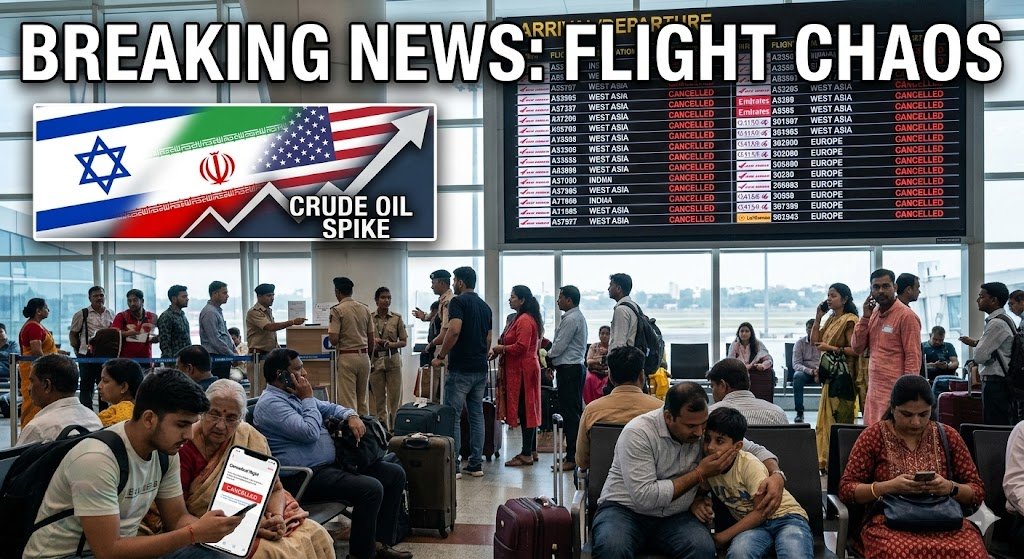
New Delhi: The escalating military conflict in West Asia has triggered a massive disruption in global aviation. On Tuesday, March 3, 2026, major Indian airports—including Delhi, Mumbai, Bengaluru, and Chennai—reported the cancellation of over 250 international flights.
Travelers Stranded Amid Rising Tensions
The disruption comes in the wake of intensifying strikes involving the U.S., Israel, and Iran. Since the crisis erupted on February 28, Indian carriers have been forced to cancel more than 1,100 flights. Travelers heading toward Europe and the Middle East are facing indefinite delays as airspace remains restricted for safety.
India Sets Up Quick Response Teams
In a tragic development, the Directorate General of Shipping confirmed that three Indian seafarers have lost their lives in the region. In response, the Indian government has constituted a Quick Response Team (QRT) to coordinate the evacuation and support of Indians stranded in the Persian Gulf and surrounding areas.
Economic Ripple Effects
The conflict isn’t just affecting travel; it’s hitting the pocket of the common man. Crude oil prices have seen a 10% spike, putting India’s energy security on edge. Industry leaders, including Tata Group Chairman N. Chandrasekaran, have expressed concerns over potential supply chain disruptions if the conflict continues to hinder maritime routes like the Strait of Hormuz.
Editorial Conclusion: As the “Blood Moon” lunar eclipse graces the Indian sky tonight, the geopolitical horizon remains dark. The Press of Asia advises all international travelers to check with their airlines before heading to the airport and to follow the official advisories issued by the Ministry of External Affairs.