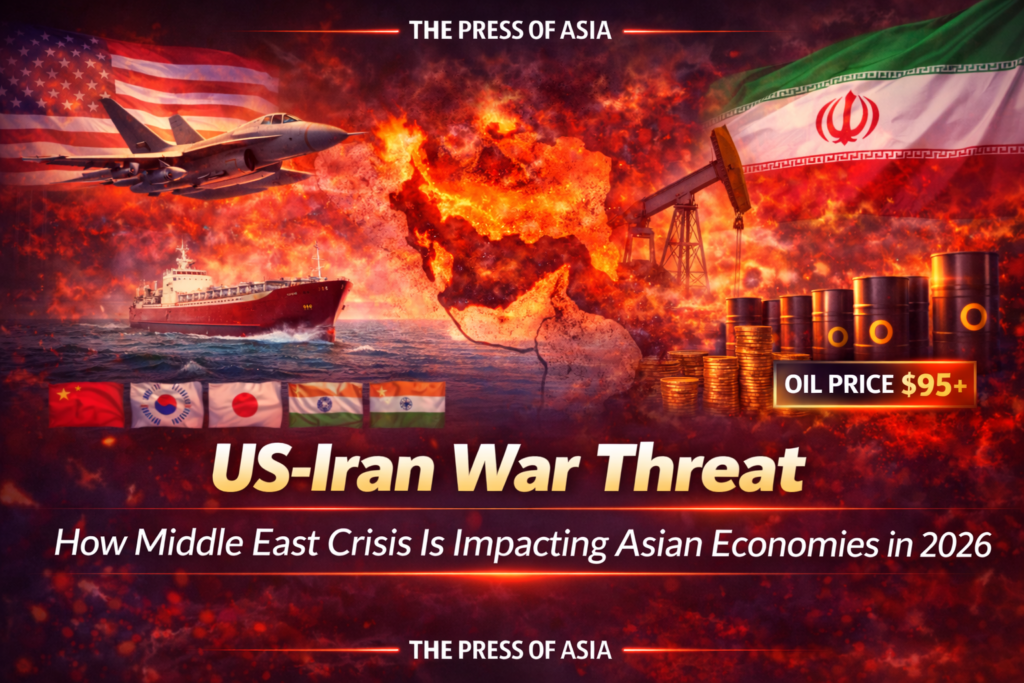
The escalating US-Iran tensions in 2026 are sending shockwaves across Asian economies that depend heavily on Middle East oil and trade routes. From India to Japan, governments are on high alert as the threat of a broader conflict grows.
The Strait of Hormuz, through which nearly 20% of the world’s oil supply passes, has become the most critical flashpoint. Any disruption to this vital waterway could trigger an immediate energy crisis across Asia. Countries like Japan, South Korea, India, and China — all major oil importers — are monitoring the situation with deep concern.
Oil prices have surged by over 15% since tensions escalated, reaching above $95 per barrel. This has pushed inflation higher across Asian markets, with fuel-dependent industries like transportation, manufacturing, and agriculture bearing the brunt of the cost surge.
India, which imports over 85% of its oil needs, has already begun activating emergency reserves and exploring alternative supply chains from Russia and the US. The Indian government has assured citizens there will be no immediate fuel shortage, but economists warn that a prolonged conflict could force a significant revision of energy subsidies.
Japan and South Korea, both heavily dependent on Middle East energy imports, are holding emergency meetings with their energy ministries. Both nations are considering accelerating investments in renewable energy and LNG imports to reduce reliance on Persian Gulf oil.
China, Asia’s largest economy, has taken a more cautious diplomatic stance, maintaining ties with both the US and Iran while quietly diversifying its energy sources. Chinese state oil companies have reportedly increased purchases from non-Middle East suppliers as a precautionary measure.
Trade routes through the Arabian Sea and Indian Ocean are also facing increased security risks, raising shipping insurance costs and causing delays in goods movement. Analysts warn that if the conflict expands, the ripple effects on Asian supply chains could last for months.
As of now, Asian governments are urging their citizens to remain calm while preparing contingency plans. The coming weeks will be critical in determining whether diplomatic efforts can prevent a full-scale energy crisis across the continent.