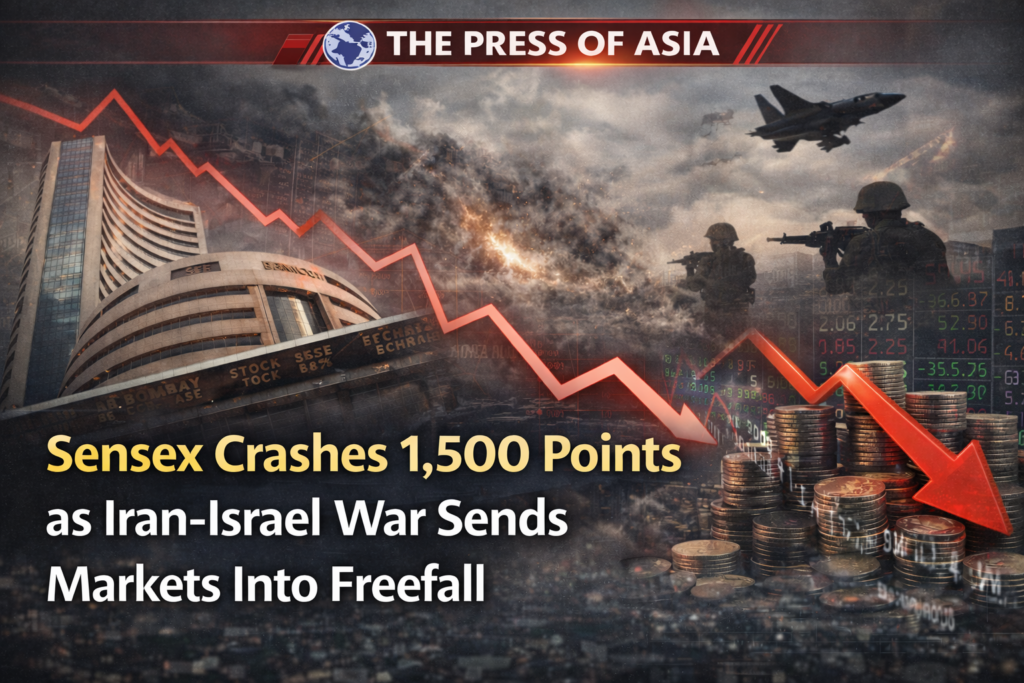
The Bombay Stock Exchange’s benchmark Sensex index plummeted over 1,500 points on February 28, 2026, as the US-Israel joint attack on Iran triggered a massive risk-off sentiment across global financial markets. The National Stock Exchange’s Nifty 50 fell nearly 450 points in a single session, wiping out approximately Rs 6 lakh crore in investor wealth.
The sharp market decline was driven by surging oil prices, fears of a broader Middle East conflict, and concerns about the impact on India’s fiscal and current account deficits given the country’s heavy dependence on oil imports.
Sectoral Impact:
- Realty sector: Down 4.2% (highest decliner)
- Auto sector: Down 3.8% (fuel cost fears)
- Aviation: Down 5.1% (jet fuel costs)
- Oil & Gas (upstream): Gainers (ONGC, Oil India up 3-4%)
- Defence stocks: Strong gainers (HAL, BEL up 5-8%)
- FMCG: Moderate declines (inflation concerns)
FII Selloff:
Foreign Institutional Investors (FIIs) were net sellers, pulling out over Rs 3,500 crore from Indian equities in a single day. The uncertainty around geopolitics and rising oil prices triggered the selloff.
Rupee Weakens:
The Indian rupee fell to 87.50 against the US dollar, a new low, as capital outflows and oil import concerns weighed on the currency. The RBI was reportedly intervening to prevent excessive volatility.
Gold Surges:
In sharp contrast, gold prices in India surged to Rs 87,000 per 10 grams, as investors rushed to safe-haven assets. Gold futures on MCX hit record highs.
Expert Reactions:
Market analysts suggest that the initial crash may be followed by recovery if diplomatic efforts gain traction. However, if oil prices remain elevated above $85 per barrel, India’s market is likely to remain under pressure.
With markets closed on Holi (March 3), traders and investors await reopening on March 4 to assess the next move. Analyst consensus suggests the market could remain choppy for at least 2-3 weeks.