
Press of Asia | International Desk | March 29, 2026
Background: Is a Bigger Attack Coming? & Why Kharg Island Matters
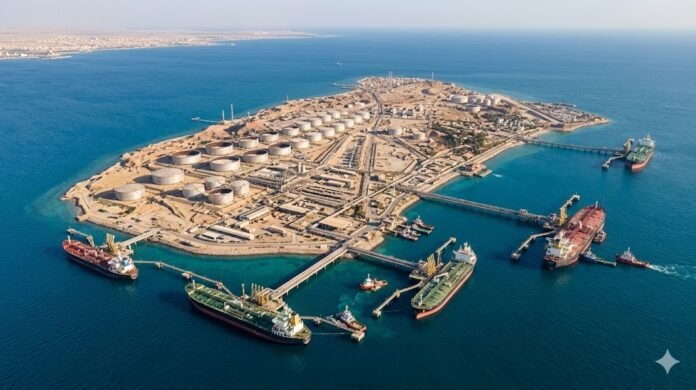
Kharg Island is Iran’s most critical oil export terminal, situated in the Persian Gulf. This small island is responsible for handling more than 90% of Iran’s total crude oil exports, making it the single most important economic asset of the Iranian state. Military and geopolitical analysts have long described Kharg Island as Iran’s “crown jewel” — and for good reason. Any serious damage to its oil infrastructure would cripple Iran’s economy almost overnight. That is precisely why this island has now become the central flashpoint of the most dangerous conflict in West Asia in decades.
What Happened on March 13, 2026?
In the early hours of March 13, 2026, the United States Air Force carried out one of the largest bombing raids in recent Middle East history. American forces struck more than 90 military targets on Kharg Island in a single night. The targets included naval mine storage facilities, missile bunkers, air defence systems, a naval base, an airport control tower, and a helicopter hangar — all belonging to Iran’s Islamic Revolutionary Guard Corps (IRGC).
President Donald Trump announced the operation publicly, stating:
“The United States Central Command executed one of the most powerful bombing raids in the History of the Middle East, and totally obliterated every MILITARY target in Iran’s crown jewel, Kharg Island.”
Crucially, Trump stated that he deliberately chose not to strike the oil infrastructure — but warned that this decision could change immediately if Iran did not reopen the Strait of Hormuz and stop attacking international vessels.
Why Did America Target Kharg Island?
The strike was a direct consequence of Iran’s IRGC blockading the Strait of Hormuz — the narrow waterway through which nearly 20% of the world’s oil and liquefied natural gas passes every single day. The United States Central Command stated the operation was aimed at destroying assets being used to enforce this blockade and threaten international shipping lanes.
Iran’s Response: Defiant but Cautious
Iranian state media confirmed that more than 15 large explosions were heard across the island, with thick black smoke visible over several areas. However, Iranian officials were quick to announce that the oil terminal and export infrastructure had not been damaged, and that crude oil shipments from Kharg Island were continuing normally.
Iran issued a stern warning in response: if its oil infrastructure is ever directly targeted, it would turn US-allied oil facilities across the region into “a pile of ashes.” Tehran also threatened to strike desalination plants — facilities that supply drinking water to millions across the Gulf region — as part of any retaliatory action.
Is a Bigger Attack Still Coming?
The situation has continued to escalate dangerously in the weeks since the March 13 strike:
- March 20: Reports emerged that President Trump was considering blockading or occupying Kharg Island to force Iran to reopen the Strait of Hormuz.
- March 25: CNN reported that Iran was actively laying traps and defensive positions on Kharg Island, anticipating a possible US ground assault.
- March 27: Military analysts warned that any US attempt to physically take Kharg Island would expose American troops to heavy drone and missile counterattacks from Iran’s well-prepared defences.
- March 28: The Pentagon confirmed new American casualties from Iranian retaliatory strikes on a US military base in Saudi Arabia.
- March 29: Regional powers convened an emergency meeting in Pakistan to attempt diplomatic de-escalation of the conflict.
War Timeline at a Glance
| Date | Event |
|---|---|
| Early March 2026 | US & Israel launch coordinated strikes against Iran |
| March 13, 2026 | US bombs 90+ military sites on Kharg Island |
| March 21, 2026 | US strikes Iran’s Natanz nuclear facility with bunker-buster bombs |
| March 27, 2026 | Iranian missiles hit US base in Saudi Arabia; 15 soldiers injured |
| March 28, 2026 | Houthis launch fresh attacks on Israel; war expands to new front |
| March 29, 2026 | Emergency de-escalation summit held in Pakistan |
Peace Talks or More War?
As of March 29, 2026, the conflict stands at a razor’s edge. President Trump has publicly claimed Iran is seeking a peace deal, but Tehran has flatly denied this — calling Trump’s statements “deceitful.” Iran rejected a US-proposed 15-point ceasefire plan and has made any peace agreement conditional on simultaneously ending the ongoing war in Lebanon.
Meanwhile, the United States has deployed thousands of additional Marines and an amphibious assault ship to the Persian Gulf region — a clear signal that Washington is not ruling out further military escalation, including a potential ground operation on Kharg Island itself.
What Does This Mean for India?
India imports a substantial portion of its crude oil from the Persian Gulf. With global oil prices already having risen sharply since this conflict began, any further escalation — particularly a US strike on Kharg Island’s oil export terminal — would directly push up petrol, diesel, and LPG prices in India. The ongoing Strait of Hormuz blockade is also disrupting Indian trade routes, increasing the cost of imported goods. Indian policymakers are closely monitoring the situation.
Press of Asia Assessment
The United States has already struck Kharg Island’s military infrastructure with devastating force. The oil terminal — which controls the flow of 90% of Iran’s oil revenues — has been spared so far, but only as a deliberate strategic choice by President Trump. Whether that decision holds depends entirely on Iran’s next move regarding the Strait of Hormuz.
With peace talks stalled, fresh casualties on both sides, and military buildups continuing, the world is watching one of its most dangerous geopolitical flashpoints in decades unfold in real time.
Press of Asia | International Desk | This report has been compiled and verified by our international affairs team based on confirmed developments as of March 29, 2026. All quotes attributed to named officials are sourced from verified public statements.