
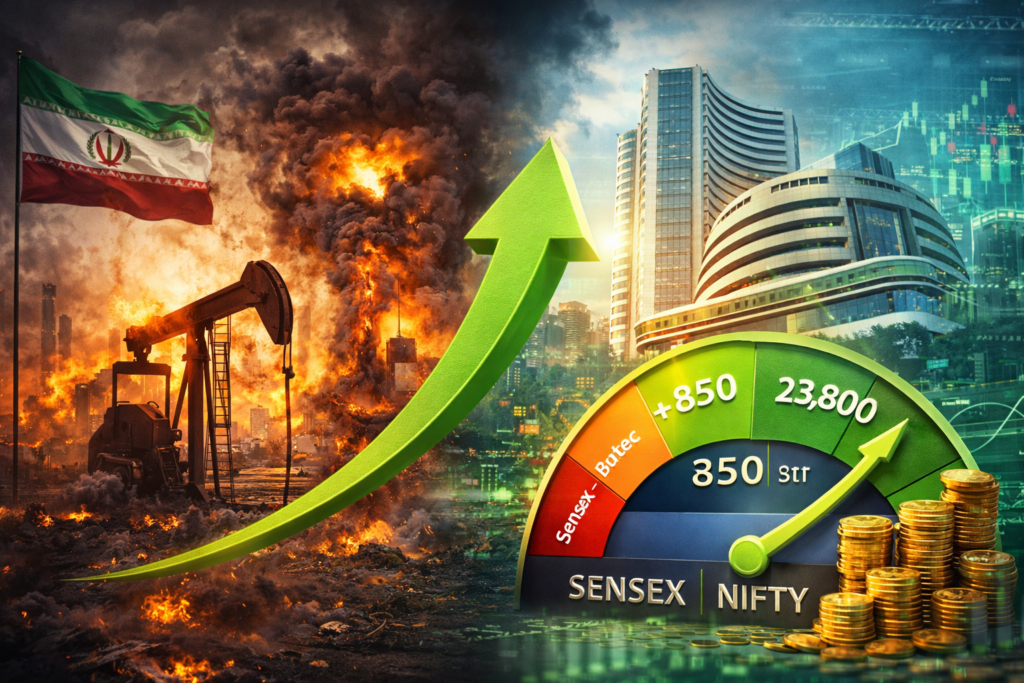
Indian stock markets delivered a positive performance for the third consecutive trading session on Wednesday, March 18, 2026, with the BSE Sensex gaining over 850 points and the NSE Nifty 50 index crossing the 23,800 mark. This rally came as a surprise to many analysts, given the backdrop of the ongoing US-Israel-Iran war and a global energy crisis centered on the Strait of Hormuz.
The Sensex closed higher after opening at 76,367.55, gaining approximately 850+ points over the course of the trading day. The Nifty 50 also showed strong upward momentum, crossing 23,800 during intraday trading. IT stocks led the gains, while banking stocks showed a more mixed performance.
Key Market Movers on March 18, 2026
Top Gainers on BSE:
- IndiGo: Strong recovery after flight disruptions were partially resolved
- TCS (Tata Consultancy Services): IT sector outperformance
- HCL Technologies: Broad IT sector rally
- Mahindra & Mahindra: Auto sector momentum
- Power Grid Corporation: Defensive utility buying
Top Losers on BSE:
- Tata Steel: Concerns about global economic slowdown
- HDFC Bank: Profit-taking after recent gains
- ICICI Bank: Cautious stance on banking amid global uncertainty
Sector Performance:
- IT Sector: Strong positive; global tech companies benefiting from safe-haven dollar flows
- Auto Sector: Positive; domestic demand remains resilient
- FMCG: Moderate gains; defensive positioning
- Banking: Mixed to slightly negative; concerns about credit quality
- Energy: Volatile; oil companies face margin pressure from high crude prices
- Metals: Negative; global slowdown concerns weigh on sentiment
Why Is the Market Rising Despite the War?
The apparent paradox of rising markets during a major geopolitical crisis can be explained by several factors:
- IT Sector Leadership
India’s IT sector, dominated by companies like TCS, Infosys, HCL, and Wipro, has emerged as a key driver of the recent rally. IT companies earn a significant portion of their revenues in US dollars. As global uncertainty rises, the dollar tends to strengthen against the Indian rupee, which directly benefits the rupee earnings of IT companies when they convert their dollar revenues back to rupees. This creates a natural hedge that makes IT stocks attractive during periods of global stress. - Selective Foreign Institutional Buying
Foreign Institutional Investors (FIIs) have been selectively buying into Indian equities, particularly in sectors that are perceived as insulated from the West Asia crisis. India’s large domestic market and relatively strong GDP growth trajectory make it attractive compared to other emerging markets that are more directly exposed to the conflict. - Domestic Institutional Support
Domestic Mutual Funds and insurance companies continue to receive steady Systematic Investment Plan (SIP) inflows from retail investors. This creates a base of buying support that partially offsets FII selling on volatile days. - RBI’s Accommodative Signals
The Reserve Bank of India (RBI) has signalled a willingness to provide liquidity support to the financial system if the global situation worsens significantly. This backstop reassures markets that a severe credit crunch is unlikely in the near term. - Cheaper Valuations After Previous Corrections
Indian markets had already corrected significantly in early 2026, making valuations more attractive. Investors are taking advantage of relatively cheaper prices to build long-term positions.
Risks and Concerns: Not All Is Well
While the market has recovered from its lows, analysts caution that significant risks remain:
Oil Price Shock: Crude oil above $106 per barrel is already squeezing margins for Indian companies that depend on petroleum products. If prices rise further, corporate earnings could disappoint significantly in the coming quarters.
Currency Pressure: The Indian rupee has been under pressure due to higher oil import bills. A weaker rupee increases the cost of all imports and adds to inflationary pressures.
Inflation Risk: Rising fuel and food prices could force the RBI to reconsider its accommodative stance and hike interest rates, which would be negative for equity markets.
Kharg Island Threat: Trump’s threat to strike Iran’s Kharg Island oil terminal, if executed, would likely trigger a massive market sell-off globally. Indian markets would not be immune.
Sectoral Outlook for March-April 2026
IT Sector: Positive. Strong dollar, resilient US tech spending, and AI-related demand support the outlook.
Banking: Cautious. Watch for any increase in non-performing assets if the economic situation deteriorates.
FMCG: Positive. Rural demand recovery and defensive buying support the sector.
Energy: Volatile and high-risk. Avoid until there is clarity on oil prices.
Metals: Bearish. Global slowdown concerns and China’s cautious growth trajectory weigh on demand.
Auto: Positive. Domestic demand remains strong, and electric vehicle transition is creating new growth opportunities.
GIFT Nifty and Global Context
The GIFT Nifty (previously SGX Nifty) had opened up 82.5 points on March 18, hinting at a positive start for Indian markets. Global markets were also largely positive, as investors appeared to be pricing in the possibility that the Iran war might be closer to a resolution than the ground situation suggests.
US markets closed mixed on March 17, with tech stocks positive but energy and industrial stocks under pressure. Asian markets were broadly positive, with Japan’s Nikkei and South Korea’s KOSPI both gaining modestly.
Conclusion
The Indian stock market’s resilience in the face of the West Asia war is remarkable but comes with significant caveats. The rally is narrow, led largely by IT stocks, and the underlying risks from high oil prices, currency pressure, and potential supply disruptions are real and growing. Investors should maintain a diversified portfolio, reduce exposure to sectors directly impacted by the energy crisis, and keep some cash ready for potential buying opportunities if markets correct sharply.