

New Delhi | The Press of Asia
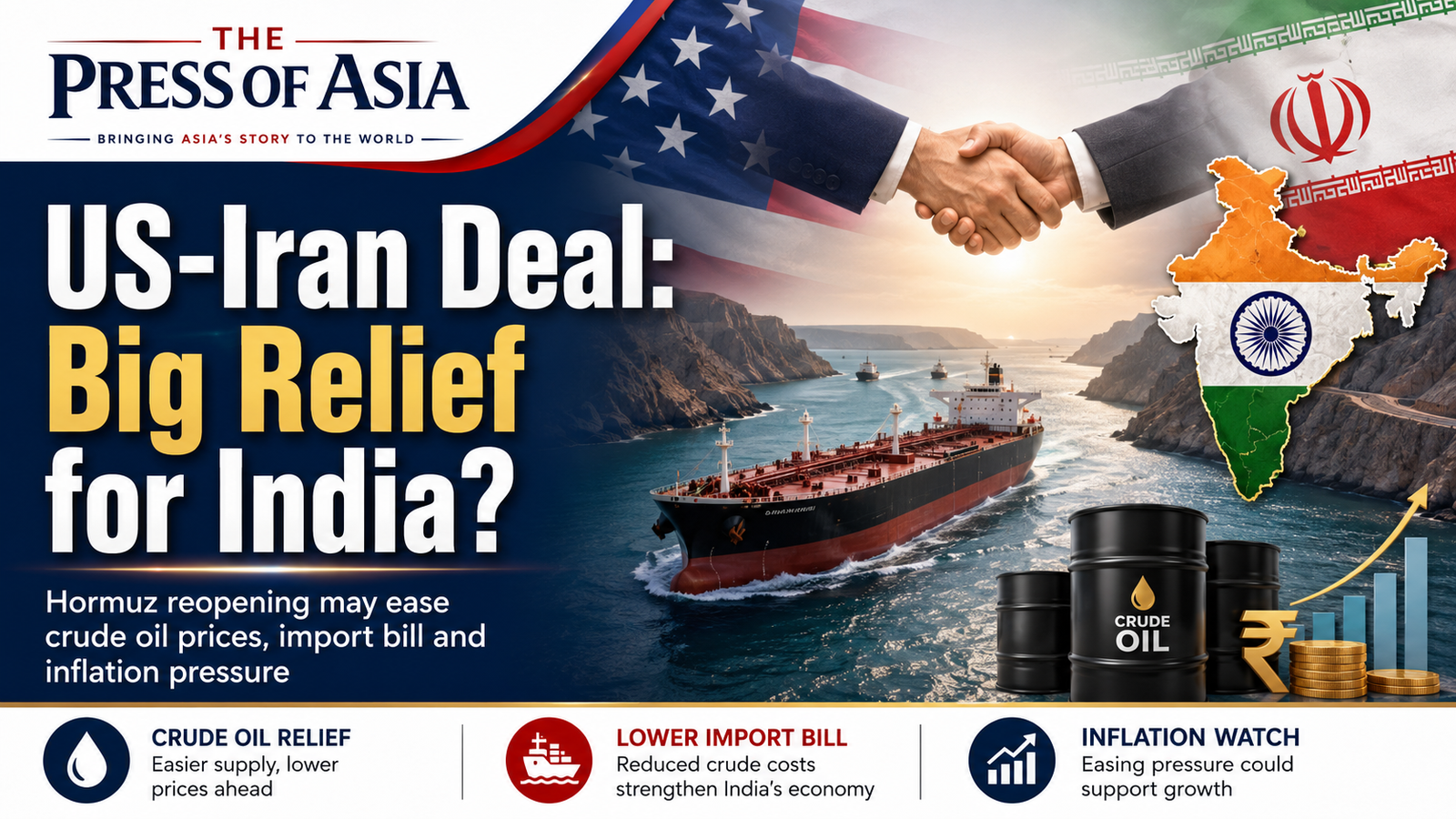
The preliminary peace agreement between the United States and Iran has brought a major sense of relief to global energy markets, with the expected reopening of the Strait of Hormuz seen as a crucial development for oil-importing countries like India.
The Strait of Hormuz, located between Iran and Oman, is one of the world’s most important energy corridors. A large share of global crude oil and LNG shipments passes through this narrow maritime route. Any disruption in this region directly affects crude oil prices, shipping costs, inflation expectations and the energy security of countries dependent on imports.
For India, the development is significant. The country imports a large portion of its crude oil requirement, and any rise in global oil prices directly impacts the import bill, the rupee, fuel prices and inflation.
Why the US-Iran Deal Matters for India
The US-Iran agreement is being seen as a major step toward reducing tensions in the Middle East. If the ceasefire holds and the Strait of Hormuz reopens fully, oil shipments may gradually return to normal.
This could help reduce pressure on crude oil prices, which had remained volatile due to the conflict and uncertainty around shipping routes.
For India, lower crude oil prices can provide relief in multiple ways:
First, India’s oil import bill may reduce if global crude prices remain stable or decline further. Since crude oil is purchased in dollars, lower prices can also reduce pressure on India’s foreign exchange reserves.
Second, the rupee may receive some support if dollar demand from oil importers comes down. A stable rupee is important for controlling imported inflation.
Third, lower crude prices can reduce pressure on fuel-linked inflation. Transportation, logistics, aviation, manufacturing and daily-use goods are all indirectly affected by fuel costs.
Impact on Petrol and Diesel Prices
One of the biggest questions for Indian consumers is whether this deal will lead to lower petrol and diesel prices.
The answer depends on several factors.
If crude oil prices fall and remain low for a sustained period, oil marketing companies may get more room to adjust fuel prices. However, domestic petrol and diesel prices are also influenced by taxes, refining margins, currency movement and government policy.
Therefore, immediate relief at the fuel pump is not guaranteed, but the global development does improve the possibility of easing pressure in the coming weeks.
Import Bill and Inflation Relief
India’s crude oil import bill is one of the largest components of the country’s total import expenditure. When oil prices rise, India spends more dollars to buy the same quantity of crude. This increases the trade deficit and can weaken the rupee.
A fall in crude oil prices, on the other hand, can help reduce the import burden.
Inflation may also get some indirect relief. Fuel prices influence transportation costs, and transportation affects the prices of vegetables, food items, consumer goods and industrial products.
If energy costs ease, inflationary pressure may reduce gradually.
Markets React Positively
Global markets reacted positively after reports of the US-Iran deal and the possible reopening of the Strait of Hormuz. Oil prices dropped sharply on hopes that energy supply routes would normalize.
Stock markets in several regions also responded with optimism, as investors viewed the development as a sign of reduced geopolitical risk.
However, analysts warn that the situation remains sensitive. The agreement still needs to be implemented fully, and shipping traffic through Hormuz may take time to return to normal levels.
Shipping Companies Still Cautious
Even after the announcement of the deal, many shipping companies are expected to move cautiously. Maritime operators usually wait for clear security guarantees before resuming full-scale movement through conflict-sensitive routes.
Insurance costs, naval advisories, port restrictions and regional military risks may continue to influence shipping decisions in the short term.
This means that while the deal is positive, the full economic benefit may come gradually rather than immediately.
What India Has Been Doing
India has already been working to reduce energy supply risks. Indian refiners have explored alternative crude sources from regions such as Africa, Latin America and other non-Middle Eastern suppliers.
India has also focused on ethanol blending, renewable energy, strategic petroleum reserves and long-term diversification of energy sources.
The US-Iran agreement may reduce immediate pressure, but it also reminds India of the importance of energy security and supply diversification.
What Could Happen Next
There are three possible scenarios.
If the deal holds and Hormuz traffic normalizes, crude oil prices may remain under pressure, giving India relief on import costs and inflation.
If implementation is delayed or tensions return, crude oil prices could become volatile again.
If the deal leads to broader regional stability, India may benefit through cheaper energy, stronger trade flows and improved investor sentiment.
The Press of Asia View
The US-Iran deal is not just a diplomatic development; it is an economic signal for the world. For India, it can mean lower crude oil pressure, a more stable rupee, reduced inflation risk and better energy security.
However, the real benefit will depend on how quickly the Strait of Hormuz fully reopens, how safely shipping resumes and whether the ceasefire remains stable.
For now, the deal has created hope — but India will need to stay alert, diversify energy sources and continue strengthening its long-term energy strategy.
Disclaimer: This article is based on publicly available international media reports and market updates. Energy prices, fuel rates and diplomatic developments may change quickly. Readers should follow official updates for the latest information.