
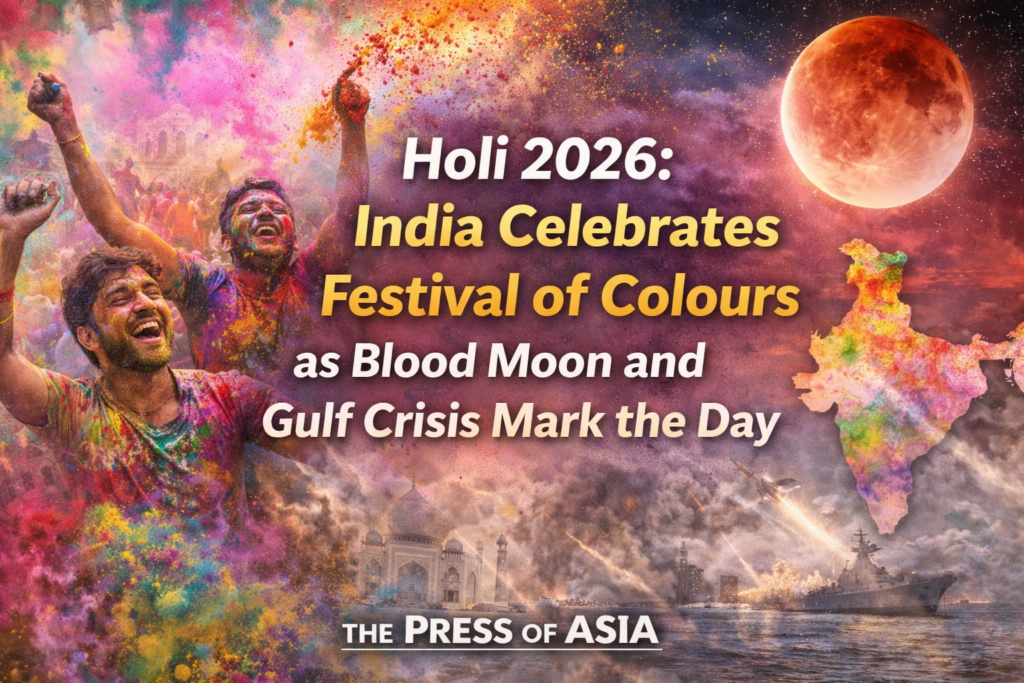
Holi Celebrations Across India
Despite the shadow of the Gulf crisis and concerns for Indian nationals abroad, Holi celebrations continued across India with great enthusiasm. Mathura and Vrindavan witnessed their iconic Lathmar Holi celebrations, drawing thousands of pilgrims and tourists. In Delhi, Jaipur, Mumbai, and other major cities, residents gathered for colour throwing festivities, cultural events, and traditional sweets.
Significance of Holi
Holi marks the arrival of spring and the triumph of good over evil. The festival is rooted in Hindu mythology, commemorating the legend of Prahlad and Holika. The Holika Dahan (bonfire) ritual is performed the night before Holi, symbolising the burning of evil. The next day, people celebrate with colours, water, music, and traditional sweets like gujiya, thandai, and mathri.
Blood Moon Connection
This year’s Holi coincided with a rare Blood Moon (total lunar eclipse), which occurred on the night of March 3-4. Astrologers noted that a Chandra Grahan on Holi eve is considered a rare and significant event. Many temples remained closed during the Sutak period, and some devotees chose to observe religious practices before beginning their Holi celebrations.
Prayers for Gulf Indians
Many Indians celebrated Holi with prayers and good wishes for the nearly 10 million Indians living and working in Gulf nations currently impacted by the ongoing Middle East war. Community organisations arranged special events to support families anxious about their loved ones in the conflict zone.
The Press of Asia wishes all its readers a very Happy Holi 2026. May this festival bring peace, joy, and prosperity to all.