
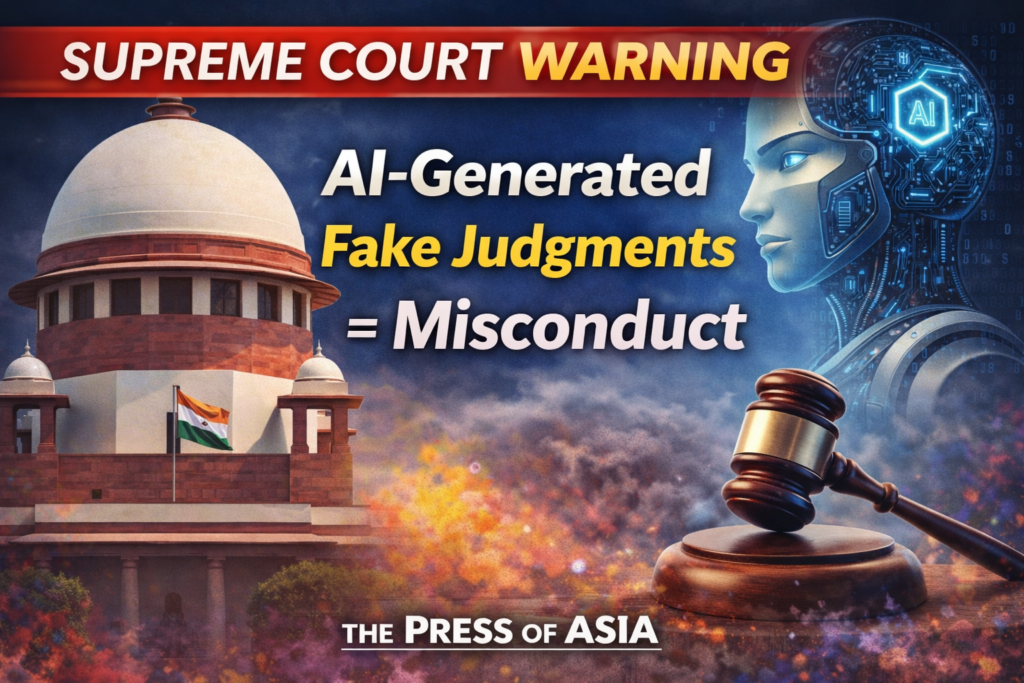
The Supreme Court’s Stand
The Supreme Court bench made it clear that judgments must be the product of independent judicial reasoning, legal scholarship, and application of mind by the judge. Any use of AI-generated text in court orders or judgments, without proper verification and attribution, would be treated as misconduct under the established norms of judicial ethics and the Code of Conduct for Judges.
Why This Warning Matters
The warning comes at a time when AI tools like ChatGPT and other large language models are being increasingly used by legal professionals, including advocates and judges, for drafting, research, and summarisation. There have been documented cases in courts around the world where AI-generated text was included in legal filings without proper verification, sometimes containing fabricated citations.
AI in Indian Courts: Opportunities and Risks
India’s judiciary faces a massive backlog of over 50 million pending cases. AI tools could potentially help in case management, legal research, and administrative tasks. However, the Supreme Court’s warning draws a firm line: AI can assist the judicial process but cannot substitute judicial reasoning or be presented as the opinion of the court.
International Context
Indian courts are not alone in grappling with this challenge. Courts in the United States, United Kingdom, and Australia have issued similar guidelines requiring lawyers and judges to disclose the use of AI tools and verify all AI-generated content for accuracy. The era of AI in law is here, but clear guardrails are essential.
The Press of Asia legal desk will continue monitoring the Supreme Court’s evolving guidelines on AI use in the Indian judiciary.