
London | International Desk | June 2026
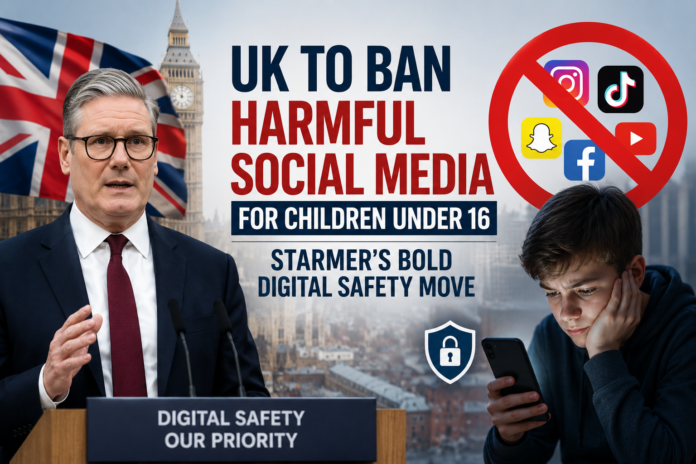
In a landmark move aimed at protecting young people from online harm, the United Kingdom is preparing to introduce stricter regulations that could prevent children under the age of 16 from accessing certain social media platforms and harmful digital content. The proposal, strongly backed by Prime Minister Keir Starmer, marks one of the most ambitious digital safety initiatives undertaken by a major Western democracy.
The plan comes amid growing concerns about the impact of social media on children’s mental health, exposure to harmful content, cyberbullying, online exploitation, and addictive platform algorithms.
Why Is the UK Taking Action?
Over the past decade, social media has become a central part of young people’s lives. While these platforms provide opportunities for communication and learning, experts have increasingly warned about their negative effects.
Studies conducted by health organizations and child protection groups have linked excessive social media use to:
- Increased anxiety and depression among teenagers
- Sleep disorders caused by prolonged screen time
- Exposure to self-harm and suicide-related content
- Online bullying and harassment
- Body image and self-esteem issues
- Digital addiction and reduced concentration
British lawmakers argue that existing safeguards have failed to adequately protect children from these risks.
What Does the Proposed Ban Include?
Under the proposed framework, social media companies may be required to implement stronger age-verification systems and restrict access to platforms that expose minors to harmful or age-inappropriate content.
The measures being discussed include:
1. Stricter Age Verification
Technology companies could be required to verify users’ ages more accurately rather than relying on self-declared birth dates.
2. Restrictions for Under-16 Users
Children below 16 may face limitations or complete bans from accessing platforms considered harmful to their mental wellbeing.
3. Algorithm Controls
Companies may be forced to modify recommendation systems that push potentially dangerous content to younger users.
4. Enhanced Content Moderation
Social media firms would be expected to remove harmful content more quickly and strengthen protections against cyberbullying.
5. Increased Accountability
Technology companies that fail to comply with the regulations could face significant financial penalties.
Starmer’s Message: Child Safety Comes First
Prime Minister Keir Starmer has emphasized that protecting children online must become a national priority.
Government officials argue that children deserve the same level of protection in the digital world that they receive in schools and public spaces.
According to supporters of the proposal, social media companies have benefited enormously from youth engagement while failing to adequately address the risks faced by young users.
Support From Parents and Educators
The proposed measures have received strong support from many parents, teachers, and child welfare organizations.
Education experts argue that unrestricted access to social media has contributed to declining attention spans and increased mental health challenges among students.
Parent groups have welcomed the government’s willingness to confront major technology companies and establish stronger safeguards for children.
Many believe the regulations could help create a healthier online environment for future generations.
Critics Raise Concerns
Despite widespread support, the proposal has also sparked debate.
Critics argue that:
- The restrictions could limit young people’s freedom of expression.
- Age-verification systems may create privacy concerns.
- Some teenagers could circumvent restrictions using VPNs or false credentials.
- Enforcement could be difficult across international platforms.
Technology companies have also warned that implementation may require significant changes to platform infrastructure and user verification systems.
Global Trend Toward Digital Regulation
The UK’s initiative reflects a broader international trend toward regulating social media use among minors.
Countries including Australia, France, and several U.S. states have introduced or considered measures aimed at limiting children’s access to potentially harmful online content.
If implemented successfully, Britain’s approach could become a model for other nations seeking stronger protections for young internet users.
What Happens Next?
The government is expected to continue consultations with technology companies, education experts, child protection groups, and lawmakers before finalizing the legislation.
Should the proposal become law, social media platforms would likely be given a transition period to comply with the new requirements.
The debate is expected to remain at the center of British politics as policymakers balance child protection, digital freedom, privacy rights, and technological innovation.
Conclusion
The UK’s proposed restrictions on harmful social media access for children under 16 represent one of the boldest digital safety initiatives in recent years. As concerns over mental health, cyberbullying, and online exploitation continue to grow, the government believes stronger intervention is necessary.
Whether the move becomes a global blueprint for protecting young users or sparks wider debates about internet freedom, one thing is clear: the future of child safety online is becoming a major policy battleground around the world.