November 29, 2026 — Several Japanese food companies plan price increases in the first quarter of 2027, with some products set for double-digit rises, Kyodo News reported on November 29. Yakult has confirmed increases to recommended pre-tax prices for 46 products from February 1, while a proposed cut in the food consumption-tax rate would start later.
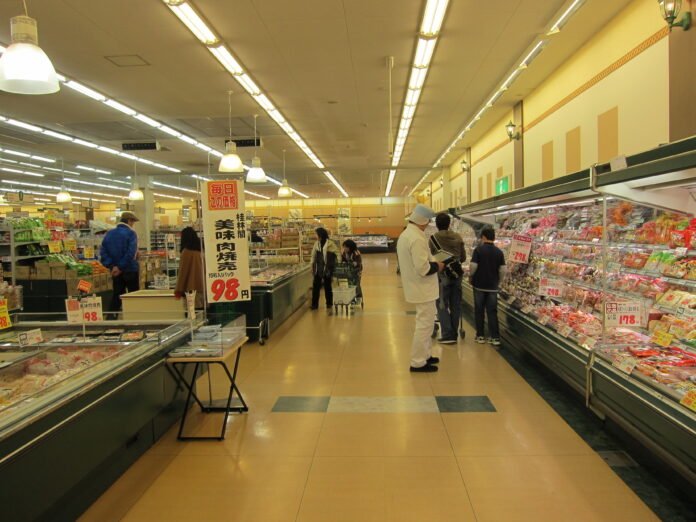
File photo: A supermarket in Japan, March 18, 2012. Yuya Tamai, Wikimedia Commons, CC BY 2.0. The site may resize or crop the image for display.
Key highlights
- Yakult plans to raise suggested pre-tax prices by 3% to 21%, depending on the product.
- The company’s notice covers 36 soft drinks and 10 food products.
- Kyodo says the government is considering cutting the rate on food and drinks from 8% to 1% for two years from April.
What Yakult confirmed
Yakult’s Japanese-language notice attributes the price changes to higher costs for ingredients, distribution, labour and fuel. The company said earlier efforts to absorb those costs had reached their limits. It excluded some products and announced the increases for the Japanese market.
Suggested retail prices can differ from what a particular shop charges. The company’s notice also gives percentage changes before tax. Whether a consumer pays more, and by how much, will depend on the item, the retailer and the date of purchase.
Our calculation: The notice lists 36 beverages and 10 food items, for a total of 46 products.
Why the timing matters
Kyodo reported that multiple food makers planned increases between January and March. The proposed reduction in consumption tax would begin in April if implemented as described. Shoppers could therefore encounter higher pre-tax prices before the government’s proposed measure would take effect.
A tax rate applies to a price base. When a manufacturer sets a new base price, a later tax change affects the new amount. The effect varies across products because companies have announced different increases and retailers can set their own prices.
An illustrative comparison
For a product with a pre-tax price of ¥100, an 8% tax gives a price of ¥108. If its pre-tax price rises by 10% and the rate later drops to 1%, the example price becomes ¥111.10 before rounding. This is a hypothetical comparison, separate from the listed retail price of any particular item.
Our calculation: ¥100 × 1.08 gives ¥108. A 10% base-price rise makes the pre-tax price ¥110, and ¥110 × 1.01 gives ¥111.10.
Related coverage: Tokyo core inflation rises to 2.9% in November
What to watch
Watch for the final scope and start date of the tax proposal, along with retailer notices specifying how individual products will be priced.
Sources

The Business Desk covers markets, the economy, companies and personal finance. Stories are checked against at least two credible sources before publication.