
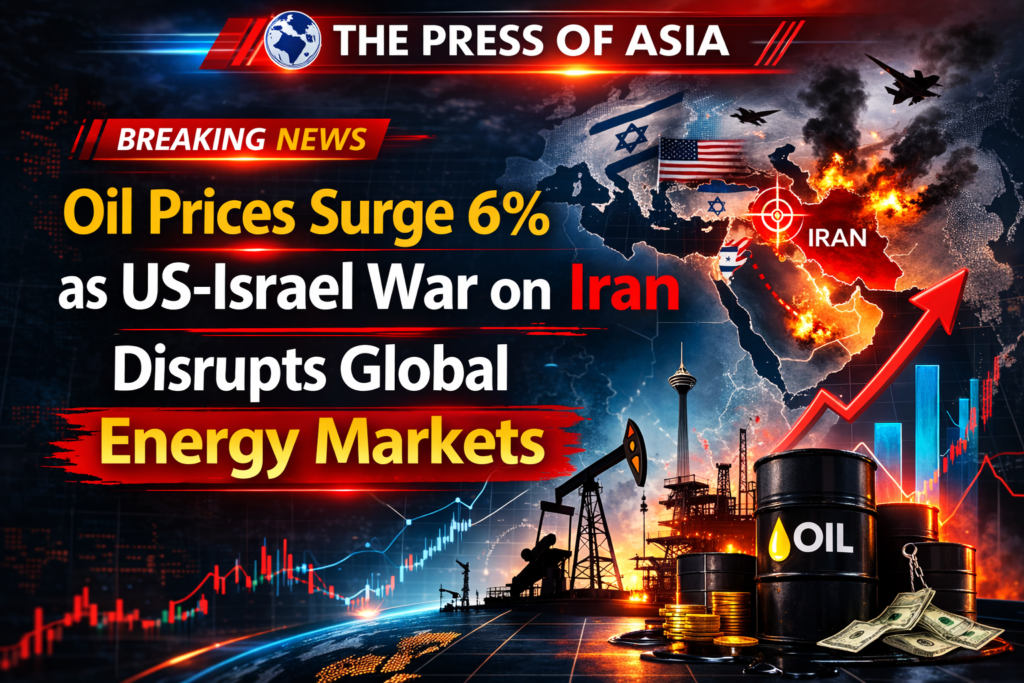
Global oil markets have been thrown into turmoil following the joint US-Israel military strikes on Iran that began on February 28, 2026. Brent crude oil surged approximately 6%, briefly crossing $82 per barrel — its highest point since January 2025 — while West Texas Intermediate (WTI) futures jumped over 5%.
The sudden price spike is primarily driven by fears of supply disruptions in the Middle East, which accounts for nearly 30% of global oil production. Iran itself produces approximately 3.3 million barrels per day, and any disruption to its output — or to the critical Strait of Hormuz shipping lane — could have severe consequences for global energy supply.
The Strait of Hormuz, through which nearly 20% of the world’s oil passes daily, has been effectively closed following Iran’s military response. Japan’s shipping companies have halted passage of vessels through the strait, and multiple global oil tankers have been rerouted.
Impact on India:
India imports over 85% of its crude oil needs and is one of the largest oil importers in the world. Rising crude prices will put significant pressure on India’s import bill, fuel prices, and inflation. Petrol and diesel prices in India could rise if crude oil remains elevated.
The Reserve Bank of India (RBI) and the Finance Ministry are closely monitoring the situation. Economists warn that a sustained spike in oil prices could push India’s current account deficit wider and stoke inflation, potentially delaying interest rate cuts.
Global Economic Impact:
Oxford Economics has flagged the conflict as a serious threat to the global economy, noting that “Iran cannot win, but disrupting Gulf oil flows could inflict material economic damage and market volatility.”
US inflation data, which President Trump had claimed was under control, is now at risk. A report from the Institute for Supply Management showed over 70% of manufacturing managers reported price increases in February — and rising energy costs could further fuel inflation.
Europe, Japan, South Korea, and other major oil importers are bracing for the ripple effects of higher energy prices. Airlines, shipping companies, and logistics firms are already seeing costs rise.
Market analysts say that if the conflict extends beyond four to five weeks as Trump has suggested, oil prices could remain elevated for months, fundamentally altering the global economic outlook for 2026.