
Dubai / Abu Dhabi — March 7, 2026:
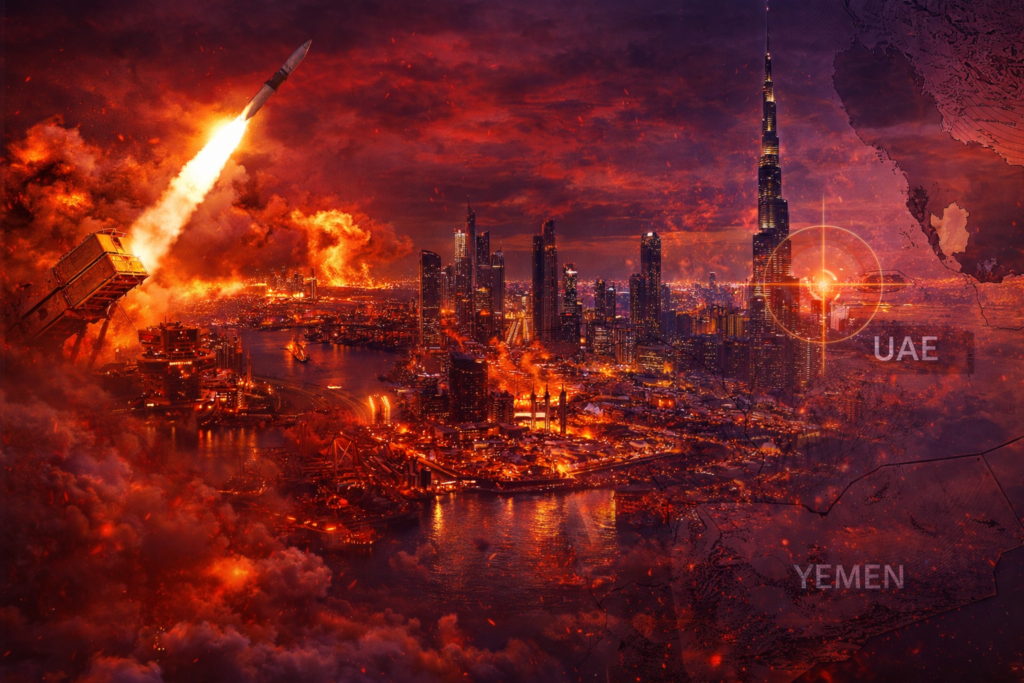
Tensions in the Middle East intensified sharply after Yemen’s Houthi movement reportedly launched a missile and drone attack targeting areas near Dubai and Abu Dhabi, raising fresh concerns about the security of critical infrastructure and global trade routes in the Gulf region.
UAE authorities confirmed that air defense systems intercepted multiple projectiles overnight, preventing major damage to key infrastructure. However, the incident has triggered global concern as the conflict in the region continues to widen.
Details of the Attack
According to initial reports from regional security sources, several missiles and armed drones were launched from Yemen toward strategic locations in the United Arab Emirates.
UAE air defense systems, including Patriot and THAAD missile interceptors, were activated and successfully intercepted most incoming threats. Officials said the majority of the projectiles were neutralized before reaching their intended targets.
Emergency services responded to isolated incidents of debris falling in certain areas, and authorities are currently assessing the situation. UAE officials have urged residents to remain calm while security agencies continue monitoring the airspace.
Impact on UAE Economy and Global Trade
The incident has raised concerns about the safety of Jebel Ali Port, one of the world’s largest shipping hubs and the busiest port in the Middle East.
Jebel Ali handles millions of containers annually and serves as a crucial gateway for trade between Asia, Europe, and Africa. Even temporary disruptions to port activity could impact global shipping schedules and increase logistics costs.
Airlines operating from Dubai International Airport and Abu Dhabi International Airport are also closely monitoring the security situation, with some flights facing precautionary delays or rerouting.
Oil Markets React
Global energy markets reacted quickly to the heightened tensions. Oil prices rose sharply as investors feared possible disruptions to energy supplies from the Gulf region.
Analysts warn that continued instability near the Strait of Hormuz, a narrow waterway through which roughly 20% of the world’s oil supply passes, could trigger further volatility in global energy markets.
Any sustained threat to shipping routes in the region could push crude oil prices significantly higher and increase inflationary pressure on major economies.
UAE Government Response
UAE leadership convened emergency security meetings following the incident. Authorities emphasized that the country’s defense systems remain fully operational and capable of responding to threats.
Regional security cooperation with international partners has also intensified, with naval patrols and surveillance operations increasing across the Arabian Gulf.
Officials stressed that protecting critical infrastructure, international trade routes, and civilian safety remains a top priority.
India and International Reaction
The situation is being closely watched by countries with strong economic ties to the Gulf region. India, which has a large diaspora in the United Arab Emirates, expressed concern over the developments.
The Indian Embassy in Abu Dhabi issued advisories urging Indian nationals to follow local safety guidelines and remain updated through official announcements.
Global leaders have also called for restraint and diplomatic engagement to prevent further escalation in the region.
Geopolitical Implications
Security analysts warn that the incident reflects a broader expansion of tensions across the Middle East.
If hostilities continue to escalate, there could be wider consequences for international trade, energy security, and global economic stability.
The Gulf region remains one of the most strategically important areas for global energy supply, making any security threat there a matter of international concern.
Conclusion
The reported missile and drone attack targeting areas near Dubai and Abu Dhabi marks a serious escalation in regional tensions. While UAE defense systems appear to have prevented major damage, the incident underscores the fragile security situation in the Middle East.
As governments and markets react to the developments, the coming days will be crucial in determining whether diplomatic efforts can prevent further escalation.
The Press of Asia will continue to monitor the situation and provide updates as more information becomes available.