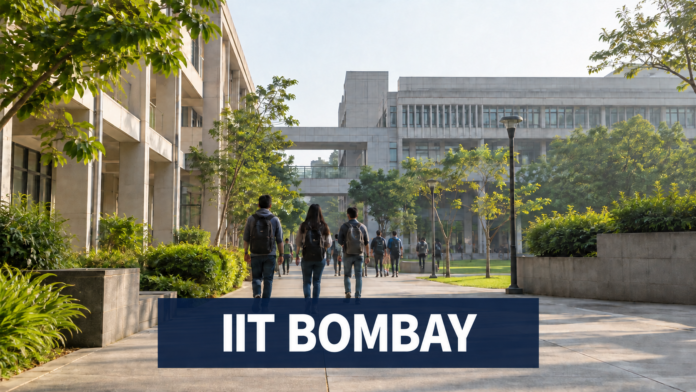
September 22: Editorial analysis. After the death of IIT Bombay student Sahil Wakode, his family has alleged caste discrimination. A police investigation is under way, and the institute and teachers have a different account. The case raises hard questions about academic support after admission, student safety and fair process for teachers.
Update (October 3): The Mumbai Crime Branch is investigating the case, and IIT Bombay has set up a 10-member internal committee. Professor Suryanarayana Doolla, questioned for about eight to ten hours, denied making casteist remarks and said he acted within institute rules. Police have recorded statements from about 40 people and sent Sahil’s phones, laptop and tablet for forensic examination. The National Commission for Scheduled Castes visited the institute on September 24 and directed that evidence be preserved. Earlier, on September 23, Outlook, reported that Prof. Doolla had been sent on leave. None of the allegations has been established in court.
Key points
- Sahil Wakode, a second-year BTech student, died on September 18, 2026; Powai police registered an FIR on his family’s complaint naming Professor Suryanarayana Doolla.
- An FIR begins an investigation into allegations; it is not proof that an offence was committed.
- IIT Bombay later withdrew its early statement that Sahil had used ChatGPT in the exam and said the circumstances are under investigation.
- Both a full inquiry into serious caste-discrimination complaints and fair process for a teacher who enforces valid rules are needed; they are not competing goals.
- IIT Bombay already has mentoring, counselling and an SC/ST Students Cell; whether help reaches students before a crisis is the open question.
What has been established so far?
Sahil Wakode, a second-year BTech student in IIT Bombay’s Department of Energy Science and Engineering, died on September 18, 2026. On his family’s complaint, Powai police registered an FIR on allegations involving Professor Suryanarayana Doolla. According to news reports, it includes Section 108 of the Bharatiya Nyaya Sanhita and provisions of the Scheduled Castes and Scheduled Tribes (Prevention of Atrocities) Act. An FIR is the start of an inquiry into allegations, not proof of an offence. Both the family and the institute have made statements.
Published reports give Sahil’s age as both 20 and 22. We could not find an authentic public record of his date of birth, so his age is not given here. Likewise, his individual admission category, exam scores or academic performance cannot be independently verified. It would be wrong to link his identity to any assumed academic weakness.
What happened during the exam?
IIT Bombay initially said Sahil was found with a phone during an exam and had put a question into ChatGPT. The institute also said no formal disciplinary action had begun by then and that the head of department had assured him the incident would not affect his academic future. IIT later expressed regret for presenting the events before his death in a definite way too early, and said the circumstances are under investigation. So it is not right to write that “use of ChatGPT is proven”. Report on IIT’s later clarification.
Published descriptions of the CCTV footage obtained by police suggest that the professor spoke to Sahil during the exam and asked him to leave. The footage has no audio, so it does not confirm the alleged caste remarks, threats or the full context. Reports based on police sources up to September 22 did not mention any note being found. New documents or statements may emerge later in the investigation.
Attributing the death to any single event, whether alleged discrimination or exam stress, would go beyond the available evidence. Mental health, social relationships, the institutional environment and immediate circumstances can combine differently for different people. The World Health Organization’s guidance on responsible reporting also asks the media to avoid simplistic explanations of cause and sensationalism.
Established, alleged or unverified
| Claim | Status on September 22 | Basis |
|---|---|---|
| Sahil Wakode died on September 18, 2026 | Established | Police, institute, reports |
| FIR registered against Prof. Doolla under BNS 108 and the SC/ST Act | Established (exact sections to be matched with the FIR) | Media reports; certified FIR copy not available |
| Caste remarks over about three months | Alleged by the family; denied by the professor | Family complaint |
| Use of ChatGPT in the exam | Not established; IIT withdrew its early statement | IIT clarification |
| Professor asked Sahil to leave the exam hall | Suggested by CCTV descriptions (no audio) | Police sources |
| Prior complaint to the SC/ST Students Cell | None received, according to the Cell | Institute statement |
The family, the institute and the students
Sahil’s father, Ravindra Wakode, alleged that Professor Doolla made caste-related remarks for about three months. He also made allegations about the director’s conduct and said Sahil had been threatened with possible suspension after the exam. These are serious allegations, but they are not yet facts established by investigation. The family has the right to put its case, give evidence and receive a safe and fair investigation.
IIT Bombay’s director denied the allegations of caste discrimination. The institute’s SC/ST Students Cell said it had not received any earlier complaint from Sahil. “No complaint was filed” is a limited administrative fact; it does not by itself prove that “no discrimination happened”. Students may fear complaining or may not trust the process. On the other hand, the absence of a complaint and other records are also relevant to the investigation. An independent inquiry must test these possibilities against evidence.
A group of students put forward several demands, including an independent inquiry, mental health support and written records of disciplinary meetings. Later, differences emerged in statements by student representatives: some made clear they do not support cheating and do not consider the professor guilty in advance. It would be wrong to fold students’ differing views into a single conclusion.
Professor Doolla was removed as Dean (Administrative Affairs); according to reports available on September 22, he had not been suspended as a professor. Some teachers at IIT Bombay, Delhi and Madras said in his support that enforcing Senate-approved rules during exam invigilation is a teacher’s duty, and raised concerns about a media trial and the possible effect on maintaining discipline. This is the teachers’ side; it does not prove that every procedure was followed in this particular case. Teachers at IIT Madras also raised the question of examining student support. Reaction of teachers from three IITs.
What do IIT’s rules on academic discipline say?
IIT Bombay’s Senate-approved academic malpractice table of July 2026 treats keeping an unauthorised mobile phone in an exam as a serious violation, with possible penalties such as an FR grade and one semester’s academic suspension. But a penalty being listed in the rules and that penalty actually being imposed on a student are different things. In this case the institute’s initial statement was that formal action had not begun.
IIT Bombay’s published detailed procedure provides for the invigilator to secure material, record the case, let the student continue answering, place the record before a committee, give a chance to reply and allow an appeal. That detailed document is older; the July 2026 penalty table is new. Which updated procedure applied on the day of the incident, and how it was followed, needs to be investigated. A procedural violation cannot be declared on the basis of CCTV descriptions alone. Nor does enforcing a rule by itself make an allegation of caste humiliation impossible.
The legal test under the SC/ST Act
The SC/ST (Prevention of Atrocities) Act aims to provide effective legal protection against caste-based violence and humiliation. Section 3(1)(r) of the Act concerns intentionally insulting or intimidating an SC/ST person with intent to humiliate, in any place within public view. Section 3(1)(s) concerns abusing a person by caste name in public view. Elements such as the words used, intent, context and public view are tested on the facts. Giving an SC/ST student poor marks, or writing up a phone violation under the rules, is not by itself an offence under these sections.
Media reports mention Sections 3(1)(r) and 3(1)(s) with this FIR, but a certified copy of the original FIR was not available for this article, so the full list of sections must be matched with police records. The BNS Section 108 charge also requires examination of the death, the related conduct and the legal elements of abetment; closeness in time between events does not give a final conclusion. Media mention of the sections; official text of the BNS.
In the Hitesh Verma judgment, the Supreme Court said that not every dispute with a person of SC/ST identity is automatically an offence under this Act; the necessary legal ingredients must be present. That does not mean allegations of caste discrimination are generally false. The Prathvi Raj Chauhan judgment explained the questions of a prima facie offence and anticipatory bail. Under Section 18A of the Act, a mandatory preliminary inquiry cannot be made a condition before an FIR. So an institution’s internal fact review should not become a barrier to registering a valid complaint.
If valid academic decisions are publicly declared crimes without checking the facts, teachers may hesitate to enforce discipline. But if every caste complaint is dismissed as “unhappiness with marks”, discrimination can hide behind academic discretion. Teachers’ statements show the concern exists; this one case does not prove a nationwide effect of grade inflation or weaker discipline.
Reservation is a route to admission; the degree standard is a separate question
Reservation is part of the constitutional and legal admission system. Students admitted to IITs have completed the prescribed selection and eligibility process. Being from a reserved category is not a synonym for “lack of merit”. Coaching for JEE, school quality, language, the study environment at home and financial security can give different students different resources. Recognising this is not the same as treating any group as inherently weaker.
IIT Bombay’s public undergraduate rulebook and academic office information set out the general rules on courses, credits, grades and exams. We found no separate exam papers or degree grading standards based on caste in these public rules. Preparatory courses or support programmes and the academic standard of the degree are separate matters, and the cause of any particular student’s difficulty cannot be inferred from them.
Two students in the same class may both have passed the entrance exam, yet one may have had English-medium schooling, expensive coaching and prior subject knowledge while the other had fewer resources. Such unequal starts can have an effect, but showing its size, its distribution by category and its impact on current IIT Bombay batches needs comparable published data. We found no such data that would support conclusions about Sahil’s situation or about the performance of all SC/ST students. Admission category should not be used to guess any individual’s ability or mental health.
What help already exists at IIT Bombay?
It would be wrong to say there is “no support at the institute”. The SC/ST Students Cell describes arrangements for complaints, welfare and special faculty advisers in departments; its website also offers a route for anonymous complaints. Its mentorship programme mentions Fresher Companions for the first year and Department-level Companions from the second year, covering studies, internships, placements and campus life. There are also a separate Student Mentor Programme and an Institute Student Companion Programme for all new students.
The Student Wellness Centre offers counselling and crisis support. The Academic Support Programme sets out a planned course load and advice after serious academic setbacks. That can be useful rehabilitation, but its trigger condition shows that this particular scheme works mainly after a problem appears. It would also be wrong to say all support “comes too late”, because mentoring and counselling are available earlier. To evaluate them we need to know how many students seek help in the early semesters, waiting times, student trust, and who fails to reach support. Scholarships, fee waivers and preparatory courses also exist. A scheme existing, reaching those who need it and producing better outcomes are three different measures.
How can help arrive before a crisis?
The answer should not be easier exams or a less rigorous degree. Early, voluntary and stigma-free support is one option: a diagnostic assessment of subjects and language in the first semester; small-group tutoring where needed; help with technical English and study skills; regular faculty and peer mentors; and a review of course load within the rules where needed. Such measures should be open to students of all backgrounds, so that seeking help does not become a public label of “lower ability”.
Mental health support should not be seen only as a post-crisis service. Students should know whom among teachers, mentors and counsellors they can talk to about what; how confidentiality of complaints will be protected; and whom they can bring along to an academic disciplinary process. Teachers also need training in recognising complaints of caste humiliation, sensitive communication and fair documentation. The outcomes of these policies should be measured.
What the National Task Force says
The National Task Force set up by the Supreme Court has stressed looking together at academic pressure, isolation, discrimination, financial stress, relationships and institutional capacity for support. Its interim report of June 2026 discusses social and linguistic isolation and many forms of discrimination, including caste. The report relies on preliminary institutional data of uneven quality; it cannot be treated as a finding on the cause in any one IIT, person or death.
The report’s analysis of responses from 31 central technical institutions showed unevenness in the availability of support. Formal peer training was reported by 10 institutions and faculty-mentor training by four. These are preliminary, self-reported numbers and say nothing about IIT Bombay’s current service quality or Sahil’s experience. The task force has suggested bridge programmes with academic preparation, social integration, financial literacy, emotional support and English language help.
Several numbers on deaths, dropouts or academic terminations of IIT students circulate in public debate. But combining different time periods, definitions and student groups without comparable denominators leads to wrong conclusions. For this analysis we found no updated, verified category-wise IIT Bombay dataset that would allow death or academic performance to be attributed to any caste or admission category. Policy debate needs privacy-respecting aggregate data, not individual student records.
Fair process for both students and teachers
In a credible system, when a complaint is received the student’s immediate safety, counselling and protection from retaliation are ensured. Exam records, complaints, emails, CCTV and the sequence of decisions are preserved. There is a panel with members independent of the institution and meaningful participation of the SC/ST Cell, and the teacher gets adequate details of the allegations and a chance to reply. The written basis of the academic decision and its consistency with similar cases are examined. Findings and the route of appeal are recorded with reasons.
Such an internal review cannot be placed above the police’s statutory powers or made a mandatory hurdle before an FIR. Information about a possible cognisable offence can be given to the police, and the legal process will follow its own rules. The institution’s job is to preserve evidence, protect the student and witnesses and give a fair internal decision, not to suppress allegations or pronounce anyone guilty in advance.
What to watch
- What direct statements, messages or other evidence exist about the alleged caste remarks.
- What was actually said between Sahil and the professor on the day of the exam.
- Whether there was any written, anonymous or informal earlier complaint.
- Which updated academic-malpractice procedure applied that day, and which of its steps are recorded.
- Whether Sahil reached the SC/ST Cell and, if not, what the barriers were.
- Comparable data on academic outcomes for different student groups, and the measured use and effect of mentoring, counselling and academic support.
- How independent hearings and the teacher’s right of reply work in discrimination complaints, and whether help arrives at the first difficulty or after major academic loss.
What it means
A final view on the allegations linked to Sahil Wakode’s death can only be formed after evidence from the police and the competent legal process. Saying “the SC/ST Act was misused” without the results of the investigation would be as careless as saying “caste atrocity is proven”. Making admission fair and giving every student a fair chance in demanding studies after admission are two parts of the same education policy. The responsible question now is whether IIT Bombay and other higher education institutions are building an environment where students can seek help and complain without stigma, and teachers can enforce rules without fear or bias.
Support: if you or someone you know is in mental distress, the Government of India’s 24×7 Tele-MANAS service can be reached on 14416. See the Directorate General of Health Services.
This article was first published in Hindi and has been translated. The Press of Asia now publishes in English only.
Sources
- National Task Force: Interim report (June 2026)
- World Health Organization: Preventing suicide: a resource for media professionals

Rajnish Kumar is the Founder and Editor-in-Chief of The Press of Asia, an independent digital news platform based in Jhusi, Prayagraj, Uttar Pradesh, India. With expertise in digital journalism, SEO, and online media management, Rajnish is dedicated to delivering accurate, fact-checked, and timely news coverage across India and Asia. He covers topics ranging from national politics and economy to technology, sports, and world affairs.