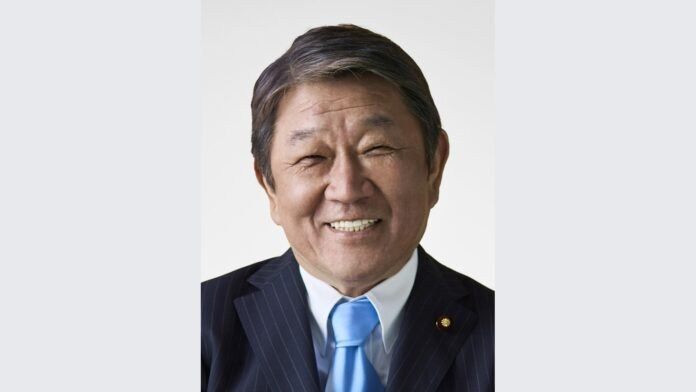
October 29: Japan’s Foreign Minister Toshimitsu Motegi is scheduled to travel to Atlanta from October 29 to November 1 for G20 foreign-minister talks. Tokyo’s announcement places energy security, resilient supply chains and major regional conflicts on the agenda, with implications extending across Asian trade routes.
Key highlights
- Japan announced the planned visit on October 27.
- The itinerary lists departure from Tokyo and arrival in Atlanta on October 29.
- Regional discussions are expected to cover West Asia, Ukraine and the Indo-Pacific.
- The published schedule has Motegi returning to Tokyo on November 1.
What Tokyo says the visit is for
The Foreign Ministry said Motegi would explain Japan’s positions and initiatives on international challenges and use the meeting to strengthen coordination with other countries. Energy security and supply-chain resilience are listed as expected subjects, not agreements already reached.
The ministry’s Japanese-language announcement provides the detailed itinerary. Its English landing page identifies the same October 29–November 1 attendance window. No completed meeting, signed agreement or bilateral outcome is being reported here ahead of an official account.
The announced travel schedule
| Date | Planned movement |
|---|---|
| October 29 | Depart Tokyo; arrive in Atlanta |
| October 31 | Depart Atlanta |
| November 1 | Arrive in Tokyo |
These are travel dates. They should not be treated as a minute-by-minute conference programme or as proof that every meeting has occurred on schedule.
Why the agenda matters to Asia
Energy and supply chains are connected in practical ways. Manufacturers need reliable fuel and power as well as components, shipping capacity and working capital. A disruption to one part of that chain can affect the cost and timing of deliveries elsewhere.
Diplomatic discussion can help clarify priorities and establish channels for cooperation. It does not by itself reroute a shipment, lower an importer’s fuel bill or create a new stockpile. Those effects require subsequent decisions, commercial arrangements or measurable changes in supply.
For readers following Japan’s relationships with other Asian economies, the useful question is what concrete mechanisms emerge: information sharing, emergency coordination, investment arrangements or a specific follow-up meeting. A broad expression of cooperation and an operational agreement carry different weight.
What to watch
Official readouts after the talks will establish which discussions took place and whether participants announced shared commitments. Any separate bilateral meeting should be assessed on its own published account, including the counterpart, timing and agreed next steps.
The G20 also includes regional bodies alongside national governments. Its value as a forum is the range of economies involved; attendance is not a guarantee that all participants will endorse identical positions on every conflict or trade issue.
Sources
- Japan Ministry of Foreign Affairs: Motegi’s attendance at the G20 foreign ministers’ meeting, October 27 announcement (Japanese)
- Japan Ministry of Foreign Affairs: October 29–November 1 G20 visit, English landing page

The International Desk covers world and Asian affairs, diplomacy and conflict, with a focus on what they mean for India. Stories are checked against at least two credible sources before publication.