October 29: Singapore has backed work on an ASEAN–US defence-cooperation framework following ministerial discussions in Cebu on October 28. Defence Minister Chan Chun Sing linked the effort to Singapore’s 2027 ADMM chairmanship and the approaching 50th anniversary of ASEAN–US dialogue relations.
Key highlights
- ASEAN defence ministers held separate informal meetings with US and Japanese counterparts.
- Singapore supports developing an ASEAN–US defence-cooperation framework.
- The 20th ADMM adopted a Manila declaration and a statement marking the Treaty of Amity and Cooperation anniversary.
- Two security conferences are planned for next year.
What the official accounts establish
Singapore’s Defence Ministry said Chan supported the US development of the framework during the ASEAN–US informal meeting. ASEAN’s Secretariat separately recorded Secretary-General Kao Kim Hourn’s discussion with Pete Hegseth on the sidelines, covering further practical cooperation.
The accounts establish political support and discussion. They do not present a completed framework, its funding or a list of binding military obligations. That distinction is important when assessing what changed at the meeting.
The Cebu outcomes at a glance
| Item | Status in Singapore’s October 28 account |
|---|---|
| ASEAN–US framework | Development supported; final text not supplied |
| Manila Joint Declaration | Adopted at the 20th ADMM |
| Treaty of Amity and Cooperation anniversary statement | Adopted |
| Chemical, biological and radiological threats conference | Second ADMM-Plus conference planned next year |
| Maritime security and emerging technologies conference | Planned next year |
Singapore will chair ADMM in 2027, the ministry said. The anniversary reference concerns ASEAN–US dialogue relations, not the age of the defence forum itself.
Why the format matters
Regional defence forums provide a setting for countries with different capabilities and security priorities to identify areas where they can work together. Training, information exchange and preparation for cross-border risks require arrangements that can operate between meetings.
A framework can help organise that work, but its practical significance depends on its contents. The key questions are which activities it covers, which institutions participate and how progress is reviewed. A broad diplomatic commitment is a starting point for those details.
The two proposed conferences point to another issue: emerging technologies can change both maritime operations and the way threats are detected or managed. Bringing specialists together may help identify common procedures. It remains necessary to distinguish a future conference from a new operational capability already in service.
What to watch
Watch for a published framework or work programme, a confirmed timetable and the arrangements Singapore develops for its chairmanship. Those documents will provide a firmer basis for evaluating practical commitments than speculation about an alliance or agreement not described in the official releases.
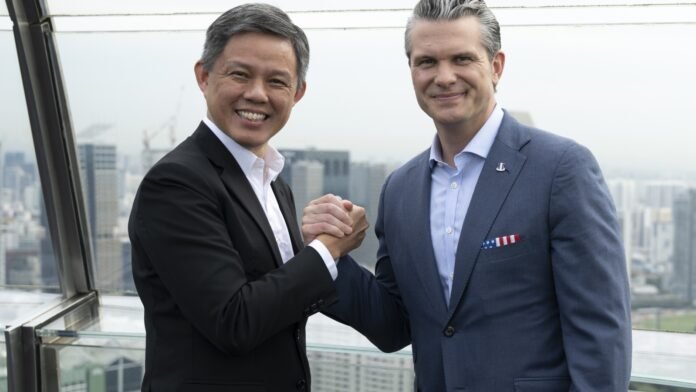
The file photograph accompanying this report shows Chan and Hegseth in Singapore in 2025. It is not a photograph of the October 2026 Cebu discussions.
Sources
- Singapore Ministry of Defence: ASEAN defence ministers reaffirm open and inclusive regional security architecture
- ASEAN Secretariat: Secretary-General meets the US Secretary of War on the sidelines in Cebu

The International Desk covers world and Asian affairs, diplomacy and conflict, with a focus on what they mean for India. Stories are checked against at least two credible sources before publication.