October 29: India and Mexico have formally launched negotiations for a preferential trade agreement after signing terms of reference, India’s Commerce Ministry announced on October 28. The step establishes a negotiating framework; it does not itself change the customs duty payable on a shipment.
Key highlights
- The terms of reference set the scope for negotiations.
- Goods access, origin rules and customs procedures are on the agenda.
- The ministry identified sectors including pharmaceuticals, automobiles and electronics.
- A possible Mexican business mission to India in early 2027 was discussed.
Who launched the talks
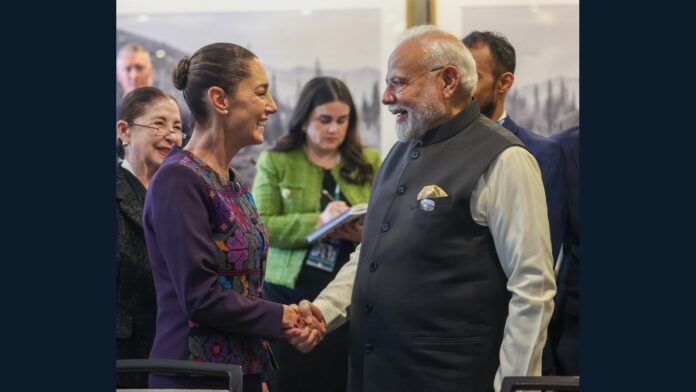
The Commerce Ministry identified Indian Commerce Secretary Rajesh Agrawal and Mexico’s Undersecretary of Foreign Trade, Luis Rosendo Gutiérrez Romano, as the officials signing the terms. It connected the initiative to the understanding reached by Prime Minister Narendra Modi and President Claudia Sheinbaum at their June 2025 G7 meeting.
The ministry’s account also described discussions on a possible Mexican business mission to India in the first quarter of 2027. A discussed visit should be distinguished from a confirmed delegation itinerary or a completed investment commitment.
What the negotiating agenda covers
| Area identified by the ministry | Why it matters to a trading business |
|---|---|
| Goods market access | Which products may receive negotiated preferences |
| Rules of origin | How a product qualifies for a preference |
| Customs and trade facilitation | Documents and border procedures |
| Sanitary and technical measures | Health, safety and product-standard requirements |
| Trade remedies and dispute settlement | How problems and disagreements may be handled |
The ministry highlighted commercial possibilities across automotive products, chemicals, electronics, pharmaceuticals, agrifood, energy, critical minerals, medical devices and advanced manufacturing. These are areas of interest, rather than a published list of final tariff concessions.
Why launching negotiations is not the same as implementing a deal
A terms-of-reference document defines the exercise that negotiators will undertake. An agreed product schedule would answer a different question: the treatment of a particular tariff line. Implementation would then require the relevant legal and customs arrangements to take effect.
For an exporter, this sequence has practical consequences. A prospective preference cannot be priced into a confirmed shipment simply because talks have begun. The business still needs the applicable tariff classification, current customs rate and any existing origin or certification requirements.
Rules of origin can be as important as the headline tariff. A good assembled in one country using imported components may need to satisfy a specified production or value-content test. The final text, if agreed, would determine that test; the launch announcement does not supply it.
Product standards also remain a separate issue. A lower tariff would not automatically remove a requirement for pharmaceutical approval, food-safety documentation or technical certification. Businesses should therefore follow both the commercial-access negotiations and the regulatory provisions.
What to watch
The next substantive milestones would be negotiating rounds, any published scope or product proposals, and an agreed text. None should be substituted with an assumed completion date.
For readers across Asia, the significance is a new India–Latin America negotiating channel. Its eventual commercial value will depend on the coverage, conditions and implementation of the agreement that emerges, rather than on the opening announcement alone.
Sources
- India Ministry of Commerce and Industry: India and Mexico launch PTA negotiations
- Mexico Presidency: Sheinbaum–Modi meeting at the G7, June 17, 2025

The Business Desk covers markets, the economy, companies and personal finance. Stories are checked against at least two credible sources before publication.