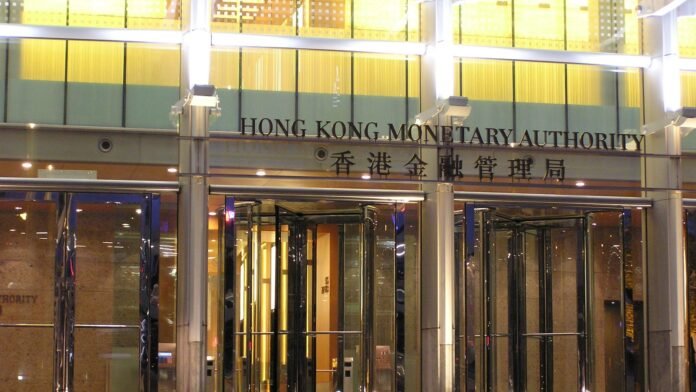
October 29: Hong Kong’s monetary authority has urged the public to manage interest-rate risks after the US Federal Reserve left its policy target unchanged. In an October 29 statement, the HKMA highlighted the gap between Hong Kong-dollar and US-dollar interest rates and its possible effect on currency-market activity.
Key highlights
- The HKMA described local money and foreign-exchange markets as orderly.
- It said the noticeable interest-rate differential may encourage carry trades.
- Hong Kong-dollar liquidity and market demand remain important for local rates.
- The warning covers property purchases, investment and borrowing decisions.
What the HKMA said
The authority said the Fed’s decision to keep its target range at 3.75–4% was in line with expectations. It noted that carry trades associated with the interest-rate differential could lead to a gradual weakening of the Hong Kong dollar.
Its statement identified global risk appetite, demand and supply of Hong Kong-dollar liquidity, capital-market activity and seasonal factors as influences on the currency and local interbank rates. The release did not announce a new base-rate figure.
The difference between the policy headline and a borrower’s bill
| Item to distinguish | What it tells a reader |
|---|---|
| US policy target | The Fed’s chosen range for its policy instrument |
| Hong Kong interbank conditions | Conditions in the local wholesale funding market |
| A loan’s reference rate | The benchmark specified in the contract |
| Contract margin and reset date | How and when the lender calculates the charge |
The table explains why an unchanged US policy target is not a promise that every Hong Kong loan payment will remain unchanged. The relevant rate and timing are specified by the borrower’s own contract.
How the carry-trade mechanism works
In a simplified carry trade, a participant borrows in a lower-interest-rate currency and holds an asset in a higher-interest-rate currency. The difference in rates is only one part of the outcome: currency movements, financing costs and hedging expenses can offset it.
This mechanism helps explain the HKMA’s attention to the rate gap. It does not establish that every investor is making the same trade, or that the exchange rate must move to a particular level. The authority’s wording was conditional.
For a business with receipts in one currency and payments in another, the practical question is its actual currency exposure. A loan denominated in Hong Kong dollars and a dollar-priced import invoice create different obligations, even when the two are discussed under the same interest-rate headline.
Why households should check the contract
A prospective property buyer can compare the reference rate, margin, repayment assumptions and reset provisions in the proposed loan. A current borrower can check the next reset date and whether a market-rate movement is reflected immediately or later.
These are contract-reading steps, rather than a forecast that rates or mortgage payments will necessarily rise. The HKMA’s warning is a reminder to allow for changing conditions when taking on a long-term obligation.
What to watch
The useful indicators are subsequent HKMA communications and observable local money-market conditions. Readers should also distinguish an authority’s description of risks from an announced change to a specific policy rate. This statement provides the former; it should not be rewritten as a rate-change announcement.
Sources
- HKMA: Response to the US Federal Reserve’s interest-rate decision, October 29, 2026
- Federal Reserve: FOMC statement, October 28, 2026

The Business Desk covers markets, the economy, companies and personal finance. Stories are checked against at least two credible sources before publication.