NEW DELHI, November 7: Foreign exchange reserves moved in different directions across Asia in October 2026. Taiwan’s reserves fell by $4.31 billion to $596.44 billion and the Philippines’ dropped to $97.4 billion, while South Korea and Hong Kong added to theirs, according to figures released by their central banks this week. India’s reserves stood at $717.06 billion on October 30.
Key highlights
- Taiwan: $596.44 billion at end-October, down $4.31 billion; the central bank said it stepped in to smooth volatile capital flows.
- South Korea: $443.2 billion, up $2.6 billion from $440.6 billion.
- Hong Kong: $440.5 billion, up from $432.9 billion.
- Philippines: $97.4 billion (preliminary), down from $99.5 billion, partly because of lower gold prices.
- India: $717.06 billion on October 30, down $2.69 billion in the week but $25.95 billion higher than at end-March.
| Economy | Reserves | Previous | Change |
|---|---|---|---|
| India (October 30) | $717.06 bn | $719.75 bn (October 23) | −$2.69 bn |
| Taiwan (end-October) | $596.44 bn | $600.75 bn | −$4.31 bn |
| South Korea (end-October) | $443.2 bn | $440.6 bn | +$2.6 bn |
| Hong Kong (end-October) | $440.5 bn | $432.9 bn | +$7.6 bn |
| Philippines (end-October, preliminary) | $97.4 bn | $99.5 bn | −$2.1 bn |
India’s previous figure is worked out from the Reserve Bank of India’s weekly change. Hong Kong’s and the Philippines’ changes are our calculation from the two published levels.
Taiwan: intervention and a fall in foreign holdings
The Central Bank of the Republic of China (Taiwan) gave three reasons for the October fall: returns from managing the reserves, movements of other reserve currencies against the US dollar, and its own action to “smooth out volatile capital flows” and keep the foreign exchange market orderly. It also said foreign portfolio investors’ holdings of Taiwanese securities and New Taiwan dollar deposits were worth $1,742.6 billion at the end of October, or 292% of reserves. A month earlier the figure was $1,927.2 billion, or 321%.
Philippines: gold and government withdrawals
The Bangko Sentral ng Pilipinas said reserves fell because of its net foreign exchange operations, lower valuations of gold as global prices eased, and the national government’s withdrawals of foreign currency for debt payments and other needs. It said the $97.4 billion level is still an adequate buffer, equal to 6.1 months of imports of goods and payments for services and primary income, and about 3.1 times short-term external debt by residual maturity.
Korea, Hong Kong and India
The Bank of Korea said securities accounted for $382.4 billion of its reserves and deposits for $36.3 billion, with deposits rising $6.3 billion in October. The Hong Kong Monetary Authority did not give reasons for its increase, as we noted in our report on Hong Kong’s reserves. In India, foreign currency assets were $591.12 billion and gold $102.59 billion on October 30; the value of gold holdings was $12.81 billion lower than at the end of March.
Our calculation
- Taiwan’s reserves fell 0.7% in October; foreign holdings of Taiwanese assets fell by $184.6 billion, a much larger swing.
- The Philippines’ reserves are down $7.4 billion, or about 7%, from $104.8 billion at end-August.
- Hong Kong’s reserves rose about 1.8% in the month and Korea’s about 0.6%.
- India’s reserves are about 20% larger than Taiwan’s and about 1.6 times Korea’s.
What it means for India and Asia
Reserves are a country’s savings in foreign currency and gold, used to pay for imports, service foreign debt and steady the currency. October’s mixed picture reflects two forces. High oil prices and swings in technology stocks have pushed money in and out of Asian markets, and central banks such as Taiwan’s and the Philippines’ have used their foreign exchange operations to calm markets. At the same time, lower gold prices have reduced the dollar value of the gold that many Asian central banks hold. For India, a reserve pile above $700 billion still gives the Reserve Bank of India plenty of room to manage the rupee if oil prices rise further.
What to watch
- China’s October reserve figures from the State Administration of Foreign Exchange.
- The RBI’s next weekly reserve figures, published every Friday.
- Taiwan’s next release, scheduled for December 4, 2026.
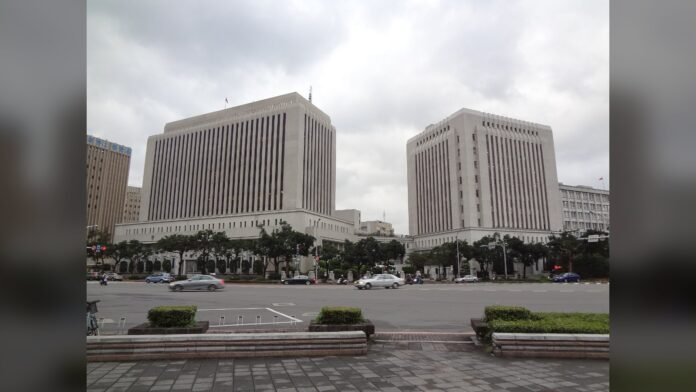
The Central Bank of the Republic of China (Taiwan) in Taipei. Image: Solomon203, CC BY-SA 4.0, via Wikimedia Commons. Photo source · Licence
Sources
- Central Bank of the Republic of China (Taiwan): Foreign Exchange Reserves as of the End of October 2026, November 5, 2026
- Bank of Korea: Official Foreign Reserves (October 2026), November 4, 2026
- Hong Kong Monetary Authority: latest foreign currency reserve assets figures, November 6, 2026
- Bangko Sentral ng Pilipinas: GIR settle at US$97.4B as of end-Oct 2026, November 6, 2026
- Bangko Sentral ng Pilipinas: GIR settle at US$99.5B, BOP posts US$3.1-B deficit in Sept 2026
- Reserve Bank of India: Weekly Statistical Supplement, November 6, 2026

The Business Desk covers markets, the economy, companies and personal finance. Stories are checked against at least two credible sources before publication.