November 27, 2026 — Cambodian National Assembly President Khuon Sudary hosted a Chinese delegation led by senior legislator Tie Ning in Phnom Penh on November 26, with both sides reaffirming their strategic partnership and calling for closer cooperation between their legislatures, according to Cambodian coverage of the meeting.
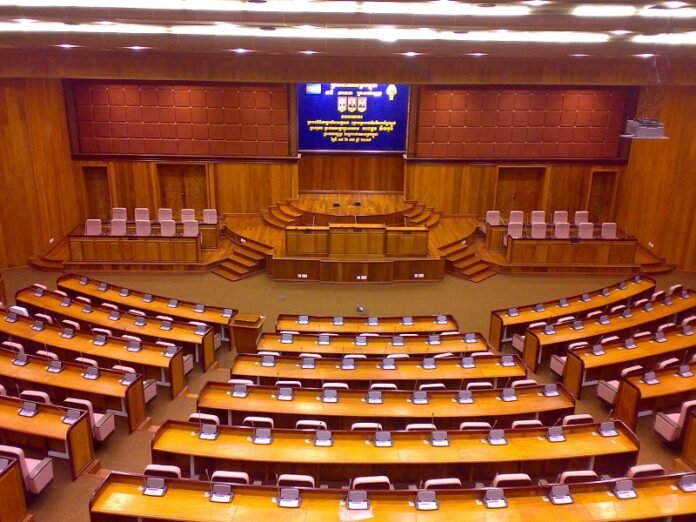
File photo: the Cambodian National Assembly chamber, June 29, 2007. SovanDara18 / Wikimedia Commons, CC BY-SA 3.0.
Key highlights
- Tie Ning is a vice chairperson of the Standing Committee of China’s National People’s Congress.
- Khuon Sudary hosted the delegation at a welcome dinner on Thursday evening.
- The accounts describe political commitments and legislative engagement, without setting out a signed instrument or implementation schedule.
A meeting between legislative leaders
The meeting brought together two officials with roles in their respective national legislatures. Khuon Sudary said the visit would strengthen cooperation and solidarity, Kampucheathmey Daily reported. The outlet also reported that she expressed appreciation for China’s support for Cambodia’s development.
The Phnom Penh talks put parliamentary ties within a broader bilateral relationship. Legislatures can keep regular contact through delegations, exchanges and discussions about their work. A pledge to maintain or deepen those exchanges does not itself establish a new law, trade commitment or project.
How both sides framed the relationship
Cambodian reporting described the officials’ emphasis on political trust, respect and the existing Comprehensive Strategic Partnership. Khuon Sudary linked the relationship to a wider framework the governments have used to describe their long-term cooperation.
The meeting’s timing and the seniority of the delegation make it a useful indicator of the importance both sides attach to contacts between their legislatures. The available accounts establish a meeting and the stated intentions. Details such as a calendar of legislative exchanges or a formal agreement would require a further release.
Separating the visit from future commitments
The wider relationship spans multiple channels. Parliamentary diplomacy can give legislative leaders a venue to discuss how cooperation is working. An economic agreement, a financed project or a change in national policy would each require evidence appropriate to that action.
For readers tracking the relationship, the next useful distinction will be whether the visit is followed by specific exchanges between committees, public work plans or concrete proposals. Thursday’s meeting shows the direction the two sides publicly endorsed. It leaves the operational details open.
Related coverage: The Press of Asia’s Southeast Asia coverage.
What to watch
Look for a published schedule of parliamentary exchanges, committee-level work or any document agreed during the wider visit. The reports on the welcome meeting do not specify dates for those steps.
Sources

The International Desk covers world and Asian affairs, diplomacy and conflict, with a focus on what they mean for India. Stories are checked against at least two credible sources before publication.