NEW DELHI, November 6: Dhanteras, which falls today and opens the five days of Diwali, has no single founding date. It grew in layers over many centuries: an ancient legend of Dhanvantari, the physician of the gods, rising from the churning of the ocean with a pot of nectar; a ritual in the Puranas of lighting a lamp for Yama, the god of death; the worship of wealth; and, in modern times, a day for buying gold and silver and, from 2016 to 2024, India’s National Ayurveda Day. This History Desk report traces how each layer came together.
Key highlights
- The name: “Dhanteras” joins dhan (wealth) and teras (the thirteenth). Its Sanskrit name is Dhanatrayodashi, the thirteenth lunar day (trayodashi) of the dark fortnight, two days before Diwali.
- Oldest layer: the Samudra Manthan (churning of the ocean) story, told in the Mahabharata and the Puranas, in which Dhanvantari rises carrying the pot of amrit (nectar).
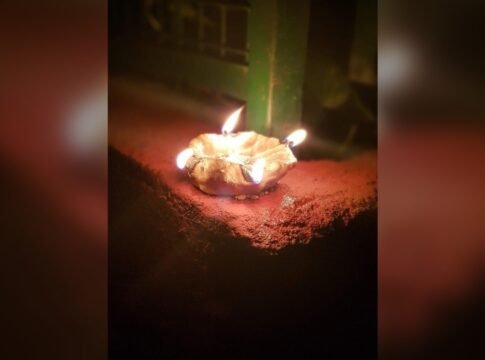
- Ritual layer: the Padma Purana prescribes placing a lamp for Yama outside the home on this night to ward off untimely death, the origin of the Yama Deepdaan custom.
- Medical layer: Dhanvantari is revered as the god of Ayurveda; the Sushruta tradition presents its teacher, Divodasa, as an incarnation of Dhanvantari.
- Modern layer: buying gold, silver and utensils became a mass custom; India marked National Ayurveda Day on Dhanteras from 2016 until 2024, before fixing it on September 23 from 2025.
So when did Dhanteras begin?
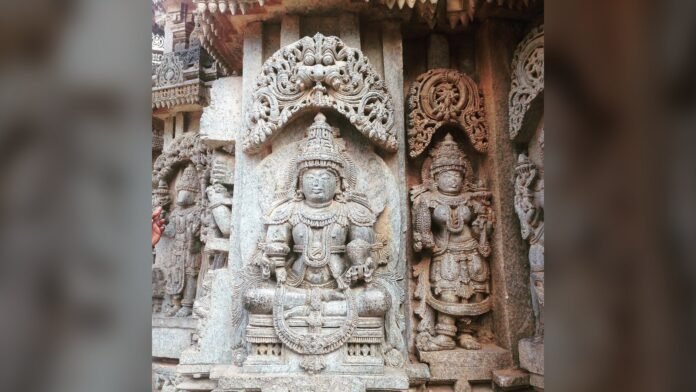
There is no record of a year in which Dhanteras was first celebrated, and any exact date found online should be treated with caution. What the sources show is a festival built from older pieces. The legend of Dhanvantari is found in texts such as the Mahabharata and the Puranas, which were composed and compiled over many centuries. The specific rule to light a lamp for Yama on the thirteenth night of the dark fortnight of Kartika appears in the Padma Purana. Stone images of Dhanvantari on medieval temples, such as the 13th-century Chennakeshava temple at Somanathapura in Karnataka, show he was being worshipped long before modern times. The shopping traditions that dominate the day today are much more recent.
Layer 1: Dhanvantari and the churning of the ocean
In the Samudra Manthan story, the gods and demons churn the ocean of milk to obtain amrit, the nectar of immortality. Among the treasures that emerge is Dhanvantari, carrying the pot of nectar. The Bhagavata Purana describes him as a partial incarnation of Vishnu who was “very conversant with the science of medicine”. The Union Ministry of Ayush describes Dhanteras as associated with Dhanvantari Jayanti, commemorating “the emergence of Lord Dhanvantari during the Samudra Manthan, carrying the Amrit Kalash”. Because the day marks his appearance, it is also known as Dhanvantari Jayanti, and Ayurvedic practitioners and hospitals hold special prayers for him.
Layer 2: the god of Ayurveda
Dhanvantari’s link to medicine runs through the classical Ayurvedic texts. In the tradition of the Sushruta Samhita, the foundational text of Indian surgery, the teacher Divodasa presents himself as an incarnation of Dhanvantari, and the Puranas describe Sushruta as Dhanvantari’s disciple. This is why Dhanteras is also a day on which the health message is as old as the wealth message: Ayurveda’s principle of “Swasthasya Swasthya Rakshanam”, protecting the health of the healthy, is often recalled on this day.
Layer 3: a lamp for Yama
The Padma Purana (Uttarakhanda, chapter 122) says that on the thirteenth day of the dark fortnight of Kartika, a lamp should be placed outside for Yama, and that doing so wards off untimely death. This is the root of Yama Deepdaan, still observed in many homes, often with a lamp placed facing south, the direction associated with Yama. A popular folk tale adds a story to the ritual: the young son of a King Hima, fated to die of snakebite, was saved when his wife kept him awake with lamps and a heap of gold and silver, so dazzling Yama, who came as a serpent, that he left at dawn. The tale is part of oral tradition rather than a fixed scripture, but it helps explain why lamps and precious metals came together on this night.
Layer 4: wealth, metals and markets
As the first day of Diwali, Dhanteras is also a day to honour Lakshmi, the goddess of prosperity, and in many places Kubera, the treasurer of wealth. Over time, buying something new in metal, whether gold, silver or kitchen utensils, became the day’s best-known custom; many families link the utensil purchase to the pot of nectar Dhanvantari carried. In modern India the custom turned Dhanteras into one of the busiest days of the year for jewellers, which is why consumer protection, such as hallmarking of gold, has become part of the day’s story.
Layer 5: the state steps in
In 2016, the Ministry of Ayush began observing National Ayurveda Day on Dhanteras in honour of Dhanvantari; the first was held on October 28, 2016. Because Dhanteras follows the lunar calendar and its date moves every year, the government decided, through a Gazette notification issued in March 2025, to observe Ayurveda Day on a fixed date, September 23, from 2025. Separately, the Bureau of Indian Standards runs gold hallmarking, voluntary from 2000 and mandatory for gold jewellery in notified districts since June 23, 2021, which protects buyers on days like Dhanteras.
Timeline
| Period or date | Milestone |
|---|---|
| Ancient (texts composed over many centuries) | The Samudra Manthan story in the Mahabharata and Puranas describes Dhanvantari rising with the pot of nectar |
| Classical Ayurveda | Sushruta tradition presents its teacher Divodasa as an incarnation of Dhanvantari |
| Puranic ritual texts | Padma Purana prescribes a lamp for Yama on Kartika’s dark-fortnight trayodashi (Yama Deepdaan) |
| 1258 CE | Chennakeshava temple at Somanathapura, Karnataka, built; its walls include a sculpture of Dhanvantari |
| 2000 | Voluntary gold hallmarking scheme launched by the Bureau of Indian Standards |
| October 28, 2016 | First National Ayurveda Day, observed on Dhanteras |
| June 23, 2021 | Gold hallmarking becomes mandatory in 256 districts |
| March 2025 | Gazette notification fixes Ayurveda Day on September 23 from 2025 |
| November 6, 2026 | Dhanteras; Diwali follows on November 8 |
Our note on sources
Dates for the composition of the epics and Puranas are debated by scholars, so this report does not assign them a single century. Where a custom comes from oral tradition rather than a text, we have said so.
What it means today
Dhanteras today carries all its layers at once: prayers to Dhanvantari for health, a lamp for Yama, worship of Lakshmi and Kubera, and a trip to the market. The Ayush Ministry’s message this year, that “Health is the Greatest Wealth”, is in a sense a return to the festival’s oldest meaning. For today’s practical guide, read our report on Dhanteras 2026 and how to check hallmarked gold and silver.
A sculpture of Dhanvantari on the outer wall of the 13th-century Chennakeshava temple at Somanathapura, Karnataka. Image: prashanthns, CC BY-SA 3.0, via Wikimedia Commons. Photo source · Licence
Sources
- PIB (Ministry of Ayush): Prioritise health on Dhanteras, November 4, 2026
- PIB Backgrounder: Ayurveda Day, September 2025 (first observed in 2016; fixed on September 23 from 2025)
- PIB Backgrounder: Bureau of Indian Standards hallmarking, November 5, 2026
- Bhagavata Purana, Canto 8, Chapter 8, verse 34 (Dhanvantari)
- Padma Purana (Sanskrit), Uttarakhanda, chapter 122, verse 4 (lamp for Yama)
- Sushruta Samhita, Vol. 1 (Sutrasthana), Introduction, Bhishagratna translation (1907)

The History Desk tells the stories behind the news: the people, events and turning points of India, Asia and the world, with timelines and original sources. Stories are checked against at least two credible sources before publication.