WASHINGTON, October 13, 2026: The International Monetary Fund has raised its forecast for India’s growth to 7% for both 2026–27 and 2027–28, up from 6.4% and 6.7% in its July update. In the October World Economic Outlook, the Fund credits resilient domestic demand and strong services activity, even as it cuts or holds forecasts for much of the world because of the war in the Middle East and higher oil prices.
Key highlights
- India’s growth forecast is 7% for FY27 and FY28, up 0.6 and 0.3 percentage points from July.
- Global growth is projected at 3.1% in 2026 and 3.4% in 2027.
- China is forecast to grow 4.5% in 2026 and 4.0% in 2027.
- The IMF expects India’s consumer inflation to rise to 5.0% in 2026 before easing to 4.4% in 2027.
- The baseline assumes oil averaging about $96 a barrel in 2026, and the Fund says risks are tilted to the downside.
What changed in the India forecast
| Period | July 2026 forecast | October 2026 forecast | Change |
|---|---|---|---|
| FY27 (April 2026–March 2027) | 6.4% | 7.0% | +0.6 points |
| FY28 (April 2027–March 2028) | 6.7% | 7.0% | +0.3 points |
On a calendar-year basis, the IMF projects India’s growth at 7.4% in 2026 and 7.0% in 2027. Readers comparing India with other countries should check the time period: India’s fiscal year runs from April to March, while most other forecasts are for calendar years.
How India compares
| Economy | 2026 | 2027 |
|---|---|---|
| World | 3.1% | 3.4% |
| India (fiscal year) | 7.0% | 7.0% |
| China | 4.5% | 4.0% |
| United States | 2.3% | 2.3% |
| Emerging and developing Asia | 5.1% | — |
| Middle East and Central Asia | −0.3% | — |
| Saudi Arabia | −3.3% | 7.9% |
Our calculation: India’s projected growth for this year is 2.5 percentage points above China’s and 3.9 points above the world average. The Fund’s oil assumption for 2026, about $95.74 a barrel, is roughly 41% higher than the 2025 average of $67.74.
The other side of the forecast: prices and the external balance
The upgrade comes with less comfortable numbers elsewhere. The IMF expects India’s consumer inflation to rise from 2.0% in 2025 to 5.0% in 2026, largely because of fuel, before easing to 4.4% in 2027. It also sees the current account deficit widening to 1.5% of GDP in 2026 from 0.7% in 2025, then narrowing to 1.3% in 2027. A bigger oil bill is the main reason. These figures help explain why the Reserve Bank raised its policy rate this month even as growth holds up.
Why the IMF is more optimistic about India
The Fund points to resilient domestic demand, robust services, a young population, a large domestic market and structural reforms. In contrast, it expects higher oil prices and prolonged uncertainty to weigh on China, and it projects a contraction for the Middle East and Central Asia region in 2026, led by Saudi Arabia, before a rebound in 2027.
What the upgrade does — and does not — mean
A forecast is not a result. Official GDP data for each quarter will show whether the momentum holds. A 7% headline also does not mean every sector or household gains equally; employment, rural incomes and private investment will decide how widely the growth is felt.
What to watch
- India’s second-quarter GDP data, due at the end of November.
- Oil prices: the IMF’s main downside risk is a prolonged or wider conflict in the Middle East.
- Inflation and the Reserve Bank’s next policy decisions.
- The IMF’s January update, which will show whether the upgrade sticks.
Updated October 25, 2026: this report was expanded with the global and regional projections, the inflation and current-account outlook, and our calculations.
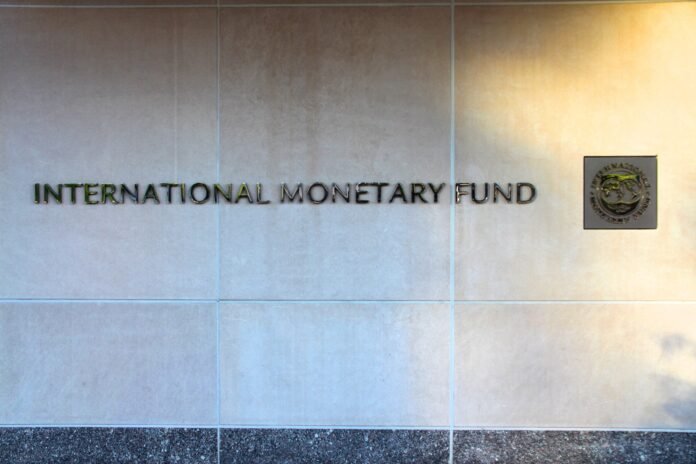
File photo: IMF headquarters in Washington, D.C. Photo: Marek Slusarczyk / Wikimedia Commons, CC BY 3.0. Resized/cropped for display. Original image and provenance · Licence / usage terms.
Sources

The Business Desk covers markets, the economy, companies and personal finance. Stories are checked against at least two credible sources before publication.