October 28: India’s Union Cabinet has approved a rise in dearness allowance for central government employees and dearness relief for pensioners from 60% to 63% of basic pay or pension, effective July 1, 2026. The Finance Ministry announced the decision through the Press Information Bureau on Wednesday.
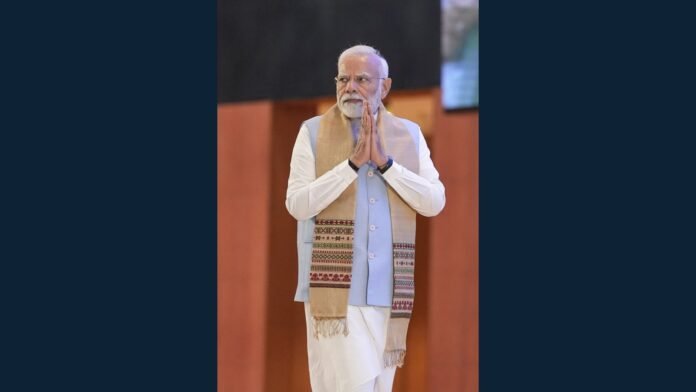
File photo: Prime Minister Narendra Modi, May 23, 2025. Prime Minister’s Office / PIB, Government of India, via Wikimedia Commons; Government Open Data Licence – India. Resized with side padding; not a photograph of today’s Cabinet meeting. Image source · Licence
Key highlights
- The increase is three percentage points of basic pay or pension.
- The effective date is July 1, rather than the October announcement date.
- The government estimates 48.54 lakh employees and 68.71 lakh pensioners will benefit.
- The annual combined cost is estimated at ₹10,016.10 crore.
What changes in the allowance
The Cabinet release describes the instalment as compensation for price rises under the accepted formula based on Seventh Central Pay Commission recommendations. DA applies to employees covered by the announcement, while DR is the corresponding relief for pensioners.
“Three percentage points” matters here. The rate moves from 60 to 63 for every ₹100 of eligible basic pay or pension. That is different from saying that the employee’s entire salary, including every component, increases by 3%.
Illustrative monthly calculations
| Illustrative eligible basic amount | At 60% | At 63% | Difference |
|---|---|---|---|
| ₹30,000 | ₹18,000 | ₹18,900 | ₹900 |
| ₹50,000 | ₹30,000 | ₹31,500 | ₹1,500 |
| ₹70,000 | ₹42,000 | ₹44,100 | ₹2,100 |
Our calculation: Multiply the eligible basic amount by 0.03 to find the additional monthly allowance. These examples assume the same basic amount throughout the month and describe the allowance difference, not an individual’s net bank credit after deductions.
Effective date and payment date are different
The retrospective effective date establishes the period from which the higher rate applies. It does not, by itself, establish the day on which every department or pension-disbursing bank will process the change. The short Cabinet announcement does not give a universal credit date.
Employees should compare their basic-pay figure, allowance rate and relevant period when reviewing a payslip. For pensioners, the equivalent starting point is the applicable basic pension and the DR line. Any arrears calculation also depends on the months already paid and whether the underlying basic amount changed.
Who the announcement covers
The release concerns central government employees and pensioners. It is not an order automatically changing every state-government allowance or private-sector salary. Those readers need the rules or notification applicable to their own employment.
What to watch
The next practical step is the implementing order and the relevant payroll or pension-payment communication. Those documents will clarify processing arrangements; the Cabinet decision alone should not be used to promise a particular payment day.
Sources

The Business Desk covers markets, the economy, companies and personal finance. Stories are checked against at least two credible sources before publication.