November 13: India’s retail inflation rose to 6.09% in October 2026 from 5.54% in September, official data released on Thursday show, as food prices climbed faster. Food inflation jumped to 8.94% from 7.74%, with onion prices more than double their level a year earlier. October’s reading is above the 6.0% that the Reserve Bank of India projected for the October–December quarter at its policy meeting last month.
Key highlights
- Headline CPI inflation: 6.09% in October (provisional), up from 5.54% in September (final).
- Food inflation: 8.94%, up from 7.74%.
- Rural vs urban: 6.63% in villages and 5.41% in cities.
- Biggest risers: onion 116.22%, garlic 60.74%, silver jewellery 52.39%, ginger 48.32% and lemon 47.30%.
- Prices that fell: potato −14.24%, cauliflower −10.57% and coconut −5.60%.
- Next data: November CPI on December 14; the RBI meets on December 2–4.
The numbers
| Measure | October 2026 | September 2026 |
|---|---|---|
| CPI inflation, all India | 6.09% | 5.54% |
| Rural | 6.63% | 6.08% |
| Urban | 5.41% | 4.88% |
| Food inflation (CFPI), all India | 8.94% | 7.74% |
| Food inflation, rural | 9.09% | 8.06% |
| Food inflation, urban | 8.68% | 7.18% |
What pushed prices up
Food did most of the work. The food and beverages division rose 8.51% from a year earlier, and the narrower food index 8.94%. Kitchen staples led the item list: onion prices were up 116.22% from October 2025, garlic 60.74%, ginger 48.32% and lemon 47.30%. Silver jewellery rose 52.39%, though that was slower than September’s 87.82%.
Eating out also cost more. Restaurants and accommodation rose 10.06%, and the division covering personal care and miscellaneous goods rose 10.14%. By contrast, housing, water, electricity, gas and fuels rose only 2.90%, health 2.05% and recreation 2.52%. Running a personal vehicle cost 7.52% more than a year earlier.
Where inflation is highest
Among the larger states, the highest rates were in Tamil Nadu (7.29%), Telangana (7.26%), Andhra Pradesh (7.25%), Madhya Pradesh (7.19%) and Odisha (7.17%). Across all states and union territories, Puducherry was highest at 7.96%, and Mizoram lowest at 2.85%.
Our calculation
| Question | Answer | How we got it |
|---|---|---|
| How much did prices rise in one month? | About 0.51% | All-India index 110.05 in October vs 109.49 in September |
| How much did food rise in one month? | About 0.94% | Food index 113.23 vs 112.17 |
| What does 6.09% mean for a family budget? | A basket that cost ₹30,000 a year ago now costs about ₹31,827 | ₹30,000 × 1.0609 |
| How much higher is rural than urban inflation? | 1.22 percentage points | 6.63% − 5.41% |
What it means for India and Asia
For households, the October numbers mean a sharper rise in kitchen costs, and the pressure is greater in rural India, where inflation is higher and food takes a bigger share of spending. For the RBI, which raised its policy rate to 5.50% in October and moved to a stance of “calibrated tightening”, a reading above its own 6.0% quarterly projection strengthens the case for caution at the December meeting. The RBI’s inflation target is 4%.
India is not alone. Vietnam’s inflation reached 5.09% in October, and Sri Lanka’s budget speech this week said inflation there had passed 8.3%. Central banks across the region face a similar choice between supporting growth and holding prices down.
What to watch
- The RBI Monetary Policy Committee decision on December 4.
- November CPI on December 14: whether onion and vegetable prices ease with the new crop.
- Wholesale price data, which show cost pressures earlier in the supply chain.
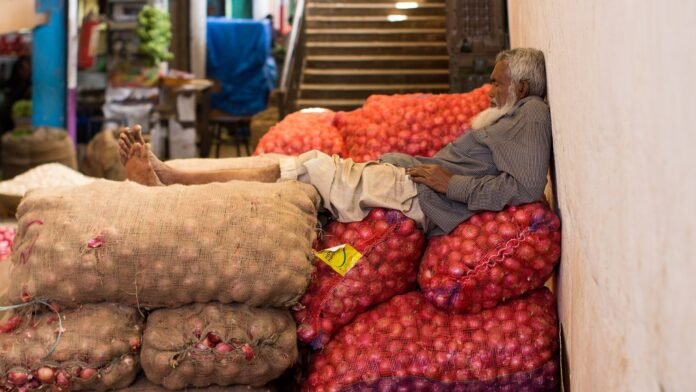
An onion vendor at a wholesale market in India. Image: Advay m, CC BY-SA 4.0, via Wikimedia Commons. Photo source · Licence
Sources
- MoSPI: Press release of CPI (base 2024=100) for October 2026 (PDF)
- PIB: Press release of Consumer Price Index for October 2026
- RBI: Resolution of the Monetary Policy Committee, October 5–7, 2026

The Business Desk covers markets, the economy, companies and personal finance. Stories are checked against at least two credible sources before publication.