
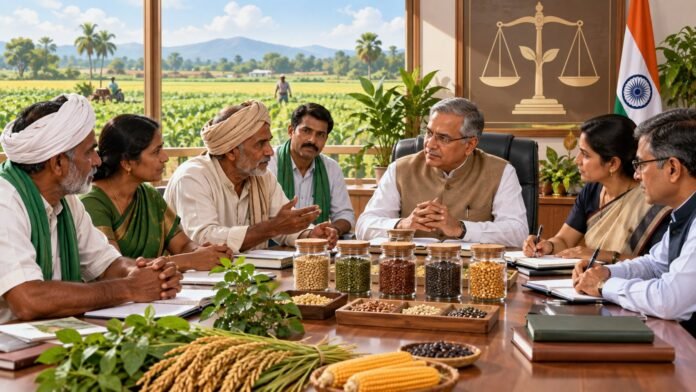

NEW DELHI, September 10, 2026: The Union government is preparing an India tougher seed law proposal aimed at protecting farmers from fake, adulterated and substandard seeds. Agriculture Minister Shivraj Singh Chouhan is scheduled to meet leaders of major farmer organisations at Krishi Bhawan on Thursday afternoon before the draft legislation is finalised.
The Ministry of Agriculture and Farmers Welfare said the consultation would bring ground-level experience into the proposed regulatory framework. According to the ministry, the planned law is expected to provide stronger action against companies and traders found selling poor-quality seed, including heavy penalties and possible imprisonment. The exact wording, enforcement process and safeguards will depend on the final draft placed before Parliament.
Why the seed consultation matters
Seed quality is one of the earliest and most consequential decisions in a crop cycle. A packet that fails to germinate, carries a false varietal claim or performs below the promised standard can wipe out spending on land preparation, labour, irrigation and other inputs. By the time a farmer discovers the problem, the sowing window may have closed.
The government says it wants farmer organisations to describe how such disputes occur in practice and where the present system falls short. Representatives invited to the meeting include leaders from the Bharatiya Kisan Sangh, factions of the Bharatiya Kisan Union, the All India Kisan Coordination Committee, Kisan Mahapanchayat, Bharatiya Krishak Samaj, Gaon Kisan Unnayan and the Society for Independent Farmers Association.
What a stronger law will need to answer
Stricter punishment may deter deliberate fraud, but enforcement will also depend on testing capacity and a clear chain of responsibility. Regulators will need to distinguish between intentional mislabelling, poor storage, contamination, weather-related crop failure and genuine differences in local growing conditions. Farmers also need a complaint process that produces a decision within the same agricultural season rather than after years of litigation.
- How quickly will disputed seed samples be collected and tested?
- Which laboratory result will be treated as authoritative?
- Will compensation reflect only the packet price or the farmer’s wider crop loss?
- How will small dealers and online sellers be monitored?
- What appeal mechanism will protect farmers as well as responsible seed producers?
Traceability is another major issue. Batch numbers, invoices and accurate dealer records can help investigators identify where a defective consignment entered the supply chain. Digital records may improve oversight, but any system must remain usable for farmers and retailers in areas with limited connectivity.
Consultation before Parliament
The ministry described Thursday’s meeting as a step toward dialogue and consensus ahead of the coming Parliament session. That sequence is significant because farmer groups have often argued that agricultural rules work best when cultivators are involved before a bill is introduced, not only after its provisions become public.
At this stage, the government has announced its intention and the consultation; it has not published a final Act. Claims about specific offences, penalty amounts or implementation dates should therefore wait for the official bill text. The Press of Asia will update the report when the draft and the outcome of the farmer meeting are released.
What farmers should watch next
Farmers and seed businesses should look for the definition of substandard seed, the evidence required for compensation, time limits for complaints and the role assigned to state authorities. They should also watch whether the proposal strengthens public laboratories and field inspections, since a tough statute cannot deliver results without credible testing and trained enforcement staff.
The central question is whether the proposed law can provide fast, practical relief while encouraging legitimate research and the availability of improved varieties. The consultation gives farmer leaders a formal opportunity to influence that balance before the legislation moves forward.
Sources
Press Information Bureau, Ministry of Agriculture and Farmers Welfare. Read more from our India desk.