Archive report: March 15, 2026. Casualty and displacement figures below relate to the reporting available at that time, not the current situation.
Israel is preparing for a massive ground invasion of southern Lebanon, aiming to seize the entire area south of the Litani River and dismantle Hezbollah’s military infrastructure — potentially the most extensive Israeli ground incursion into Lebanon since the 2006 war. The ongoing air campaign has already killed over 700 people including 103 children, and displaced more than 800,000 Lebanese civilians — roughly one in every seven people in the country — in just 10 days. Aid organisations have warned that humanitarian needs are escalating far faster than their capacity to respond.
How the Lebanon War Began
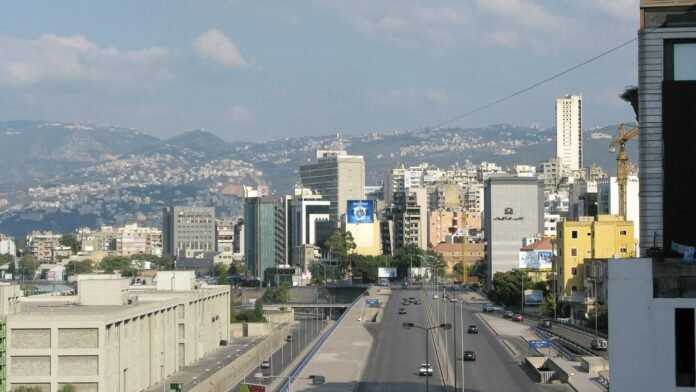
The current Lebanon conflict was triggered on March 2, 2026 — four days after the US-Israel war against Iran began — when Hezbollah launched a barrage of rockets at Israel following the killing of Iranian Supreme Leader Ali Khamenei. Israel responded immediately with a massive bombing campaign, issuing evacuation orders to civilians in over 50 villages across southern Lebanon and the Beqaa Valley, including parts of Beirut’s southern suburbs — Dahiyeh — which is one of Lebanon’s most densely populated areas.
By March 6, the IDF claimed to have struck over 500 Hezbollah targets throughout Lebanon and conducted twenty-six waves of airstrikes in Dahiyeh alone. Among those killed were Hezbollah’s Intelligence HQ Commander Hussain Mouqalled and its Firepower Management Commander Zaid Ali Jumaa. [Source: Long War Journal]
Ground Operations Planned: “We Will Replicate Gaza”
According to senior Israeli and US officials, Israel’s planned ground operation aims to seize the entire area south of the Litani River, drive Hezbollah forces further north of the border, and destroy weapons caches, cross-border tunnels and missile launch sites embedded in southern Lebanese villages. A high-ranking Israeli official said bluntly: “We are going to replicate what we did in Gaza.”
The IDF has already issued evacuation orders for areas north of the Litani River — including Hezbollah’s stronghold in Beirut’s southern suburbs — for the first time in this conflict. Ground forces have already seized “strategic areas” in southern Lebanon, with IDF troops conducting helicopter-borne operations in eastern Lebanon near Nabi Sheet.
Hezbollah leader Naim Qassem responded defiantly: “When the enemy threatens a ground invasion, we respond: this is not a threat, but rather a trap into which you will fall. Every advance of a ground invasion allows resistance fighters to gain advantages through direct confrontation with the enemy.”
White Phosphorus and War Crimes Allegations
Human Rights Watch said on March 9, 2026 that it had verified images of artillery-fired white phosphorus being used over homes in Yohmor on March 3 and assessed that use as unlawful. Its report also explains that white phosphorus has multiple military uses and that the treaty rules contain exclusions for some multipurpose munitions. This is an attributed rights-group assessment, not a court finding or a claim that every use of white phosphorus is prohibited.
Humanitarian Crisis: 800,000 Displaced, 700+ Dead
More than 800,000 Lebanese civilians — one in every seven people in Lebanon — have been displaced since the conflict began on March 2, 2026. Lebanon’s Health Ministry confirmed that over 700 people have been killed, including 103 children, 42 women and 9 rescue workers.
The cash-strapped Lebanese government has only been able to accommodate roughly 120,000 displaced people in emergency shelters, including Lebanon’s largest sports stadium which is being used as a makeshift shelter for over 800 people sleeping in stadium corridors. The International Organisation for Migration warned: “The needs are escalating much faster than our capacity to respond.”
Hospitals and relief agencies are overwhelmed, with critical shortages of food, medicine and clean water reported across displacement sites. UNRWA and other international organisations have urgently appealed for humanitarian access and emergency funding. [Source: Democracy Now!]
Hezbollah’s Connection to Iran War
The Lebanon campaign is being conducted simultaneously alongside Israel’s aerial offensive against Iran, which entered its 16th day on March 15, 2026. Military analysts say Israel is pursuing a dual strategy — simultaneously weakening Iran’s nuclear and missile programme while eliminating Hezbollah’s ability to open a second front from the north. [Source: Meir Amit Intelligence and Terrorism Information Center]
Iran has been directing Hezbollah to maintain rocket and drone attacks on Israel as part of a coordinated pressure strategy. Hezbollah has fired rockets and artillery shells at multiple Israeli targets including Ramat David Airbase, the Meron monitoring base, Camp Yitzhak, the Golan Heights and Haifa. Israel has vowed it will not accept a two-front threat indefinitely.
International Pressure Mounts
Several world leaders have called on Israel to exercise restraint in Lebanon, warning that a full-scale ground invasion could trigger a wider regional war. France, which has historically strong ties to Lebanon, has been particularly vocal in demanding an immediate ceasefire. The United States has said it supports Israel’s right to self-defence, but US officials have privately urged Israeli leaders to avoid actions that could further destabilise the Lebanese state.
The UN Secretary-General has warned that the entire Middle East has been “pushed to breaking point” and called for an immediate cessation of hostilities across all theatres of conflict.
For the latest updates on the Lebanon war and the wider US-Israel-Iran conflict, stay with The Press of Asia — your trusted source for international news.
Correction — October 22, 2026: The earlier headline stated more than one million displaced, while the body cited more than 800,000 without reconciling those figures. The unsupported headline total has been removed. The white-phosphorus paragraph now attributes its assessment to the linked Human Rights Watch report rather than using a blanket prohibition claim. Empty source links have been made readable. The original publication date is retained.
Sources
- www.hrw.org: source linked in this archived report
- Meir Amit Intelligence and Terrorism Information Center: source linked in this archived report

The International Desk covers world and Asian affairs, diplomacy and conflict, with a focus on what they mean for India. Stories are checked against at least two credible sources before publication.