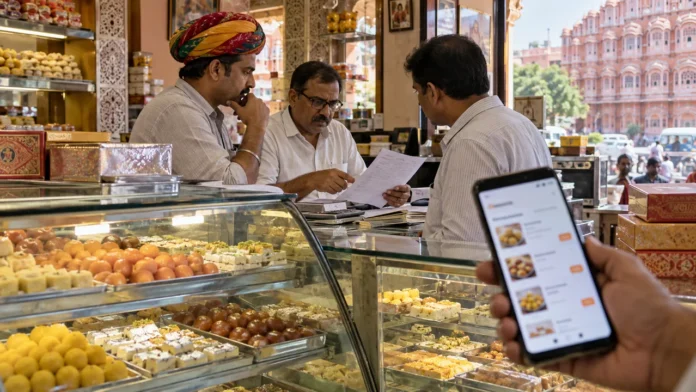

The Jaipur sweet shops Zomato boycott involves a group representing about 60 prominent sweet shops and restaurants, which says commissions, discounts and other platform costs have made online orders financially difficult.
Shri Halwai Samiti, a trade body established in 1942, said participating businesses would remain off the platform until their concerns were addressed. The group includes well-known establishments such as Laxmi Misthan Bhandar, Rawat Misthan Bhandar, Kanha, Sodhani Sweets and several other mithai and restaurant operators.
What the Jaipur businesses are alleging
Ajay Agarwal, proprietor of Laxmi Misthan Bhandar, told The Indian Express that commission rates had risen from the platform’s early zero-commission period to levels ranging from about 10-12 per cent to 25 per cent in some cases. Another representative said rates can differ across businesses and may reach higher levels.
The Samiti also alleged pressure to fund discounts and advertising, questioned some deductions and said promotional offers were sometimes applied without adequate consultation. These are allegations made by the participating businesses; the commercial terms can vary by contract and have not been independently audited in the public record.
Dialogue sought, response awaited
The trade body said it had sent a formal representation asking Zomato to rationalise commissions for sweets and related categories and to hold a meeting. Members said an earlier discussion had not produced a resolution.
The Indian Express reported that it sent questions to Zomato and that a company representative requested time to respond. No detailed company response was included in the report available at publication. Zomato’s position should therefore be added when it is formally provided.
Why the dispute matters beyond Jaipur
The Samiti says member stores collectively conduct business worth about Rs 50 lakh a day through Zomato. That figure is the group’s estimate, but it illustrates why a prolonged pause could affect both merchants and customers in a city known for its traditional sweets.
The Federation of Sweets and Namkeen Manufacturers has also sought a meeting with Zomato. It said concerns about commissions, promotional programmes, deductions, settlements, transparency and customer relationships are being discussed by businesses in more than one city.
Food-delivery platforms give small businesses access to a large customer base and logistics network. In return, merchants pay commissions and may participate in advertising or discount programmes. The dispute centres on whether those costs and terms remain workable for price-sensitive products such as mithai, where margins can be narrow and competition is local.
What each side needs to establish
For merchants, evidence will depend on contracts, settlement statements and examples of disputed deductions. For the platform, a detailed response could explain how commissions are calculated, which promotions require consent and what appeal process is available. Comparing like-for-like agreements matters because rates may reflect different services, advertising packages, delivery arrangements and order volumes. Transparent records would make it easier to distinguish a broad policy concern from individual commercial disputes. They would also allow shop owners, customers and the platform to judge proposed remedies against documented costs instead of relying only on competing public statements.
What could end the boycott
A negotiated settlement could involve clearer contracts, a more uniform commission structure for the category, advance approval for discounts and transparent statements of deductions. Any agreement would need acceptance from both the platform and the participating merchants.
Until then, the boycott is best understood as collective bargaining by a local trade group rather than a government ban. Customers may still find individual businesses on other channels, while participating shops decide how to handle online orders during the standoff.
Reporting basis: statements from Shri Halwai Samiti and industry representatives reported by The Indian Express on September 9, 2026. Featured image is an AI-generated editorial illustration.