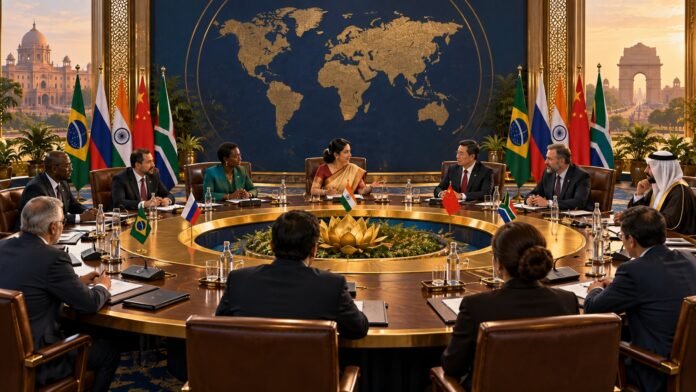
NEW DELHI, September 14, 2026: Prime Minister Narendra Modi used the closing phase of the New Delhi summit to press BRICS leaders for practical follow-through, arguing that the grouping must convert declarations into measurable results. The Modi BRICS summit message focused on geopolitical instability, disrupted supply chains, climate pressure and the growing strategic importance of technology and critical minerals.
Addressing leaders on the second day of the summit, Modi said international tensions were affecting ordinary people through higher costs, insecurity and uncertainty. His intervention placed implementation at the centre of the agenda: agreements, he said, should move through time-bound plans rather than remain broad diplomatic commitments.
From summit language to delivery
The demand for concrete action reflects a familiar challenge for large multilateral groupings. BRICS has expanded to 11 members and represents roughly half of the world’s population, giving it considerable political weight. Yet its members have different security interests, economic models and relationships with major powers.
New Delhi’s approach was to identify areas where cooperation can produce visible public benefits. The summit backed an integrated early-warning system for infectious diseases, an initiative shaped by the lessons of the Covid-19 pandemic. If members share data and coordinate alerts, the mechanism could help governments respond more quickly to outbreaks that cross borders.
Technology and critical minerals move up the agenda
Modi also warned against the “weaponization” of technology and critical minerals. These resources are essential to semiconductors, batteries, electric vehicles, defence systems and clean-energy equipment. Export controls, concentrated processing capacity and political disputes have made access to them a major strategic concern.
For India, the issue links diplomacy with industrial policy. More resilient supply chains could support domestic manufacturing while reducing exposure to sudden restrictions. But any BRICS framework will require transparent rules, reliable financing and safeguards that prevent new dependencies from replacing old ones.
What to watch after New Delhi
- Whether the health early-warning system receives a clear timetable and operating structure.
- Whether members announce practical arrangements for critical-mineral supply chains and technology cooperation.
- How China, which takes the next BRICS chair, carries forward the New Delhi commitments.
- Whether smaller Global South economies gain easier access to finance, technology and crisis support.
The summit highlighted BRICS’ ambition to offer developing countries a stronger voice in global institutions. Its credibility, however, will be judged by what happens between annual meetings. Implementation, funding and public reporting will show whether New Delhi’s agreements become durable programmes.
Sources: Associated Press. Read more from our Politics and India desks.

The National Desk covers India's politics, governance, security and public-interest news. Stories are checked against at least two credible sources before publication.