NEW DELHI, November 7: Defence Minister Rajnath Singh spent the eve of Diwali with troops in north Bengal, reviewing infrastructure along the Line of Actual Control (LAC) with China and the deployment of new equipment at the Army’s Trishakti Corps in Sukna, and meeting Air Force personnel at Bagdogra. He told them that modern threats now include “hybrid warfare, proxy wars, cyber-attacks, drone incursions and information warfare”, and called the Cabinet’s new “Second Tour of Duty” for Agniveers a “significant Diwali gift”.
Key highlights
- Sukna: briefed on infrastructure development along the LAC and the deployment of advanced military equipment and emerging technologies at the Trishakti (33) Corps.
- Who was there: Army chief General Dhiraj Seth, Eastern Army Commander Lt Gen V.M.B. Krishnan and 33 Corps commander Lt Gen Man Raj Singh Mann.
- Bagdogra: told Air Force personnel to keep the “highest level of operational readiness”, with focus on domain awareness, cyber resilience and information integrity.
- Spending: said budgets for roads, tunnels, border infrastructure and modern equipment have been increased.
- Agniveers: said all Agniveers will get a chance to become regular soldiers after a second two-year term, subject to willingness and conditions.
| Place | Unit | Main message |
|---|---|---|
| Air Force Station Bagdogra | Indian Air Force | Readiness, cyber resilience and information integrity; “Air Warriors” are a shield for the eastern sector |
| Sukna | Army’s Trishakti (33) Corps | LAC infrastructure, new equipment and technology; Sukna as a logistics hub for forward areas |
What he said about new threats
At Bagdogra, Mr Singh said adversaries often avoid direct confrontation and try to “exploit our vulnerabilities”, including by spreading misleading information on social media to sow doubt among local people and soldiers. At Sukna, he said adversaries monitor sensitive locations with drones and try to break into military systems through cyber-attacks. He praised troops for learning drone operations and cyber security and said Indian start-ups and industries are now making drones, anti-drone systems and other equipment.
Logistics and the North-East
Mr Singh described Sukna and the surrounding region as a critical hub for moving supplies, weapons, food, medical provisions and personnel to forward posts, and “a vital link in the security architecture of Eastern India”. He called the North-East the “first edge” rather than the “last edge” of India, and urged officers to spend time with soldiers and look after their mental health.
Our calculation
- The minister visited two bases, one Air Force and one Army, in a single day, both in the Siliguri area of north Bengal.
- The Agniveer change he called a Diwali gift was approved by the Cabinet this week, as covered in our report on the decision.
What it means for India and Asia
North Bengal sits near the narrow strip of Indian territory that links the North-East to the rest of the country, close to the borders with Nepal, Bhutan, Bangladesh and China. A defence minister’s Diwali visit there, with a briefing on LAC infrastructure, signals the government’s focus on the eastern front and on logistics, drones and information warfare rather than only conventional fighting.
What to watch
- Further announcements on border roads and tunnels in the eastern sector.
- Implementation rules for the Agniveer second tour of duty.
- Defence orders for indigenous drones and anti-drone systems.
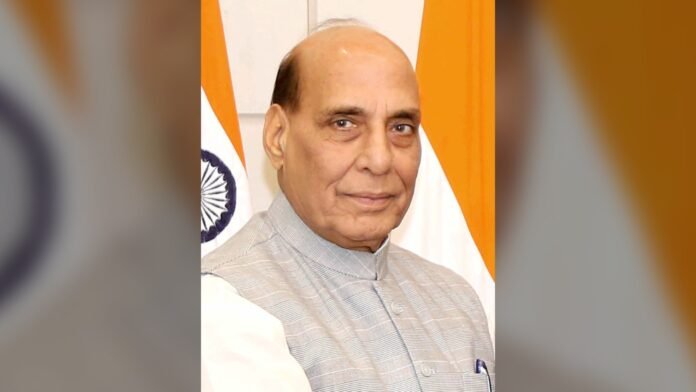
Defence Minister Rajnath Singh (file photo). Image: Ministry of Defence, GODL-India, via Wikimedia Commons. Photo source · Licence
Sources
- Ministry of Defence (PIB): Raksha Mantri reviews infrastructure development along LAC and deployment of advanced military equipment during visit to Trishakti Corps at Sukna, November 7, 2026
- Ministry of Defence (PIB): Defence Forces must maintain highest level of operational readiness… Raksha Mantri at Air Force Station, Bagdogra, November 7, 2026

The National Desk covers India's politics, governance, security and public-interest news. Stories are checked against at least two credible sources before publication.