October 30: Singapore and Pakistan exchanged a disaster-cooperation memorandum in Islamabad today as their foreign ministers discussed trade, carbon markets and education. Singapore Foreign Minister Vivian Balakrishnan described the talks as an effort to give a 60-year diplomatic relationship a stronger practical and economic foundation.
Key highlights
- The disaster MOU links Singapore’s civil-defence force and Pakistan’s disaster authority.
- Officials are exploring carbon-market cooperation.
- University partnerships and skills feature in the agenda.
- A discussion or MOU does not by itself establish a completed investment project.
What was agreed in Islamabad
According to the Singapore Ministry of Foreign Affairs’ transcript, Balakrishnan and Pakistan’s Deputy Prime Minister and Foreign Minister Ishaq Dar exchanged an MOU between the Singapore Civil Defence Force and Pakistan’s National Disaster Management Authority.
Balakrishnan identified early warning, sharing practices, search-and-rescue capability and possible joint training and exercises as areas for cooperation. He also acknowledged Pakistan’s experience with floods and other large disasters, presenting the relationship as an opportunity for mutual learning.
The agenda at a glance
| Area | Status described in the official remarks |
|---|---|
| Disaster response | MOU exchanged between the two agencies |
| Trade and investment | Stronger business and SME links sought |
| Carbon markets | Officials exploring opportunities |
| Higher education | Closer institutional cooperation welcomed |
| Leadership engagement | Pakistan’s prime minister accepted an invitation to visit |
Singapore’s pre-visit notice and Pakistan’s foreign ministry notice independently recorded the official visit on October 30. The same-day transcript provides the more current record of what Balakrishnan said after the talks, rather than leaving the story at the planned-visit stage.
Trade ties are the next practical test
Balakrishnan said the two countries’ economic links should be stronger given their diplomatic relationship. He called for more contact among smaller firms and businesspeople, including better understanding of opportunities and risks in South and Southeast Asia.
That is a commitment to facilitate interaction, not the announcement of a new free-trade agreement or an immediate tariff reduction. A company assessing market access would still need the applicable customs rules, sector approvals and commercial terms. The ministers’ statement does not replace those records.
The same distinction applies to carbon markets. The transcript says officials are exploring cooperation and projects that could reduce emissions while supporting development in Pakistan. It does not provide a completed project list, credit volume, purchase price or implementation agreement.
Education, skills and regional links
The Singapore minister named Nanyang Technological University and the National University of Singapore alongside Pakistan’s National University of Sciences and Technology as institutions with potential for deeper cooperation. He framed relevant skills and qualifications as important in an economy being reshaped by AI and digital technology.
For a prospective student or researcher, the next useful detail would be a specific institutional notice: programme, eligibility, funding, application dates and recognition of qualifications. General diplomatic support for cooperation does not establish that a scholarship is already open.
The remarks also linked Singapore’s coming ASEAN chairmanship to opportunities for wider engagement with Pakistan. That opens a regional avenue, but it should be assessed through subsequent ASEAN and bilateral announcements rather than treated as a completed new bloc-to-bloc arrangement.
What to watch
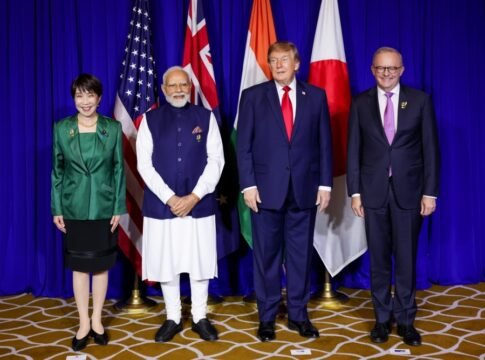
Agency work plans under the disaster MOU, university announcements, business delegations and any formal carbon-market agreement will show how the agenda advances. The portrait accompanying this report is a 2023 file photograph of Balakrishnan, not an image of the Islamabad signing.
Sources
- Singapore MFA: Remarks at the Islamabad joint press conference, October 30, 2026
- Pakistan Ministry of Foreign Affairs: Singapore foreign minister’s official visit

The International Desk covers world and Asian affairs, diplomacy and conflict, with a focus on what they mean for India. Stories are checked against at least two credible sources before publication.