November 14: South Africa’s official unemployment rate rose to 33.7% in the third quarter of 2026, up from 33.6% in the second quarter, according to Statistics South Africa’s Quarterly Labour Force Survey released on November 10. The labour force participation rate rose to 59.9%. The economy added 101,000 jobs, but 97,000 more people were counted as unemployed because the labour force grew faster. Youth unemployment stayed at 47.3%.
Key highlights
- Official unemployment rate: 33.7%, up 0.1 percentage point.
- Employed: 16.8 million, up 101,000.
- Unemployed: 8.6 million, up 97,000.
- Formal sector: 12.3 million jobs, up 268,000, offset by losses in the informal sector and private households.
- Youth (15–34): unemployment rate 47.3%, down 0.1 point.
The four measures of labour underutilisation
| Measure | Q2 2026 | Q3 2026 |
|---|---|---|
| Official unemployment rate | 33.6% | 33.7% |
| Unemployment plus time-related underemployment | 36.6% | 36.5% |
| Unemployment plus potential labour force | 43.8% | 44.0% |
| Composite labour underutilisation | 46.3% | 46.3% |
Where jobs came and went
| Industry | Change in jobs |
|---|---|
| Finance | +111,000 |
| Manufacturing | +33,000 |
| Mining | +31,000 |
| Construction | −8,000 |
| Agriculture | −34,000 |
| Private households | −68,000 |
By province, the Western Cape added 48,000 jobs, North West 45,000, the Eastern Cape 36,000 and Gauteng 25,000, while the Free State lost 34,000 and Mpumalanga 30,000. The number of discouraged job-seekers rose by 70,000 to 3.7 million.
Our calculation
| Measure | Figure | How we got it |
|---|---|---|
| Growth in the labour force | 198,000 | 101,000 more employed + 97,000 more unemployed |
| Share of the labour force growth that found work | About 51% | 101,000 ÷ 198,000 |
| Net change in jobs outside the formal sector | −166,000 | Informal −98,000 and households −68,000 |
| Youth share of all unemployed | About 58% | 5.0 million ÷ 8.6 million |
What it means for India and Asia
South Africa is a fellow BRICS member and a major Indian trade partner in Africa, and its jobs crisis shapes its domestic politics and economic choices. Nearly half of young South Africans in the labour force are without work, a challenge that resonates in India and much of Asia, where creating enough jobs for young people is also a central economic concern. Growth in finance and manufacturing jobs this quarter is a small positive sign.
What to watch
- The South African Reserve Bank’s next interest-rate decision.
- Third-quarter GDP data from Statistics South Africa.
- Whether formal-sector hiring continues into the fourth quarter.
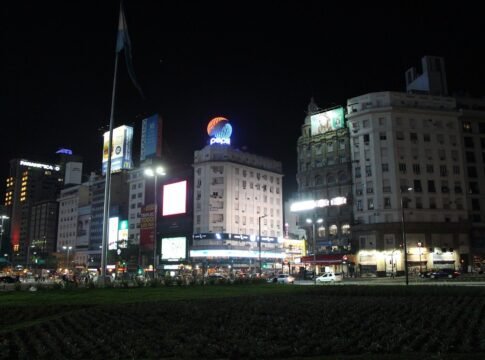
The Johannesburg skyline. Image: Khaanya96, CC BY-SA 4.0, via Wikimedia Commons. Photo source · Licence
Sources
- Statistics South Africa: Quarterly Labour Force Survey, Q3 2026 (statistical release, PDF)
- Statistics South Africa: QLFS Q3 2026 presentation by the Statistician-General (PDF)

The Business Desk covers markets, the economy, companies and personal finance. Stories are checked against at least two credible sources before publication.