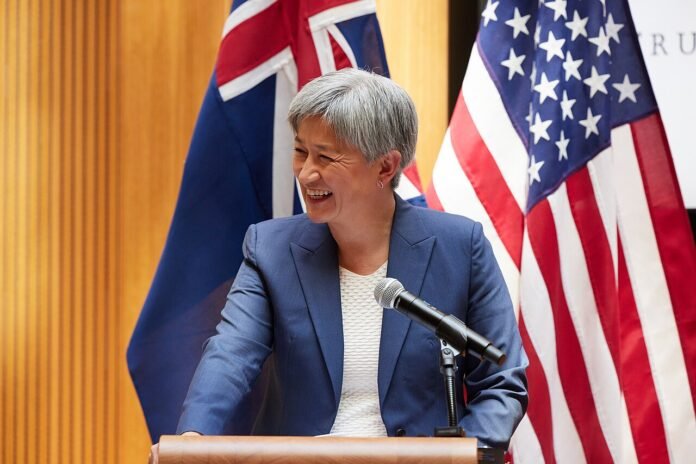
November 18: Australia announced targeted sanctions on three individuals and four organisations on November 18 over their involvement in West Bank settlement expansion and human-rights abuses against Palestinians. Foreign Minister Penny Wong’s department said the measures include Australia’s first sanctions targeting a construction company involved in building settlements.
Key highlights
- The government says Australians and Australian businesses cannot trade with or support the designated targets.
- The action adds to existing sanctions rather than imposing a general ban on all trade with Israel.
- Official designation records, rather than social-media lists, determine who is covered.
What Canberra has announced
The Foreign Minister’s release says the targets participated in planning, coordination and establishment of settlements, including fundraising, recruitment and support for violent settlers. These are the Australian government’s stated reasons for imposing the measures; the announcement should not be confused with a report of a criminal conviction.
The government said the action was coordinated with international partners and linked it to preserving the possibility of a two-state solution. In a separate doorstep statement on November 18, Wong also connected the decision with concerns about settlement activity and prospects for peace. The announcement builds on earlier targeted measures.
Why the construction-company element matters
Sanctions can affect more than the person who appears in a political headline. A designation involving a construction company can be relevant to financing, procurement, contracting and other commercial relationships. Australia’s announcement specifically warned Australian businesses against bidding for construction tenders for illegal settlement developments.
The practical reach of a restriction depends on the law, the listed entity and the particular transaction. A company with international customers or suppliers should not assume that a short news summary is enough to resolve an ownership or sanctions question. The official records are the relevant starting point.
Targeted measures need precise reporting
Australia’s DFAT Consolidated List combines people and entities designated under UN and Australian autonomous sanctions regimes. That makes it useful for checking names and aliases, but it should be read alongside the relevant legal instruments and official guidance. A person’s nationality alone does not establish that they are a designated target.
The distinction between targeted sanctions and a country-wide prohibition is also important for readers outside Australia. This announcement concerns named individuals and organisations and the activities described by the Australian government. It does not justify describing every Israeli business, every construction transaction or every traveller as subject to the same restriction.
At a glance
| Announcement | November 18, 2026 |
| Individuals targeted | 3 |
| Organisations targeted | 4 |
| New element | Construction-company designation |
| Official reference point | DFAT designation records and guidance |
What to watch
Watch for the published designation details and any further coordinated announcements. Businesses with a potentially affected transaction should check current official requirements; this report explains the news and is not a determination about a particular transaction’s legality.
Sources
- Australian Foreign Minister: West Bank settler sanctions
- Australian Foreign Minister: November 18 doorstep transcript
- DFAT: Consolidated sanctions list

The International Desk covers world and Asian affairs, diplomacy and conflict, with a focus on what they mean for India. Stories are checked against at least two credible sources before publication.