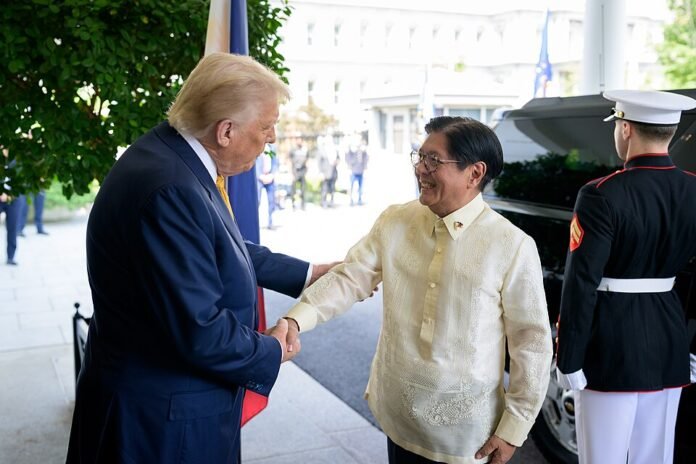
November 18: The White House said on November 18 that President Donald Trump’s two-day Philippines visit produced more than $17 billion in commercial deals and strategic investments for US companies. Its fact sheet combines announcements across Southeast Asia, with different projects at different stages; the total should not be treated as money already spent or as one completed Philippines trade treaty.
Key highlights
- The US account lists aircraft, defence, cloud infrastructure, energy and connectivity initiatives.
- Some entries are described as finalised sales; others are financing plans, negotiations or expressions of intent.
- The announced total spans regional engagements during the visit, rather than a single tariff agreement.
What Washington says is in the package
The White House’s Philippines section describes a $12 billion Boeing and GE Aerospace sale for up to 20 Boeing 787 aircraft for Philippine Airlines. It separately says the two governments will pursue a military-financing loan package of more than $2 billion. The wording signals that a commercial sale and a proposed financing facility are not the same kind of commitment.
The release also lists technology and infrastructure cooperation, including sovereign-cloud work and exploration of an intergovernmental civil-nuclear arrangement. Those descriptions should be retained when reporting the announcements: exploring an arrangement is not the same as an operational power project or a completed reactor order.
Why the status of a deal matters
A fact sheet can place a signed contract beside a project still being negotiated. Each may be politically important, but the certainty, timetable and financial consequences differ. Readers should ask whether the parties have signed a binding document, secured financing, obtained approvals and set delivery milestones.
The announced values also should not be added indiscriminately to unrelated investment targets. A headline package can include ceilings, options or multi-year opportunities. Without the underlying terms, it is not possible to infer how much will be spent this year or how much represents entirely new activity.
Trade cooperation is broader than a tariff treaty
Trump and President Ferdinand Marcos Jr. discussed strengthening economic and security ties during the Manila visit. However, an announcement about cooperation, a purchase contract and an agreement changing tariff treatment answer different questions. A reader shipping goods needs an applicable customs rule, not simply a political description of a deal.
For Southeast Asian supply chains, the useful follow-up is therefore the project-level evidence: procurement notices, company disclosures, lending terms and implementation schedules. Those documents can show whether an announcement creates a new order, expands an existing relationship or merely sets a direction for later negotiations.
At a glance
| Language used in an announcement | How to interpret it |
| Finalised sale | Check the contract, options and delivery terms |
| Will pursue a loan | Financing process remains to be completed |
| Exploration of an agreement | Discussions rather than an operating project |
| Regional package total | Not automatically one treaty or immediate spending |
What to watch
Watch for company confirmations, formal financing decisions and published trade terms. The White House’s employment and commercial-impact estimates are its projections, not independently measured outcomes of projects that have yet to be implemented.
Sources
- White House: Economic announcements from the Philippines and ASEAN visit
- White House: US–Thailand reciprocal trade joint statement

The Business Desk covers markets, the economy, companies and personal finance. Stories are checked against at least two credible sources before publication.