November 26, 2026 — Japan’s space agency demonstrated a ground test model in Chofu, Tokyo, on November 25 for a lunar rover it is developing for a mission with India. The Lunar Polar Exploration mission, known as LUPEX, is intended to investigate water near the Moon’s south pole.
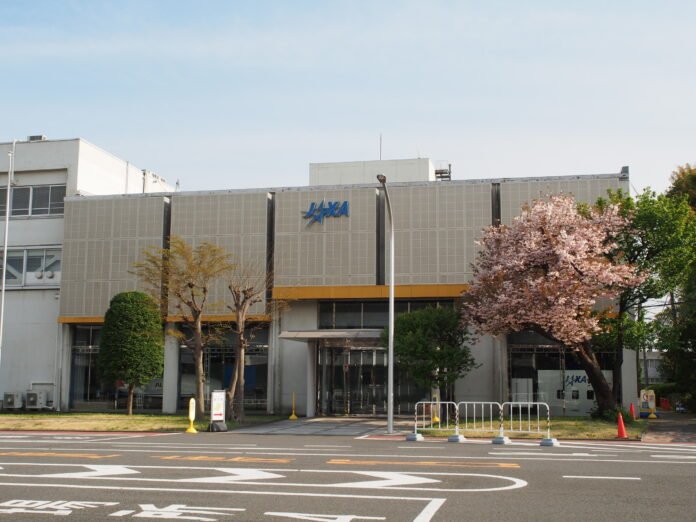
File photo: The exhibition hall at JAXA’s Chofu Aerospace Center, April 18, 2019. Kestrel, Wikimedia Commons, CC BY-SA 4.0.
Key highlights
- The demonstration took place at JAXA’s Chofu Aerospace Center.
- The planned mission uses a mobile rover to examine lunar material.
- Japan’s fiscal 2028 remains the reported target for launch on an H3 rocket.
What the rover is meant to find
JAXA presented a model intended for testing movement on Earth. The Japan Times reported that the vehicle moved on tracks attached to four legs. The equipment planned for the flight rover includes instruments for taking measurements and drilling. Moving between sites would let the mission compare samples where local conditions differ.
Measurements of water and its distribution would inform future mission planning. Scientists need to know how much is present and how it is held in lunar material before they can assess what later missions might do with it. Demonstrating mobility on Earth is one stage in that development.
Polar terrain poses practical problems for a rover. Route choice affects which areas it can reach, how it manages energy and how quickly it can collect measurements. Ground trials let engineers observe how movement and control systems behave before those systems have to operate at a distance.
What to watch
Watch for updated milestones from JAXA and India’s space agency, including further rover and instrument tests and the launch schedule. Fiscal 2028 is a target.
Sources
- JAXA’s LUPEX media materials (Japanese)
- Jiji Press coverage of the test
- The Japan Times report on the demonstration

The Tech Desk covers technology, artificial intelligence and cybersecurity. Stories are checked against at least two credible sources before publication.