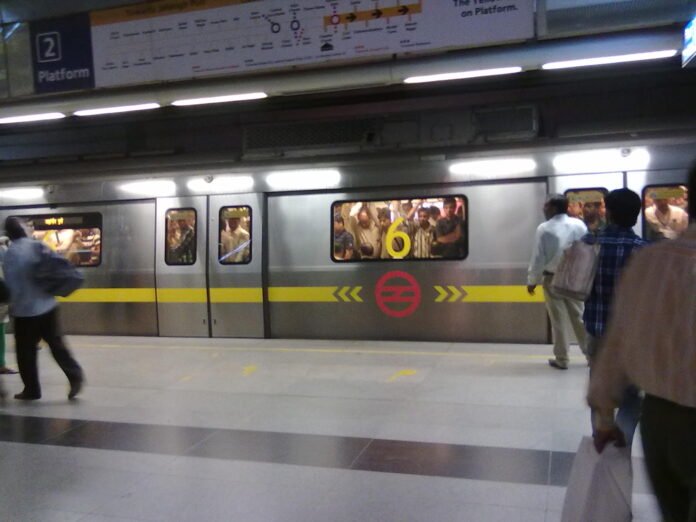
October 22: Delhi Metro is adding 20 train trips on weekdays from Thursday as the National Capital Region begins measures under Stage I of the Graded Response Action Plan. The transport change follows Wednesday’s decision to activate the first pollution-response stage after Delhi’s air quality moved into the “poor” category.
Key highlights
- DMRC announced 20 additional Monday-to-Friday trips from October 22, according to Dainik Jagran.
- CAQM activated GRAP Stage I across NCR on October 21.
- Delhi’s AQI was 244 at 2 pm on Wednesday, according to the commission’s figures reported by Akashvani.
- Stage I does not itself announce school closures or a blanket shutdown of offices.
What changes for Metro commuters
Dainik Jagran reported that the Delhi Metro Rail Corporation would supplement weekday operations with 20 extra trips. The measure is intended to support public transport as pollution-control efforts intensify. The announcement should not be read as 20 extra trains on every line or a promise of the same frequency increase at every station.
For a journey today, the practical distinction is between additional network trips and a published station timetable. Commuters should use DMRC’s current service information for their line rather than assume that every platform has a shorter wait. No line-by-line allocation is established in the sources cited here.
Why Stage I has been invoked
Akashvani reported that CAQM directed the relevant agencies to implement, monitor and review the first-stage measures throughout NCR after the AQI reached 244 on October 21. The commission asked agencies to intensify their response and residents to follow the Stage I citizen charter.
The Indian Express reported that the city’s AQI had been 179 on October 20. The revised GRAP schedule uses the 201–300 range for Stage I. These are dated readings, not a claim that every Delhi neighbourhood has the same pollution level or that Wednesday’s number is today’s live reading.
At a glance
| Indicator | Latest position |
|---|---|
| New Metro trips | 20 additional trips on weekdays, from October 22 |
| GRAP activation | Stage I, across NCR, October 21 |
| Reported AQI reference | 244 at 2 pm on October 21 |
| Schools and offices | Not closed automatically by Stage I |
| Construction | Dust-control compliance remains important; not a blanket ban on all work |
What the restrictions do—and do not—mean
The Indian Express’s explainer describes Stage I as a set of measures aimed at dust, waste burning, vehicle emissions and other pollution sources. It also sets out restrictions on construction projects that fail specified registration or dust-monitoring requirements. That is different from saying that all construction is prohibited.
The same reporting says schools and offices continue to function normally under this stage. Higher GRAP stages carry additional measures, but they should not be presented as already activated merely because pollution has increased. Residents and businesses need to check the actual operative order for their activity and location.
Dust controls also matter
Jagran’s report describes additional dust-management work at Metro construction sites. Public transport expansion and construction-site controls address different parts of the response: one concerns journeys, while the other concerns emissions from work and surrounding roads.
The meaningful test is implementation, not just the announcement of a stage. For readers, the useful information is whether services change, which activities face specific compliance requirements and whether authorities issue a later order. A single citywide index cannot settle all three questions.
What to watch
Watch for DMRC service notices and any subsequent CAQM order changing the GRAP stage. This report describes the October 21 decision and the extra weekday trips scheduled from October 22; it does not announce future restrictions or attribute the pollution rise to a single source without evidence.
Featured image: Pranay Rathod / Wikimedia Commons, CC BY-SA 3.0 · Licence. Displayed with responsive cropping.
Sources
- Akashvani: CAQM Invokes Stage-I GRAP Across NCR as Delhi AQI Enters Poor Category
- Dainik Jagran: DMRC to add 20 extra trips from October 22 (Hindi)
- The Indian Express: GRAP-1 imposed in Delhi as air turns poor
- The Indian Express: GRAP Stage I restrictions explained

The National Desk covers India's politics, governance, security and public-interest news. Stories are checked against at least two credible sources before publication.