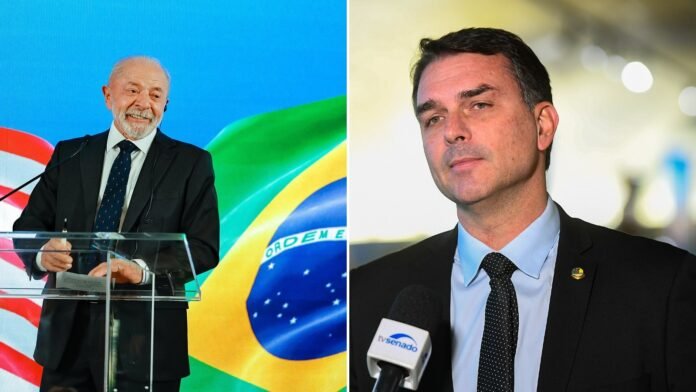
October 26: Luiz Inácio Lula da Silva has won Brazil’s presidential run-off for a fourth term, according to the country’s Senate and regional electoral authorities. The vote took place on October 25, and the new term is due to begin on January 5, 2027. For Asia, the immediate significance is political continuity in a major trading partner, rather than an automatically changed trade agreement.
Key highlights
- Brazil’s Senate reports that Lula defeated Senator Flávio Bolsonaro in the second round.
- The election-night percentages cited below are dated snapshots, not a substitute for the final national results portal.
- The presidential inauguration is scheduled for January 5, 2027.
- Brazil’s latest official trade data show substantial exports to China, making the transition relevant to Asian businesses.
What the official election accounts establish
The Senate’s October 25 report says the Superior Electoral Court considered Lula re-elected at 9.08 pm Brasília time, when 97.69% of the count had been completed. At that point, Lula had about 62.6 million valid votes, or 51.74%, against Flávio Bolsonaro’s 58.4 million, or 48.26%.
Those figures describe the point at which the result was called. They should not be labelled the final count. A later bulletin from the Tocantins regional electoral court, published at 10.38 pm, also identifies Lula as re-elected and provides a different, later snapshot of the advancing national tally.
| Official record | Time in Brazil, October 25 | What it confirms |
|---|---|---|
| Senate report | Result called at 21:08 | Lula re-elected; counting still advancing |
| Tocantins electoral court | Report published at 22:38 | Lula elected for the 2027–2030 term |
| Electoral calendar | January 5, 2027 | Presidential inauguration date |
Why different percentages can both appear in official reports
The Tocantins court’s report quotes 64,253,514 votes for Lula, equivalent to 51.78%, as of 10.33 pm, and 59,824,860 for Bolsonaro, or 48.22%. These later figures do not invalidate the earlier announcement: they reflect additional returns being counted after the outcome was established.
For a reader comparing headlines, the essential checks are the reporting time, whether the figures cover the whole country and whether percentages are calculated from valid votes. A local result and a national result answer different questions. Neither should be silently substituted for the other.
What changes now—and what does not
The Senate describes the victory as Lula’s fourth presidential mandate. His previous wins were in 2002, 2006 and 2022. The scheduled January inauguration separates an election result from the formal start of the next administration.
An electoral victory does not itself announce a new cabinet, fiscal package or agreement with another country. Those require their own decisions and official publications. This report does not attribute a market move or currency reaction to the result without separately checked trading data.
Why Asian trade partners will follow the transition
Brazil’s industry and trade ministry’s consolidated monthly data report that exports to China reached US$84.68 billion in January–September 2026, up 12.0% from the comparable period a year earlier. The figures predate the election and provide economic context; they are not a forecast of what the next term will deliver.
For Asian importers and investors, policy continuity matters through customs administration, investment conditions, infrastructure and the reliability of commercial commitments. The election does not automatically change a shipment contract or tariff. The relevant next evidence will be an adopted policy or a signed instrument, not a campaign interpretation.
What to watch
Watch the consolidated national electoral record, the formal transition and announcements about the incoming administration. For the Asia angle, follow Brazil’s next official trade releases and any confirmed diplomatic engagements.
This account relies on Brazilian public institutions for the result and on official trade statistics for the economic context. The photograph is archival and should not be read as an image of election-night celebrations.
null — Lula source; Bolsonaro source; CC BY-SA 4.0; CC BY 4.0. These are archival images, not election-night photographs.
Sources
- Brazilian Senate: Lula re-elected for a fourth presidential term
- Tocantins electoral court: Lula re-elected, October 25 bulletin
- TSE: Main dates in the 2026 electoral calendar
- MDIC: Consolidated monthly trade data

The International Desk covers world and Asian affairs, diplomacy and conflict, with a focus on what they mean for India. Stories are checked against at least two credible sources before publication.