NEW DELHI, November 6: The Union Health Ministry has proposed that the manufacturing licence for a medicine be suspended immediately if a government analyst finds it “not of standard quality” (NSQ) on any of five critical tests, instead of only after a show-cause process. The draft amendment to the Drugs Rules, 1945, was announced on Wednesday and is open for public comment for 30 days.
Key highlights
- Trigger: a government analyst’s report declaring a drug NSQ on assay, dissolution, related substances, impurities or sterility.
- Action: immediate suspension of the manufacturing licence for that drug by the central or state licensing authority.
- Restoration: only after the maker carries out a root cause analysis and corrective and preventive action (CAPA), verified by the licensing authority.
- Reporting: the analyst’s report (Form 13) would go to the Drugs Controller General of India, the state licensing authority, the manufacturer and the marketer.
- Comments: 30 days from publication of the draft in the Gazette.
| Test | What it checks |
|---|---|
| Assay | Whether the medicine contains the right amount of active ingredient |
| Dissolution | Whether a tablet or capsule releases the drug properly in the body |
| Related substances | Levels of closely related chemical by-products |
| Impurities | Unwanted substances in the medicine |
| Sterility | Whether sterile products such as injections are free of microbes |
Why the change
The ministry said that under the current rules, suspension or cancellation of a licence comes only after a show-cause notice and other steps, which can leave a gap between a drug being declared NSQ and any action. During that time the drug can stay on the market, posing risks to patients and making recalls harder. The proposal follows discussions at the 65th meeting of the Drugs Consultative Committee on December 20, 2024, and recommendations of the 92nd meeting of the Drugs Technical Advisory Board on April 24, 2025.
Our calculation
- This is the fourth draft change to the Drugs Rules proposed in about a week, after the drafts on a named batch-release officer, more import gateways and WHO-aligned clean-room limits for sterile plants.
What it means
For patients, faster action means a substandard medicine is less likely to stay on pharmacy shelves while paperwork moves. For manufacturers, a single failed test on a critical parameter could halt production of that product until they prove the problem is fixed. Together with the other recent drafts (our report), the proposal points to a tighter regime for drug quality.
What to watch
- Industry responses during the 30-day comment period.
- Final notification and the date the rule takes effect.
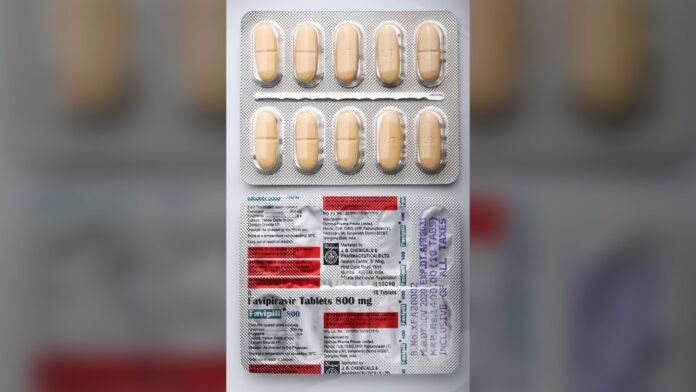
Tablets in a blister pack (file photo). Image: Biswarup Ganguly, CC BY 3.0, via Wikimedia Commons. Photo source · Licence
Sources
- PIB (Ministry of Health and Family Welfare): Immediate suspension of manufacturing licences for drugs found not of standard quality, November 4, 2026
- The Gazette of India (eGazette)

The National Desk covers India's politics, governance, security and public-interest news. Stories are checked against at least two credible sources before publication.