NEW DELHI, November 6: Union Minister Jitendra Singh on Thursday set out a vision of “debris-free space by 2030” as he inaugurated, virtually, the Hyderabad facility of Cosmoserve Space, an Indian start-up working on removing space debris and servicing satellites in orbit. He said India’s space economy has grown to nearly $9 billion and is expected to reach $40–45 billion in the coming decade.
Key highlights
- Facility: Cosmoserve Space’s Base 1 at VSD Tech Park, Gachibowli, Hyderabad, about 14,800 sq ft, where space robots are designed, built, tested and operated.
- Labs: orbital rendezvous and capture, space robotics, microgravity simulation and satellite integration clean rooms.
- Track record: the company’s Mission EMBRACE tested soft robotic “petals” in space in July 2026, within a year of the firm being set up.
- Partners: Pixel for satellite systems, Dhruv Aerospace Netherlands for propulsion and Skyroot Aerospace for launches.
- Sector: India now has nearly 450 space start-ups, up from single digits, the minister said.
| Item | Detail |
|---|---|
| Company | Cosmoserve Space (founder and CEO: Dr Chiranjeevi Phanindra) |
| Facility | Base 1, Gachibowli, Hyderabad (~14,800 sq ft) |
| Focus | Active debris removal and in-orbit servicing |
| India’s space economy | Nearly $9 billion now; $40–45 billion targeted in the coming decade |
| Space start-ups | Nearly 450 |
Why space debris matters
Thousands of dead satellites, spent rocket stages and fragments circle the Earth at high speed. Even small pieces can damage working satellites, and collisions create more debris. Removing debris and servicing satellites so they last longer are seen as key to keeping busy orbits usable, especially as companies launch large constellations. Few companies worldwide have yet shown they can capture and remove debris.
What the minister said
Jitendra Singh credited the space reforms of the past five to six years, including the creation of NewSpace India Limited and IN-SPACe, for opening the sector to private firms. He urged domestic and international investors to put more money into space and called for more philanthropy for science and research. Telangana IT and Industries Minister D. Sridhar Babu attended the inauguration in Hyderabad.
What it means
A target of debris-free space by 2030 is an ambitious goal for any country, and its meaning will depend on what India commits to measure and achieve. But the opening of a dedicated facility shows Indian start-ups moving into advanced areas such as in-orbit robotics, beyond building and launching satellites. Their success will depend on funding, test missions and customers.
What to watch
- Cosmoserve’s next in-orbit demonstration.
- Any national policy or targets on space debris from the Department of Space or IN-SPACe.
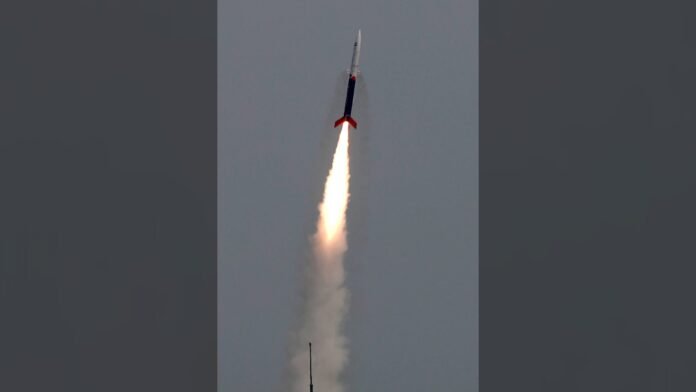
Skyroot Aerospace’s Vikram-S rocket lifts off on Mission Prarambh in 2022 (file photo). Skyroot is Cosmoserve’s launch partner. Image: ISRO, GODL-India, via Wikimedia Commons. Photo source · Licence
Sources

The Tech Desk covers technology, artificial intelligence and cybersecurity. Stories are checked against at least two credible sources before publication.