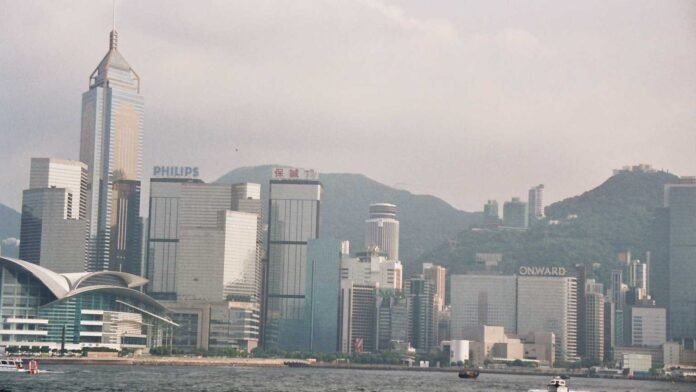
November 6: Hong Kong’s official foreign currency reserve assets rose to US$440.5 billion at the end of October, from US$432.9 billion a month earlier, the Hong Kong Monetary Authority announced on Friday. The release provides a new balance-sheet snapshot, but does not break down the reasons for the increase.
Key highlights
- End-October reserve assets were US$440.5 billion.
- The end-September comparison was US$432.9 billion.
- HKMA reported no unsettled foreign-exchange contracts at either month-end.
- The change should not automatically be described as a currency intervention or an investment return.
What changed in October?
The HKMA’s November 6 release puts reserves above five times the currency in circulation and at about 36% of Hong Kong dollar M3. Those ratios compare the reserve stock with different monetary measures. They are not interchangeable and should not be described as the percentage of all money backed by a particular new transaction.
Our calculation: US$440.5 billion minus US$432.9 billion gives a monthly increase of US$7.6 billion, equivalent to approximately 1.76% of the September figure. This calculation uses the published rounded totals; it is not a separately reported investment-performance number.
Why the cause cannot be read from the headline
A change in the value of reserve assets does not, by itself, tell readers which transactions or valuation effects produced it. The short release gives the stock of assets at two dates, not a complete attribution of the movement. It would therefore be unsupported to label the entire increase a profit, a fresh capital inflow or a defence of the currency.
The statement that there were no unsettled foreign-exchange contracts at the two month-ends is also specific. It should not be expanded into a claim that there were no foreign-exchange operations at any point during October. A month-end position and all activity during a month are different kinds of information.
How this relates to the Hong Kong dollar
The HKMA’s explanation of the Linked Exchange Rate System says it has operated since October 17, 1983. Under its currency-board arrangements, the Hong Kong dollar remains within a band of HK$7.75–7.85 to the US dollar. That background explains why the authority’s monetary and reserve disclosures attract attention.
The reserve announcement does not alter that band. Nor does it announce an interest-rate decision, a change in the currency-board framework or a new exchange-rate target. Readers following the currency should distinguish a regular statistical release from a policy change.
What the figure means for readers in Asia
Hong Kong’s role in cross-border finance makes its monetary data relevant beyond the city. However, the reserve total should not be treated as a forecast for equities, property prices or the exchange value of another Asian currency. Those outcomes depend on additional information.
For a business planning a payment or investment, the practical distinction is between the overall stability framework and the price or terms available for its own transaction. A large official reserve stock is not a guarantee of a particular commercial return or a substitute for checking contractual exposure.
At a glance
| Measure | Published figure or calculation |
|---|---|
| End-October reserves | US$440.5 billion |
| End-September reserves | US$432.9 billion |
| Monthly increase | US$7.6 billion; our calculation |
| Unsettled FX contracts at the two month-ends | None reported |
| Linked exchange-rate band | HK$7.75–7.85 per US dollar; unchanged by this release |
What to watch
The HKMA schedules further Exchange Fund and liquidity releases during November, including analytical accounts on November 13 and additional reserve-liquidity and currency-board disclosures on November 30. Those documents should be read on their own terms rather than assuming the brief reserve headline supplies a full explanation of every monthly movement.
Sources

The Business Desk covers markets, the economy, companies and personal finance. Stories are checked against at least two credible sources before publication.